


For enterprises, voice is not just a communication channel. It is an operational infrastructure.
Every inbound call represents a potential sale, service request, escalation, compliance moment, or retention risk. Before an agent answers, before a workflow begins, routing determines what happens next.
This is where auto-attendant systems play a foundational role.
Modern enterprises use auto-attendants to:
But in 2026, buyers are no longer evaluating routing systems in isolation. Traditional menu-based routing is being compared with IVR systems, AI-assisted routing, and analytics-enabled call orchestration.
Enterprise teams should ask:
This guide evaluates the best enterprise auto-attendant platforms based on operational depth, scalability, integrations, governance, analytics, and reliability. It is designed for organizations managing high call volumes across multiple teams, locations, or business units.
An auto-attendant is a phone system feature that automatically answers inbound calls and routes them based on predefined menu options.
When a caller hears:
“Press 1 for Sales. Press 2 for Support. Press 3 for Billing.”
They are interacting with an auto-attendant.
At its core, the system performs three functions:
In enterprise environments, this routing logic may include:
Auto-attendants are primarily routing engines. They ensure calls are distributed correctly and consistently without manual intervention.
For enterprises managing thousands of inbound calls daily, this routing layer prevents missed calls, reduces transfer friction, and improves first-touch handling efficiency.
The terms are often used interchangeably, but they serve different operational roles.
An auto-attendant routes calls.An IVR system can interact with callers.
Understanding the difference is important when evaluating enterprise requirements.
Auto-attendants are well-suited for:
If the primary goal is to direct callers to the correct team efficiently, an auto-attendant is sufficient.
For example:
In these cases, structured menu routing is effective and predictable.
IVR systems extend beyond routing. They enable:
Instead of transferring immediately to a live agent, IVR systems allow callers to complete tasks independently.
For enterprises with high call volumes related to repetitive actions, IVR reduces agent workload and improves operational efficiency.
In practice, many enterprises deploy layered systems:
For a deeper look at how conversational systems analyze interactions at scale, see how to use AI agents to analyze phone calls and unlock insights.
Enterprise auto-attendants follow a structured flow: greeting, routing, and time-based controls.
The system answers calls and plays branded greetings, language options, and department menus. Enterprises may manage different greetings by location or campaign.
Based on caller input, calls are sent to queues, extensions, submenus, or voicemail. Advanced setups may include regional or overflow routing.
The system applies business hours, holiday rules, after-hours handling, and failover logic to maintain continuity across locations.
Routing is not a cosmetic feature. It directly impacts:
Even small inefficiencies at the routing layer scale dramatically at enterprise volume.
For example:
Auto-attendants provide predictability. But predictability alone is not enough. Enterprises increasingly evaluate routing systems alongside analytics and visibility.
For insight into how voice data drives operational improvements, read AI Voice Analytics: How It Works & Key Features.
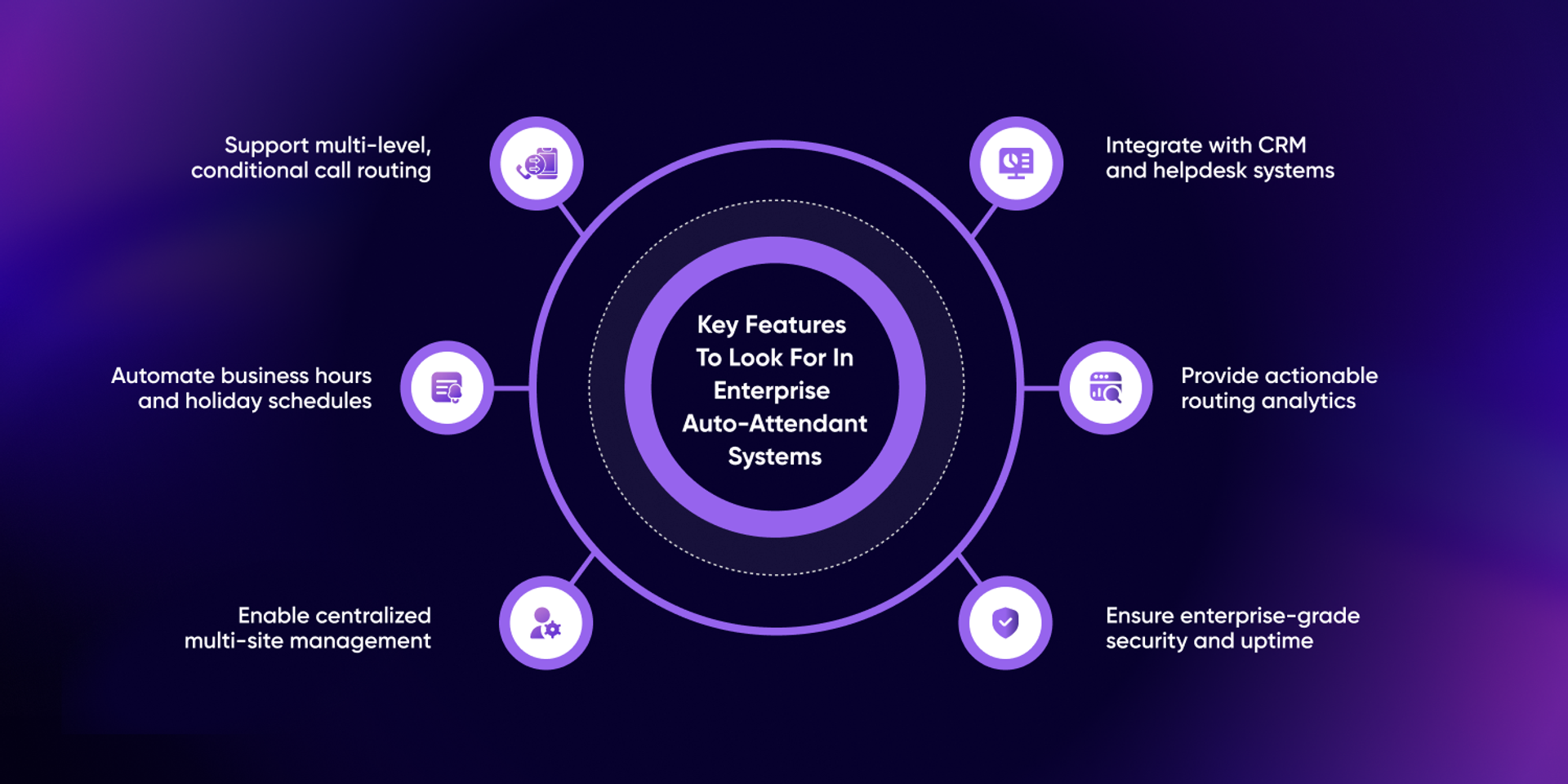
Enterprise routing quickly moves beyond basic menus. What starts as a simple department selection often expands into regional rules, overflow logic, language options, compliance messaging, and failover paths. The right platform must support this scale without becoming difficult to manage.
Look for:
Routing should be flexible, easy to edit, and clearly visualized.
The system should support:
Central control with regional flexibility is essential.
Enterprises need:
This is especially important in regulated industries like healthcare and financial services.
Routing should connect to CRM, helpdesk, and contact center systems. Leaders must track:
Basic logs are not enough for enterprise oversight.
Evaluate:
Routing infrastructure must meet enterprise standards.
Pros: Faster routing, 24/7 availability, fewer missed calls, consistent intake.Cons: Menu fatigue, misrouting, limited resolution without IVR or AI.
Auto-attendants improve distribution. More complex environments may require layered capabilities beyond routing.
Enterprise selection decisions should begin with operational clarity, not vendor comparison.
Analyze call intent across departments:
If most calls require only routing, a structured auto-attendant may suffice.
If a significant portion requires data collection or account interaction, deeper systems may be needed.
Understanding intent prevents overinvestment in features that will go unused.
Before evaluating platforms, sketch your routing map:
Complexity becomes visible quickly.
This exercise reveals:
Selecting a platform before designing your flow often results in constraint discovery after implementation.
Enterprise cost includes more than per-user pricing.
Consider:
Low seat pricing can mask higher operational overhead.
If leadership depends on reporting, ensure the platform supports exportable analytics.
If your organization relies heavily on CRM systems, integration quality directly affects usability.
Routing should enhance visibility, not fragment it.
Many enterprises begin with auto-attendants. Over time, operational demands expand.
Signs that routing-only systems may be insufficient:
In these scenarios, enterprises often explore:
For example, in retail environments with seasonal volume spikes, layered routing and analytics can significantly improve performance.See how voice systems operate in large-scale retail environments.
Enterprise buyers don’t just need a list of platforms. They need context, how these systems perform in real routing workflows, how they integrate, how they scale, and when they fit (or don’t fit) real enterprise requirements.
Each evaluation below explains:
Best for: Enterprises that want intelligent routing plus actionable insights, resolution metrics, and real-time quality control.
Overview:CallBotics reimagines the auto-attendant not just as a menu system, but as an AI-enhanced routing layer capable of understanding caller intent, capturing nuanced signals, and integrating deeply with enterprise workflows.
Why Enterprises Choose It:
Enterprise Operational Strengths:
Enterprise Fit Scenario: Large service organizations with high inbound volumes, compliance requirements, and complex routing, where traditional menus fail to capture intent and context.Example: A multinational retailer routing calls for support, returns, sales, and franchise operations, with SLA compliance and analytics as a must-have.
Considerations: Deployment includes workflow scoping and training data alignment, which can be a strategic advantage but requires upfront planning.
Enterprise Signal: Best choice when traditional auto-attendants must evolve into actionable routing + insight.
Best for: Enterprises that want unified communications (voice, video, messaging) under one administrative umbrella.
Why it Ranks High:
Enterprise Strengths:
Operational Fit: Large distributed enterprises standardizing voice, messaging, and meetings together — especially where centralized governance matters.
Considerations: Advanced routing logic can require higher-tier subscriptions. IVR depth may lag behind specialist contact center platforms without add-ons.
Best for: Teams that want robust phone routing combined with customer communication tracking.
Why It Works for Enterprises:
Enterprise Strengths:
Operational Fit: Operational teams that want phone systems integrated with customer context — especially in support and service desks.
Considerations: Routing depth is strong but not as flexible as specialist auto-attendant systems with advanced decision logic.
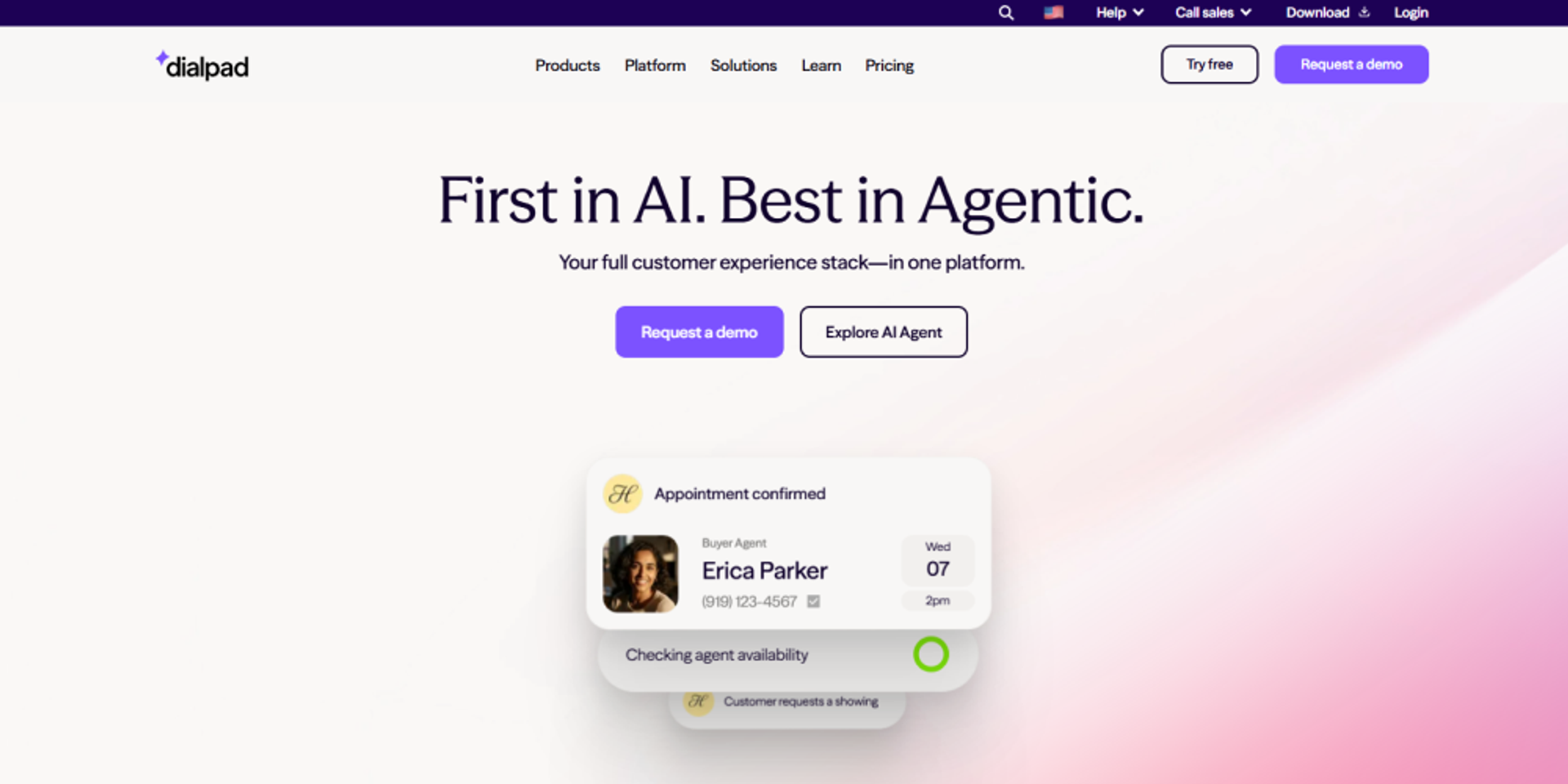
Best for: Technology-forward enterprises looking for AI features that enhance routing and visibility.
Why It’s Notable:
Enterprise Strengths:
Operational Fit: Tech organizations or digital-first enterprises that value AI cues alongside routing structures.
Considerations: Custom routing beyond standard menus may require configuration expertise.
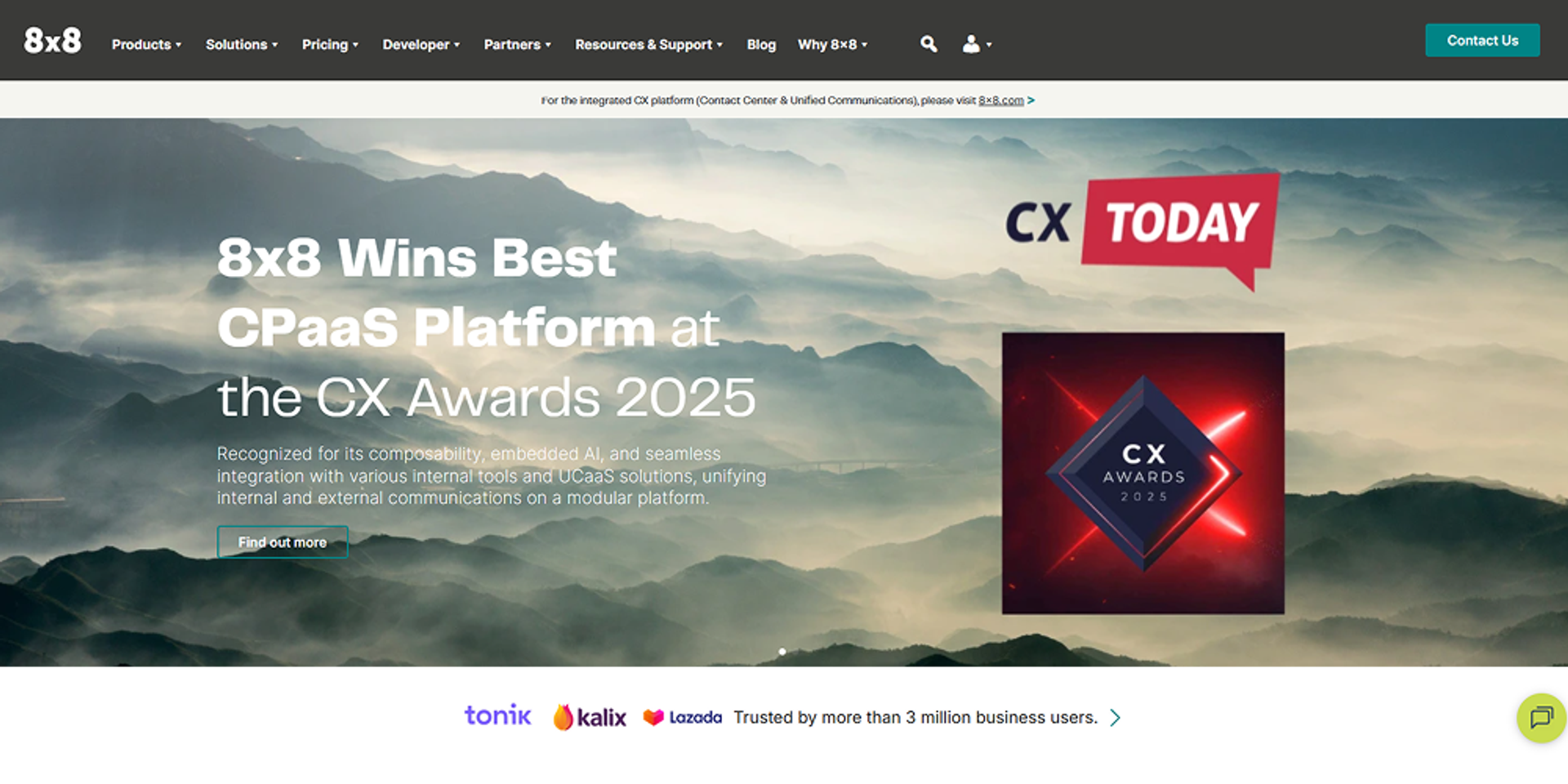
Best for: Organizations with multi-region, multi-country operations.
Why It Excels:
Enterprise Strengths:
Operational Fit: Global enterprises managing localized routing across continents — especially in regulated sectors.
Considerations: Costs scale with international numbers and compliance packages.
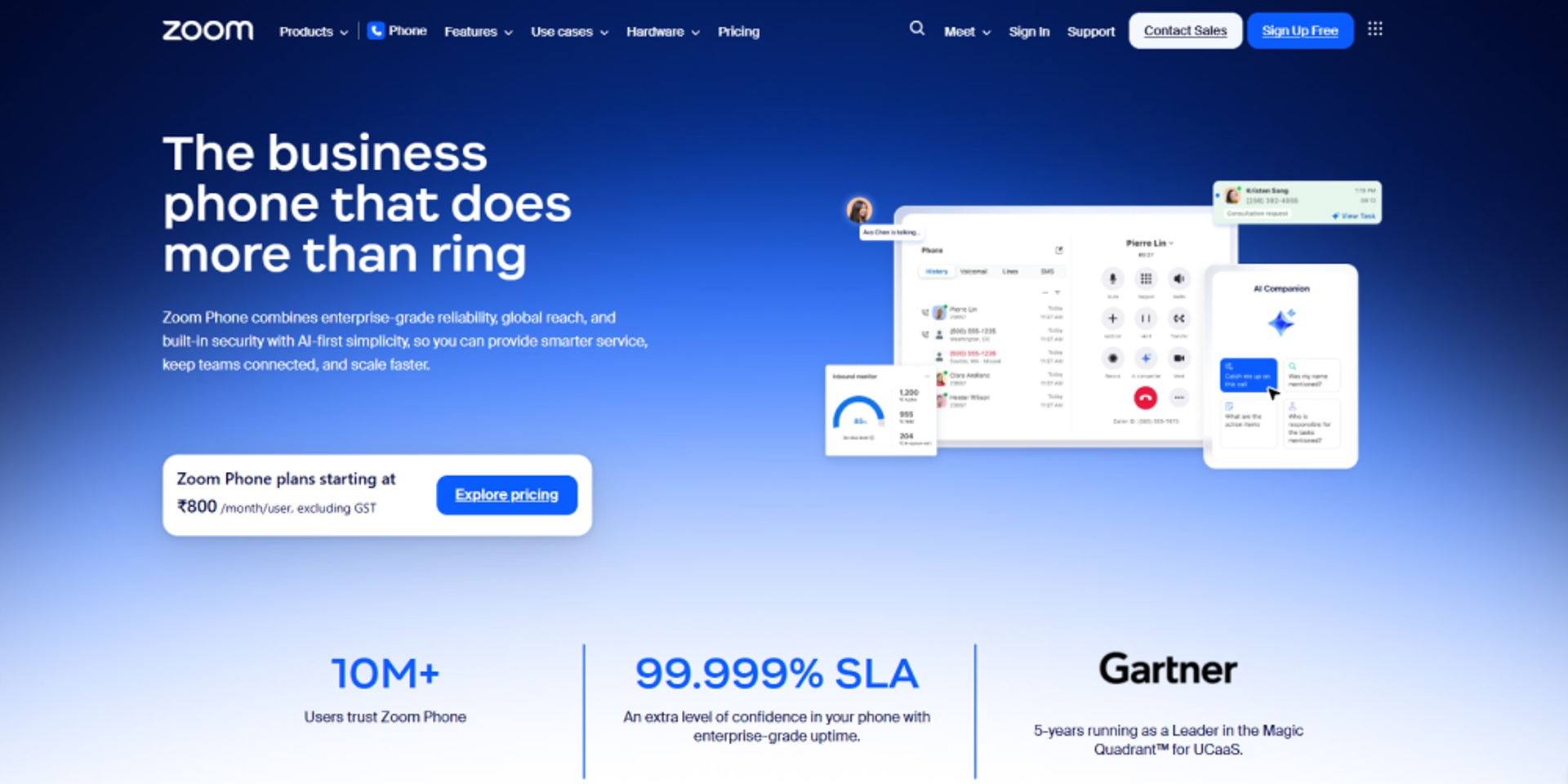
Best for: Organizations already invested in Zoom for meetings and collaboration.
Why It Works:
Enterprise Strengths:
Operational Fit: Enterprises that value one-vendor simplicity and have lighter routing complexity.
Considerations: Routing depth and analytics are functional but not as advanced as specialist systems.
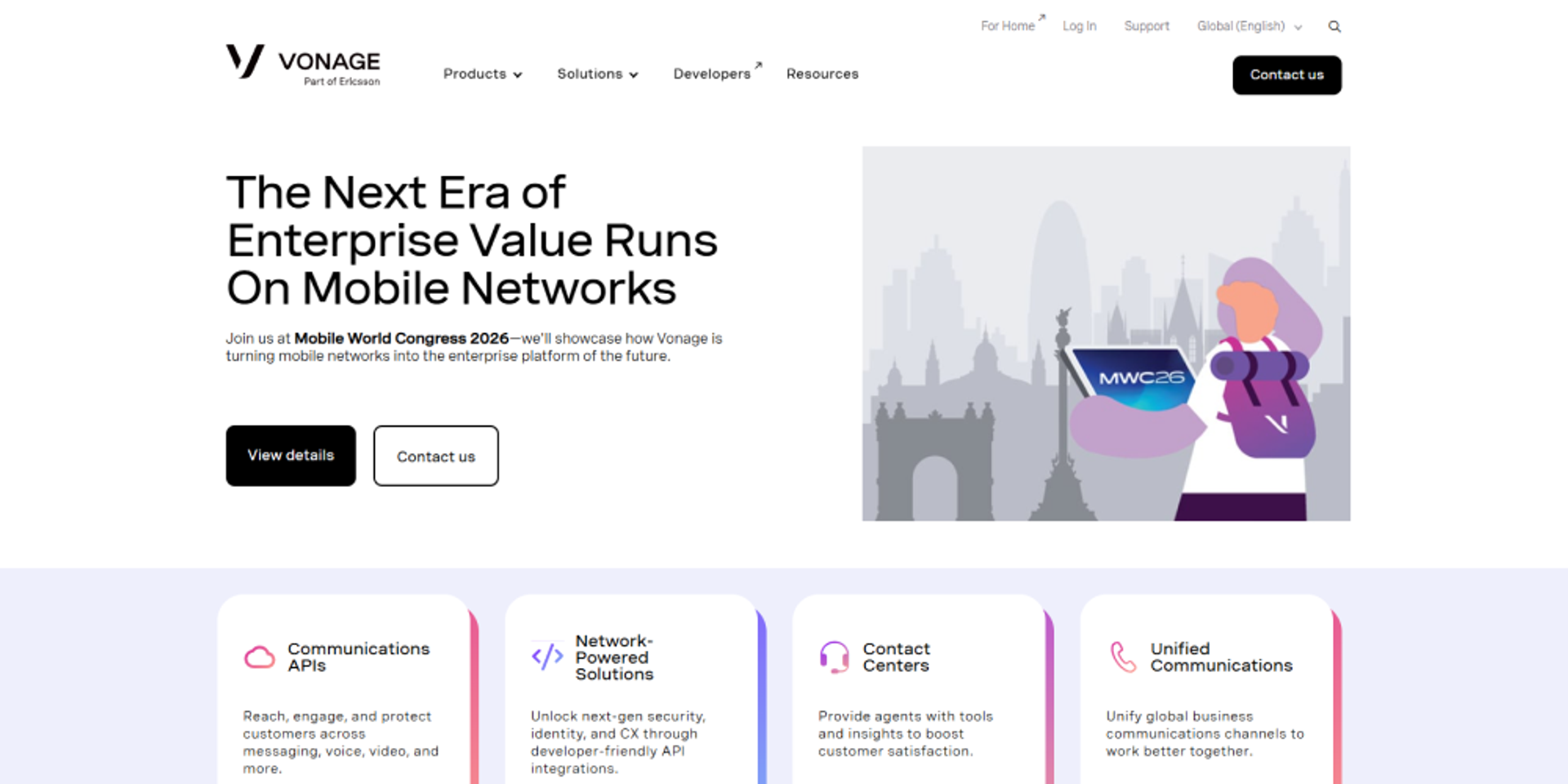
Best for: Enterprises with development teams who want custom telephony workflows.
Why It’s Attractive:
Enterprise Strengths:
Operational Fit: Technical enterprise teams that want tailored integrations and routing logic embedded in broader systems.
Considerations: Requires in-house development or integration partners.
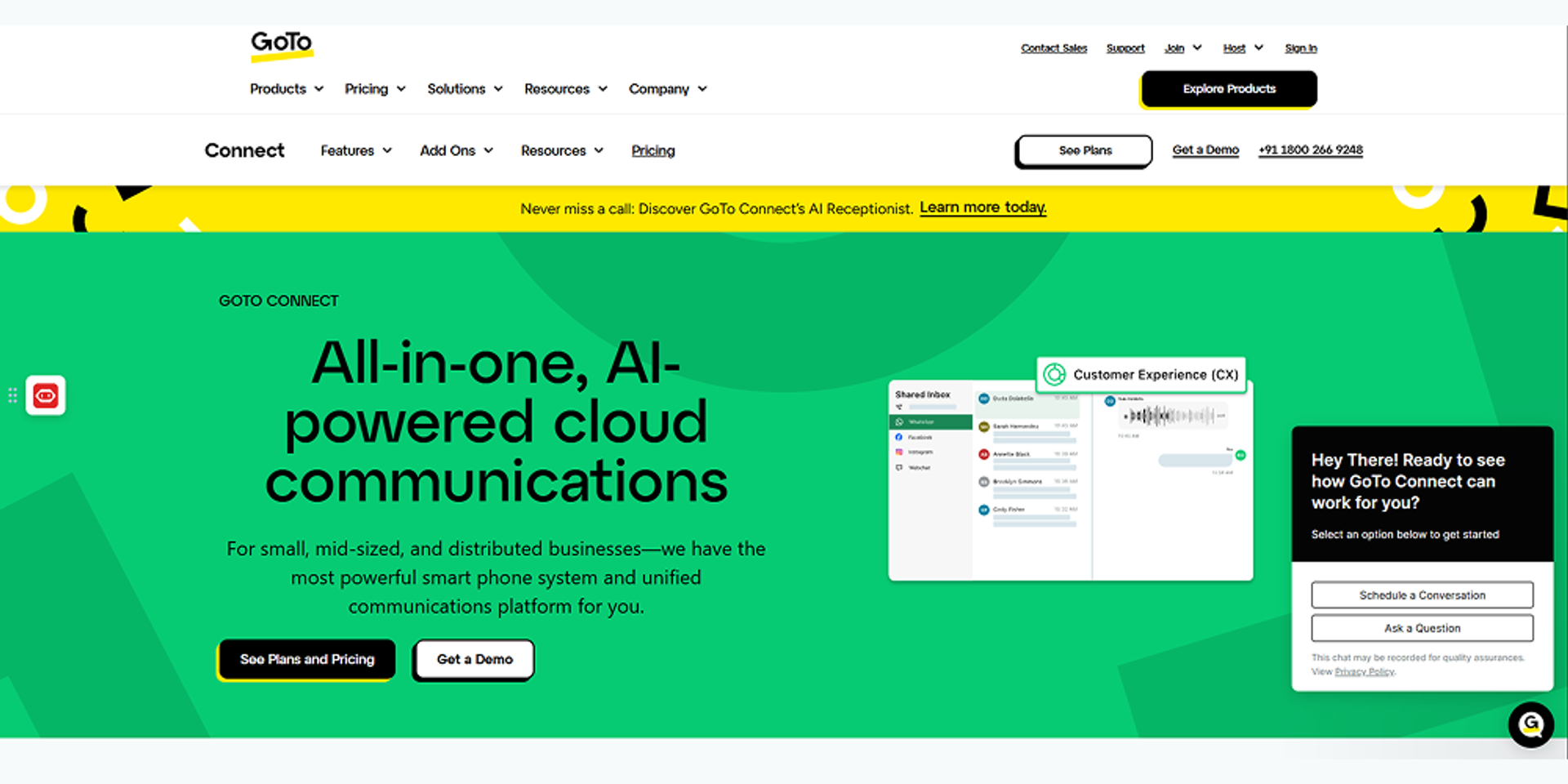
Best for: Enterprises wanting consolidated phone + meeting systems.
Why It’s Compelling:
Enterprise Strengths:
Operational Fit: Operational teams that want one system for voice and meetings without high admin overhead.
Considerations: Routing logic may be less flexible for advanced use cases.
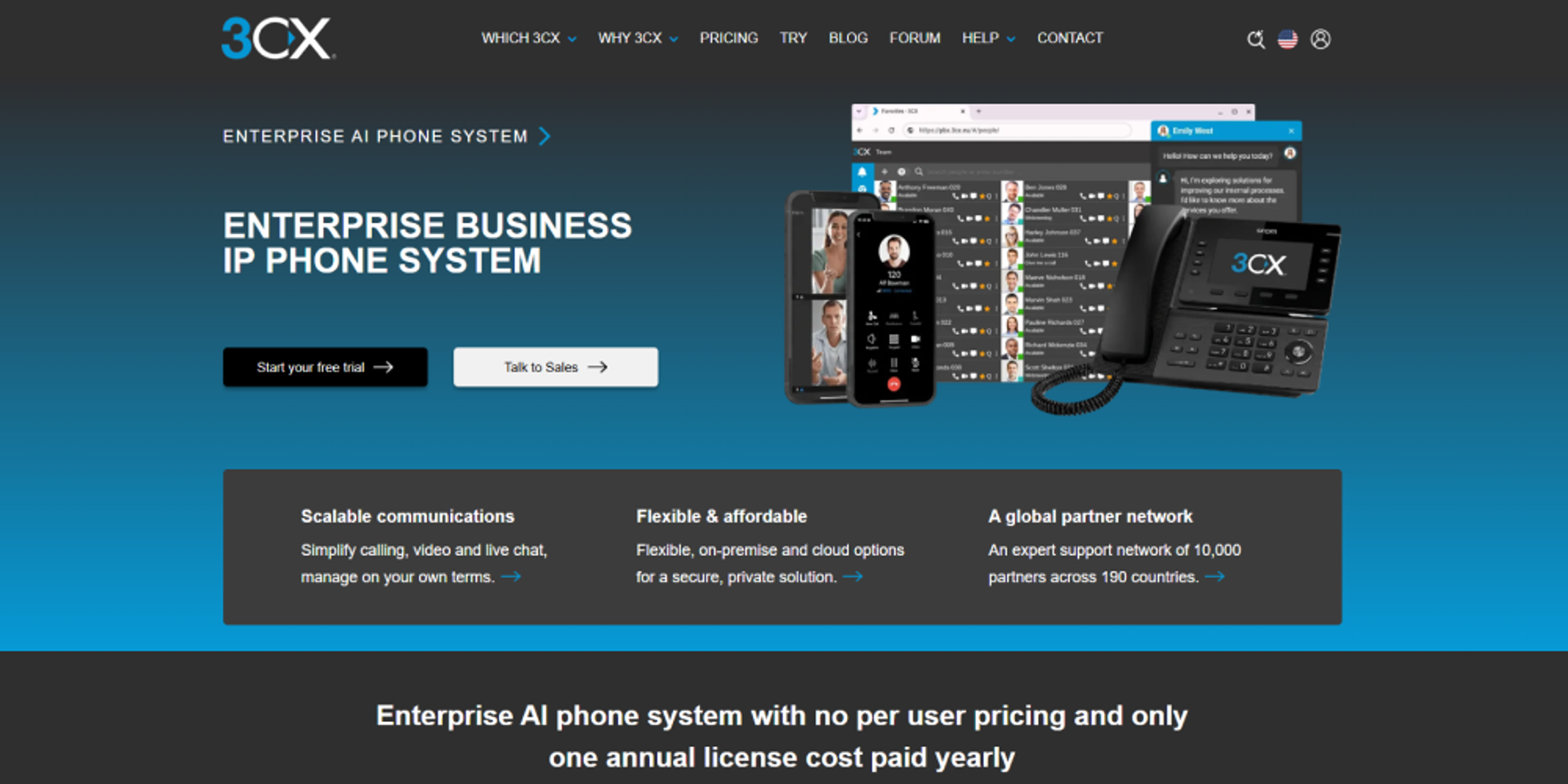
Best for: Organizations that want deployment flexibility and configuration control.
Why It’s Relevant:
Enterprise Strengths:
Operational Fit: IT-centric enterprises with telephony staff and customization needs.
Considerations: More technical setup and maintenance responsibility.
Best for: Departments within larger enterprises with straightforward call routing needs.
Why It Works:
Enterprise Strengths:
Operational Fit: Subsidiaries or business units that want effective, no-friction routing.
Considerations: Scaling and analytics are not suited for highly complex operations.
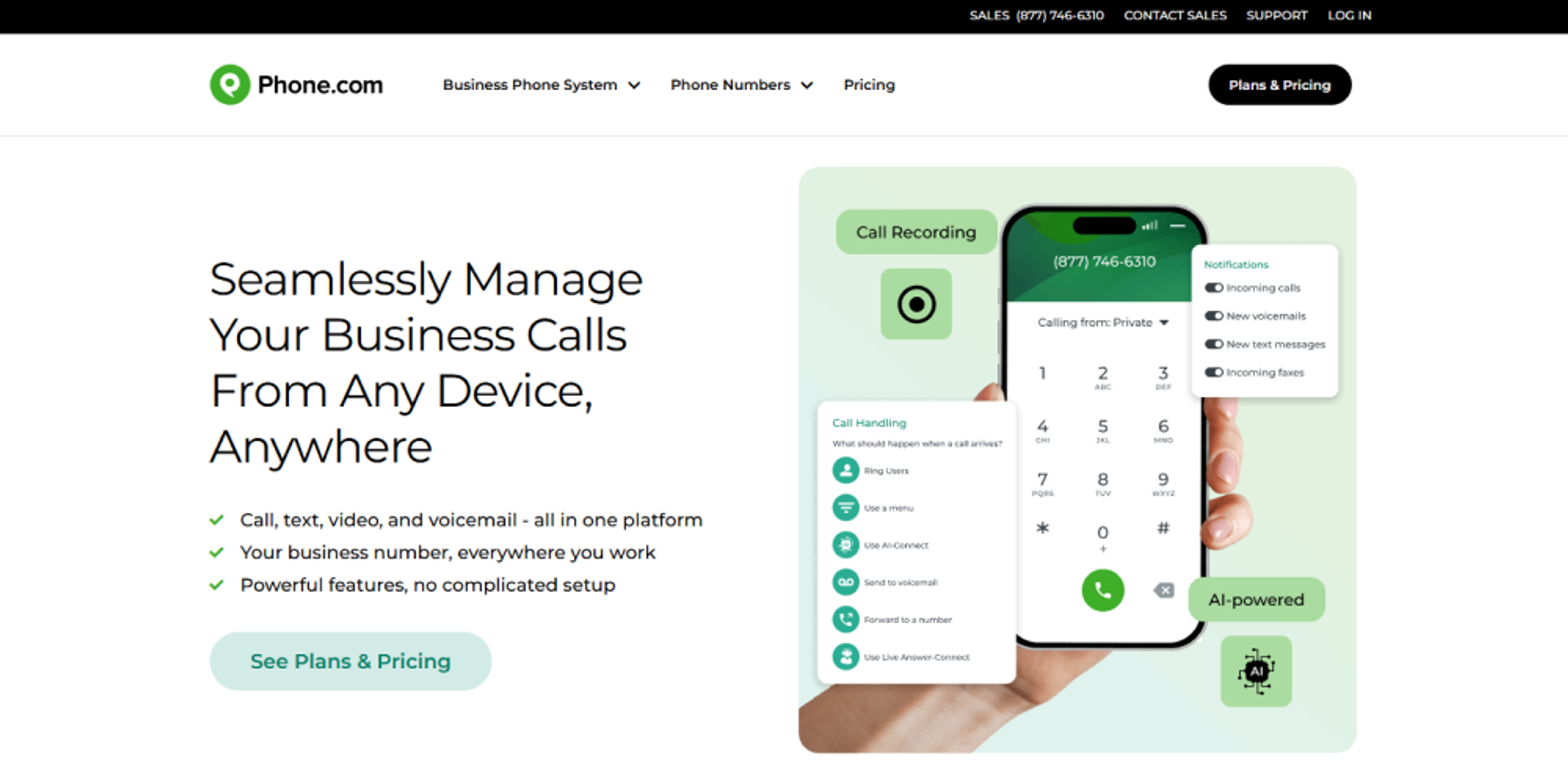
Best for: Cost-sensitive enterprise divisions needing straightforward routing.
Why It’s Used:
Enterprise Strengths:
Operational Fit: Enterprises that want to standardize basic call routing without advanced analytics.
Considerations: It lacks deeper enterprise governance and integration strength.
Routing is foundational. Modern enterprise communication requires intent understanding, action automation, and insight at scale.
Callbotics adds a new dimension to enterprise call routing:
By combining structured routing, AI voice agents, and enterprise analytics, Callbotics moves beyond traditional menu systems, transforming routing from a static decision tree to a data-driven operational force.
Auto-attendant systems remain a foundational layer in enterprise voice operations. They provide structure, consistency, and scalable call routing across departments, locations, and time zones.
But the right platform depends on operational clarity.
Enterprises should evaluate:
For some organizations, structured multi-level routing is enough. For others, high call volumes, compliance requirements, and performance oversight demand more than menu-based systems can provide.
The most effective deployments treat routing as part of a broader operational strategy that connects call distribution to visibility, quality control, and measurable outcomes.
When selecting an auto-attendant platform in 2026, the question is not just “Where will the call go?” It is also “What insight and control do we gain from every interaction?”
The answer to that question determines long-term impact.

Alex Penn is a B2B SaaS writer with 3 years of experience turning complex AI topics into clear, practical content for modern businesses. She specializes in AI, automation, and emerging tech, with a knack for making technical ideas accessible without watering them down. Outside of work, Alex bakes cookies for friends and unwinds with a steady diet of indie music.
See how enterprises automate calls, reduce handle time, and improve CX with CallBotics.
CallBotics is an enterprise-ready conversational AI platform, built on 18+ years of contact center leadership experience and designed to deliver structured resolution, stronger customer experience, and measurable performance.