Customer interactions rarely stay on one channel anymore. A customer may start with a phone call, continue the conversation over SMS, and follow up through chat or email later in the day.
For enterprises, this shift has exposed a major limitation of traditional voice bots. Most early AI voice systems were designed for a single channel, meaning each conversation existed in isolation.
Modern customer experience operations require something different. They require omnichannel voice AI platforms that unify voice, SMS, chat, and messaging channels under a single orchestration layer so conversations can continue seamlessly regardless of how customers reach out.
Instead of treating each interaction as a new conversation, omnichannel AI systems maintain context continuity, allowing agents and automation workflows to remember previous interactions across channels.
Platforms such as CallBotics are built around this concept, enabling enterprises to automate customer interactions while maintaining consistent context and operational visibility across voice, messaging, and chat environments.
This guide evaluates the 10 best omnichannel voice AI platforms for enterprise in 2026, helping organizations compare capabilities, deployment models, compliance support, and pricing fit.
An omnichannel voice AI platform is a conversational AI system that manages customer interactions across multiple communication channels while maintaining a single shared conversation context.
This differs significantly from traditional multi-channel systems.
Multi-channel systems simply support multiple communication methods such as phone, SMS, and chat. However, each interaction is treated separately.
Omnichannel platforms instead provide:
For example:
A customer may call a support line, receive an SMS follow-up from the AI agent, and later resume the conversation through web chat. With an omnichannel system, the AI remembers the original issue and continues the conversation without requiring the customer to repeat details.
This continuity improves both customer experience and operational efficiency, especially in high-volume support environments.
To identify the most capable enterprise omnichannel voice AI platforms, we evaluated vendors based on a set of operational and technical criteria that reflect real-world contact center requirements.
Enterprises deploying voice AI across multiple channels must consider more than conversation quality alone. They must evaluate how well a platform integrates with existing infrastructure, maintains conversation context across channels, scales under heavy load, and supports regulatory requirements.
The evaluation criteria below reflect the factors that most influence long-term success in production environments.
True omnichannel platforms support multiple communication channels through a unified architecture rather than separate channel-specific tools.
We evaluated whether each platform can operate across channels such as:
More importantly, we examined whether these channels operate through a single orchestration layer or exist as separate modules. Platforms that treat each channel independently often struggle to maintain continuity when customers move between channels.
Strong omnichannel platforms allow organizations to manage customer conversations consistently across voice, messaging, and digital channels without fragmentation.
Maintaining context across channels is one of the defining characteristics of a true omnichannel AI platform.
We assessed whether each system can preserve:
When context retention works properly, a customer can begin an interaction through a phone call and continue the conversation later through SMS or chat without repeating information.
Platforms that fail to maintain context often create fragmented customer experiences and reduce the effectiveness of automation.
Natural language understanding (NLU) determines how accurately a system interprets customer intent and manages conversational complexity.
We evaluated how well each platform performs in scenarios involving:
Enterprise environments require systems capable of handling long conversations, changing topics, and resolving requests without constant human intervention.
High NLU accuracy reduces misrouting, improves automation success rates, and increases customer satisfaction.
Enterprise customer interactions rarely occur in isolation. Most workflows depend on backend systems such as CRM platforms, ticketing tools, billing systems, and order databases.
We evaluated each platform’s ability to integrate with common enterprise systems, including:
Strong integrations allow AI agents to retrieve customer information, update records, and trigger automated workflows during conversations.
Platforms lacking deep integrations often require additional engineering effort or limit the automation’s ability to complete real tasks.
Enterprise deployments must meet strict security and regulatory standards.
We examined whether platforms support certifications and security frameworks commonly required by enterprise organizations, including:
Compliance support is especially important for organizations operating in regulated industries such as healthcare, financial services, and insurance.
Platforms designed for enterprise environments typically include built-in governance features that support secure deployment and auditing.
Contact center operations often involve thousands of simultaneous interactions across multiple channels.
We evaluated whether each platform can handle:
Enterprise platforms must maintain low latency and high reliability even under heavy operational loads.
Systems that struggle with concurrency or infrastructure scaling can quickly become operational bottlenecks.
Finally, we evaluated each platform’s pricing structure to determine how well it aligns with enterprise automation strategies.
Enterprise buyers typically look for pricing models that provide predictable operational costs while allowing automation to scale over time.
We considered whether pricing models were based on:
Understanding how pricing scales with usage is critical for organizations planning long-term automation investments.
Enterprises deploying AI-driven customer service automation are increasingly looking for platforms that can manage conversations across multiple communication channels while maintaining consistent context.
The platforms below are among the most commonly evaluated by enterprise teams implementing omnichannel voice AI automation across voice, SMS, chat, and messaging environments.
Each platform offers different strengths depending on operational priorities such as voice quality, automation depth, infrastructure scalability, or developer flexibility.
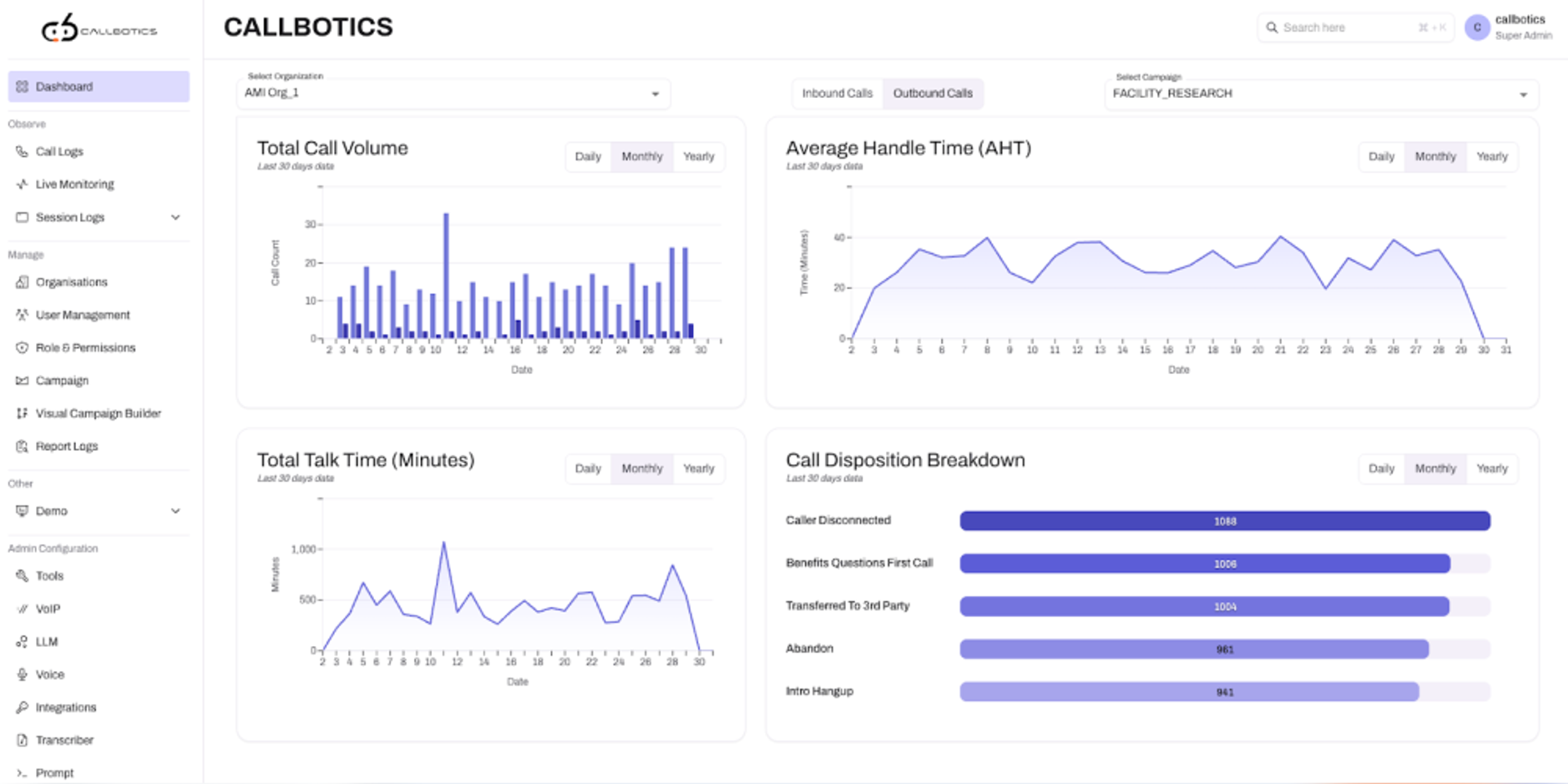
Caption: This dashboard provides operational visibility into automated conversations, including call volume trends, talk time metrics, and interaction outcomes across AI-powered voice workflows.
CallBotics is purpose-built for enterprise contact centers managing large volumes of inbound and outbound interactions across multiple customer communication channels.
Unlike many conversational AI platforms that focus primarily on chatbot experimentation or isolated voice assistants, CallBotics is designed for production environments where automation must reliably support real operational workloads.
The platform enables organizations to deploy AI voice agents capable of resolving customer requests, capturing information, updating backend systems, and executing workflows while maintaining context across channels such as voice, SMS, and chat.
This unified orchestration layer allows enterprises to automate customer interactions while preserving continuity across channels, improving both operational efficiency and customer experience.
Key strengths include:
Because the platform is designed for high-volume customer service environments, CallBotics is particularly well-suited for industries such as healthcare, insurance, retail, and financial services, where voice interactions remain a core support channel.
Organizations evaluating enterprise conversational AI systems can also explore our guide to the best conversational AI platforms for a broader comparison.
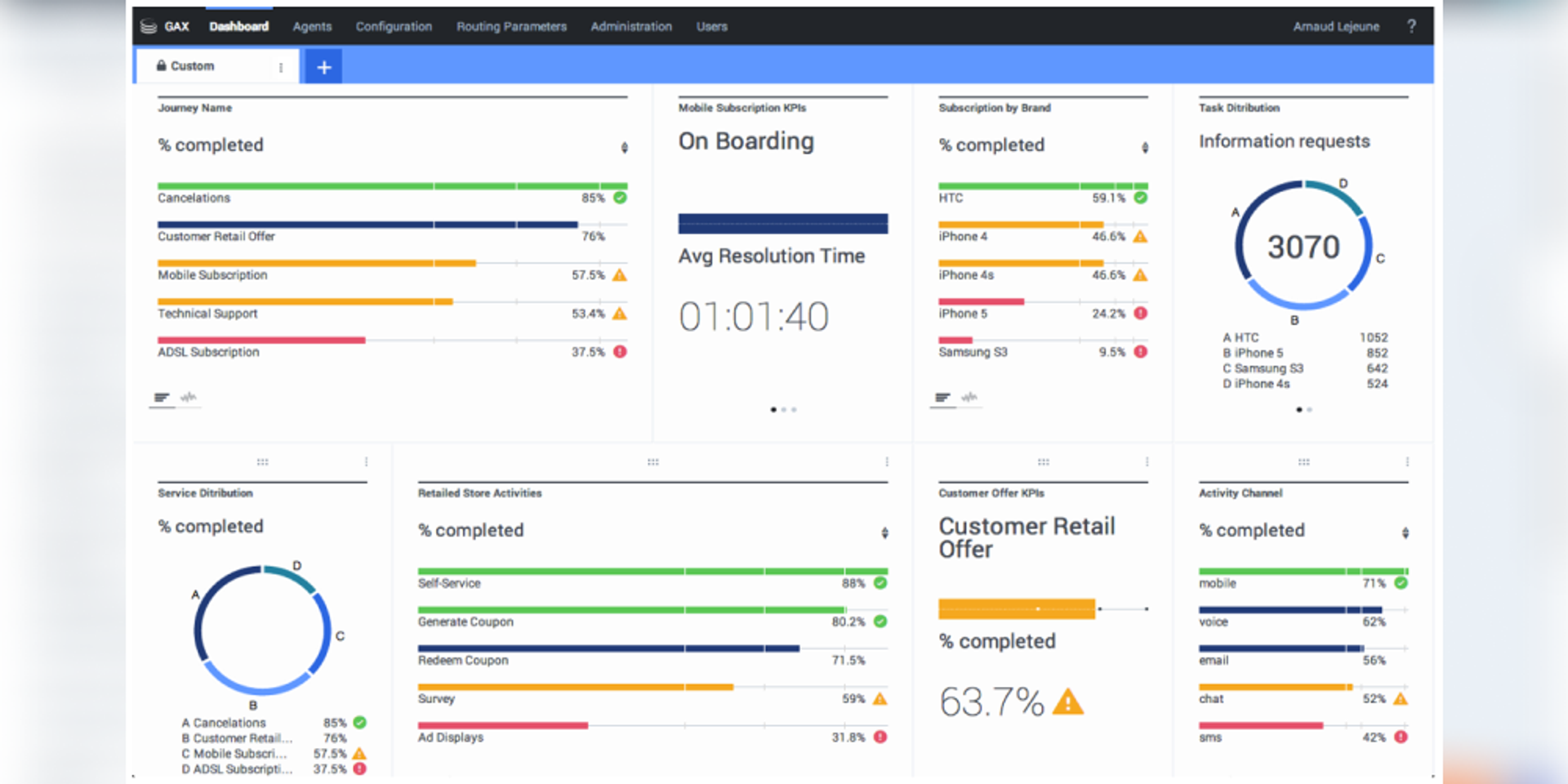
Caption: The Genesys interface displays contact center KPIs such as task completion rates, resolution times, and activity distribution across voice, chat, SMS, and email channels.
Genesys Cloud CX is one of the most widely deployed cloud contact center platforms globally.
The platform offers a comprehensive CCaaS infrastructure that combines telephony services, omnichannel routing, workforce management tools, and AI-powered automation capabilities.
Genesys has built a strong ecosystem around enterprise contact center operations, making it a common choice for organizations managing complex global customer support environments.
Key capabilities include:
Genesys is often selected by enterprises to replace legacy contact center systems or to consolidate multiple support platforms into a single cloud infrastructure.
However, implementing advanced conversational AI capabilities within the Genesys ecosystem may require additional configuration and integration work compared with platforms built specifically for AI automation.
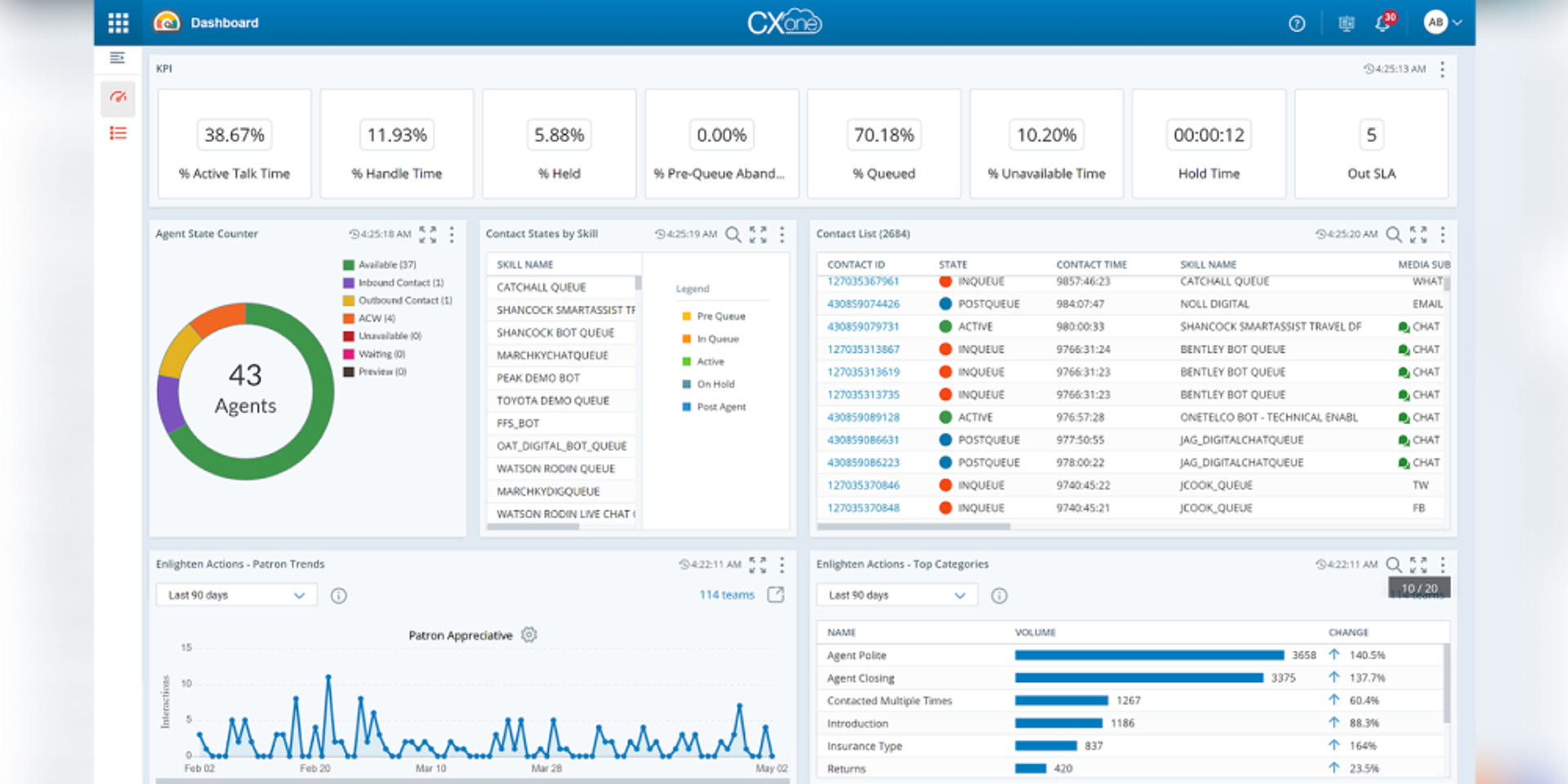
Caption: The CXone dashboard provides real-time insights into agent availability, call queues, service-level metrics, and operational performance across contact center environments.
NICE CXone is a comprehensive cloud contact center platform designed for organizations operating in heavily regulated industries.
The platform combines AI-driven customer interaction tools with workforce management, analytics, and quality assurance systems.
NICE also offers its Enlighten AI suite, which provides conversational AI features and predictive analytics designed to improve customer experience and operational performance.
Key strengths include:
Because of its strong governance and compliance capabilities, NICE CXone is widely used by organizations in financial services, healthcare, and insurance sectors.
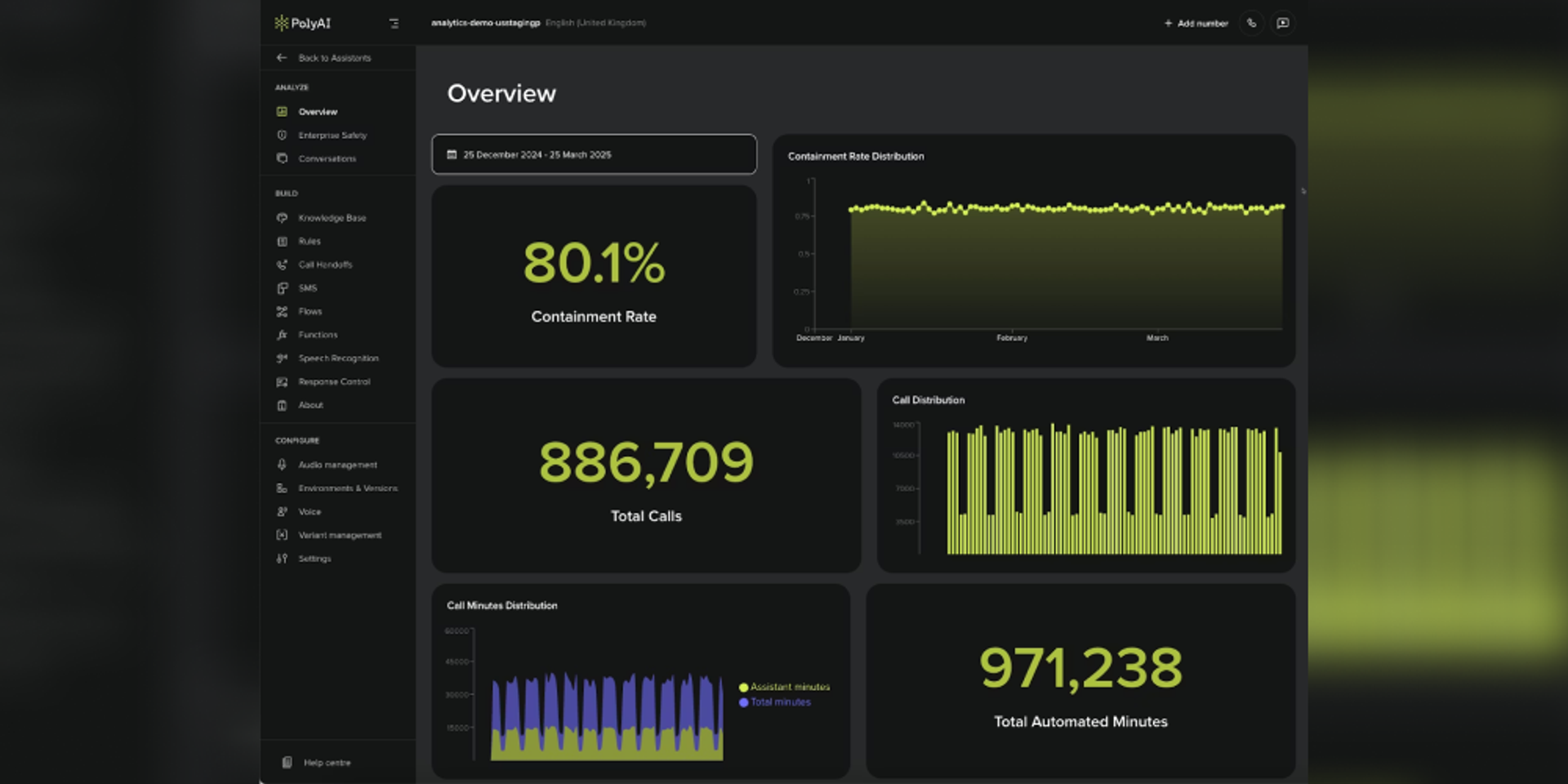
Caption: PolyAI’s analytics interface tracks AI voice assistant performance, including containment rates, automated call volume, and interaction distribution over time.
PolyAI focuses specifically on building conversational AI systems designed for high-quality voice interactions.
Unlike platforms that extend chatbot frameworks into voice channels, PolyAI takes a voice-first approach, emphasizing natural speech patterns, conversational flow, and long-form interactions.
The platform builds enterprise voice assistants capable of handling complex customer service conversations while maintaining a natural and human-like speaking style.
Key strengths include:
PolyAI is particularly popular among industries where phone-based customer service remains a primary interaction channel, including telecommunications, banking, and hospitality.
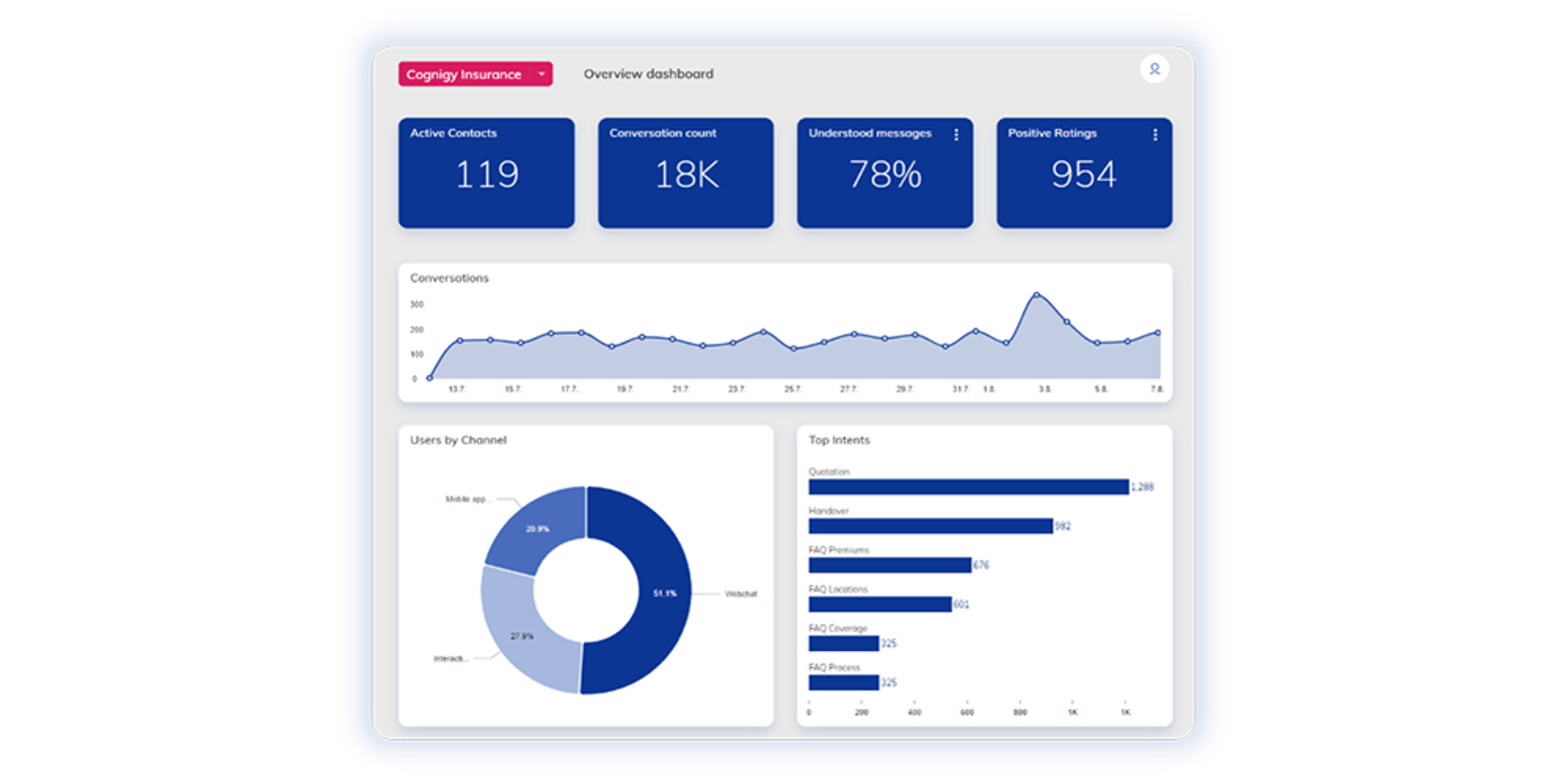
Caption: The Cognigy dashboard helps teams monitor conversational automation performance, including message understanding rates, conversation volume, and top user intents.
Cognigy is a conversational AI orchestration platform designed to support large-scale enterprise automation initiatives.
The platform provides low-code tools that allow organizations to design complex conversational workflows across voice and digital channels.
Cognigy’s architecture enables organizations to integrate conversational AI directly into operational systems, allowing automation to trigger backend actions such as updating CRM records or creating support tickets.
Key strengths include:
Cognigy is often chosen by enterprises with strong engineering teams capable of building and managing large conversational automation ecosystems.
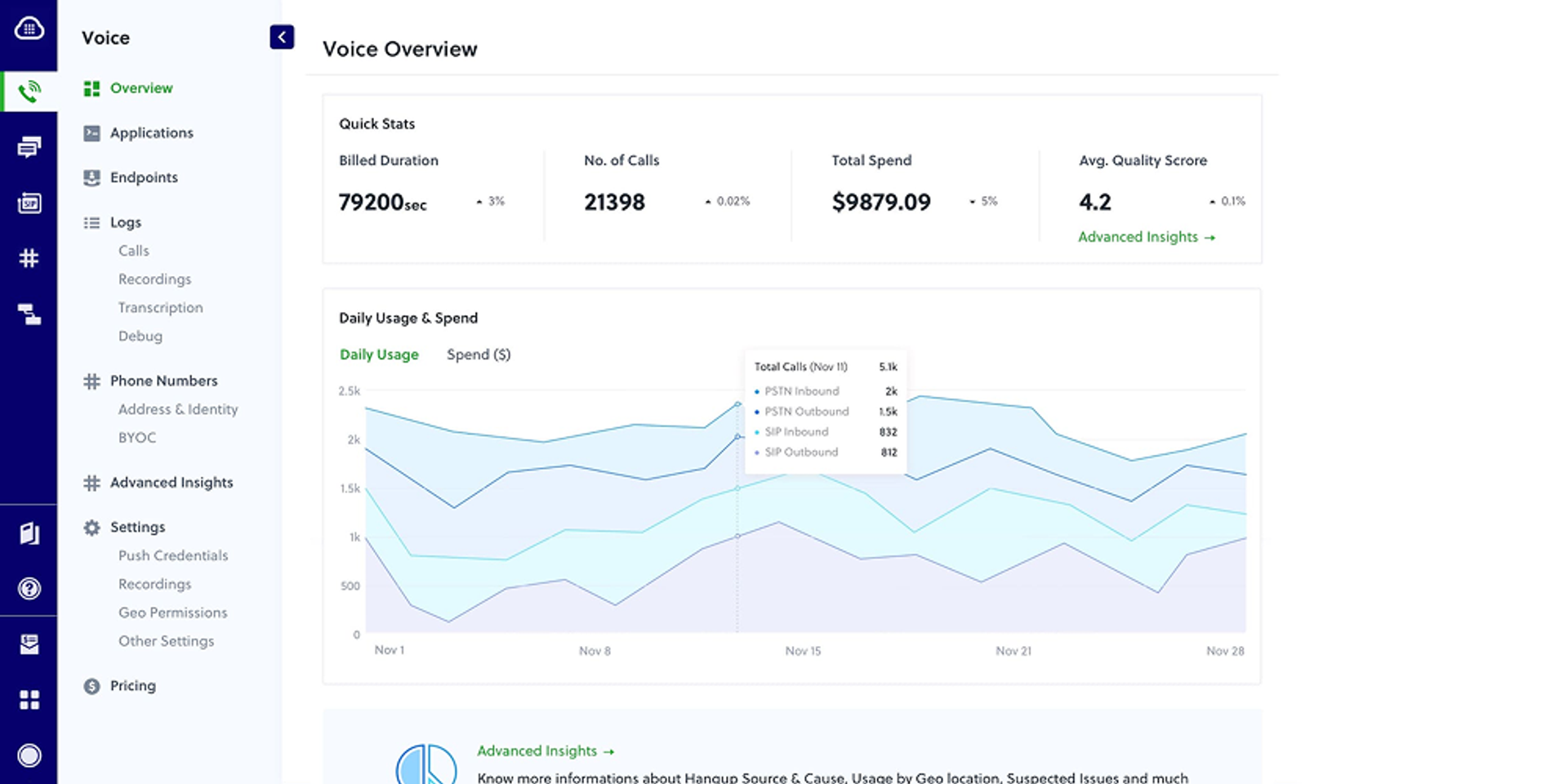
Caption: Plivo provides developer-focused insights into telephony usage, call volumes, billing duration, and voice infrastructure performance across communication channels.
Plivo provides programmable communication infrastructure supporting voice, SMS, messaging, and chat services.
Rather than offering a packaged conversational AI platform, Plivo focuses on providing the communication infrastructure required for developers to build custom customer interaction systems.
Its global carrier connectivity and flexible APIs allow organizations to design highly customized communication workflows.
Key strengths include:
Plivo is commonly used by engineering teams building communication systems for large-scale applications such as marketplaces, logistics platforms, and SaaS products.
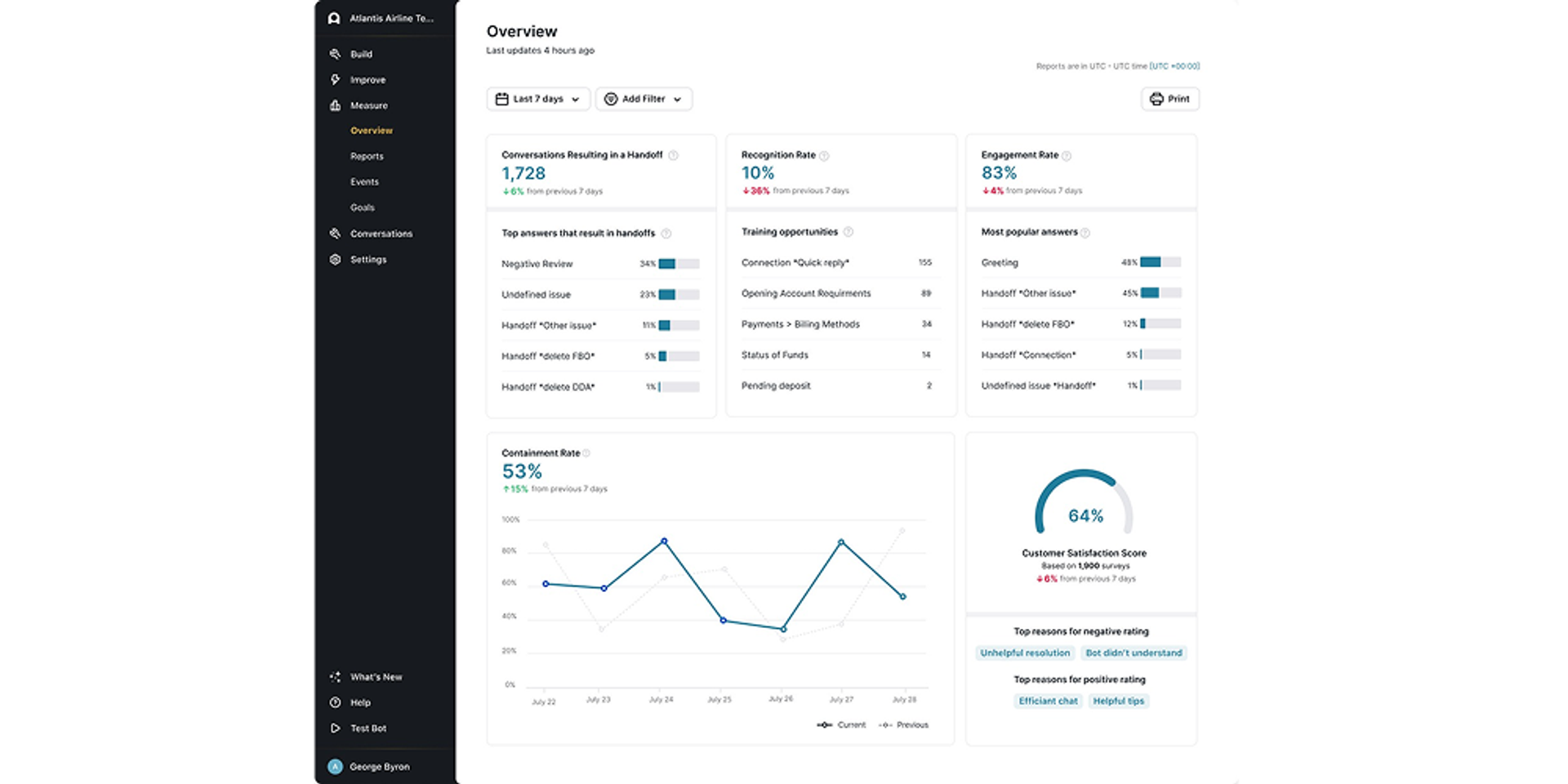
Caption: Ada’s analytics dashboard highlights automation performance across support channels, including containment rate, handoff frequency, and customer experience metrics.
Ada is an AI-powered automation platform focused on improving customer support across multiple communication channels.
The platform allows organizations to automate common customer inquiries and support workflows through conversational AI systems that operate across messaging and chat environments.
Ada’s approach centers on building a centralized automation layer that integrates with knowledge bases, helpdesk tools, and support workflows.
Key strengths include:
Ada is particularly popular among organizations seeking to standardize support automation across digital channels such as chat, messaging apps, and online support portals.
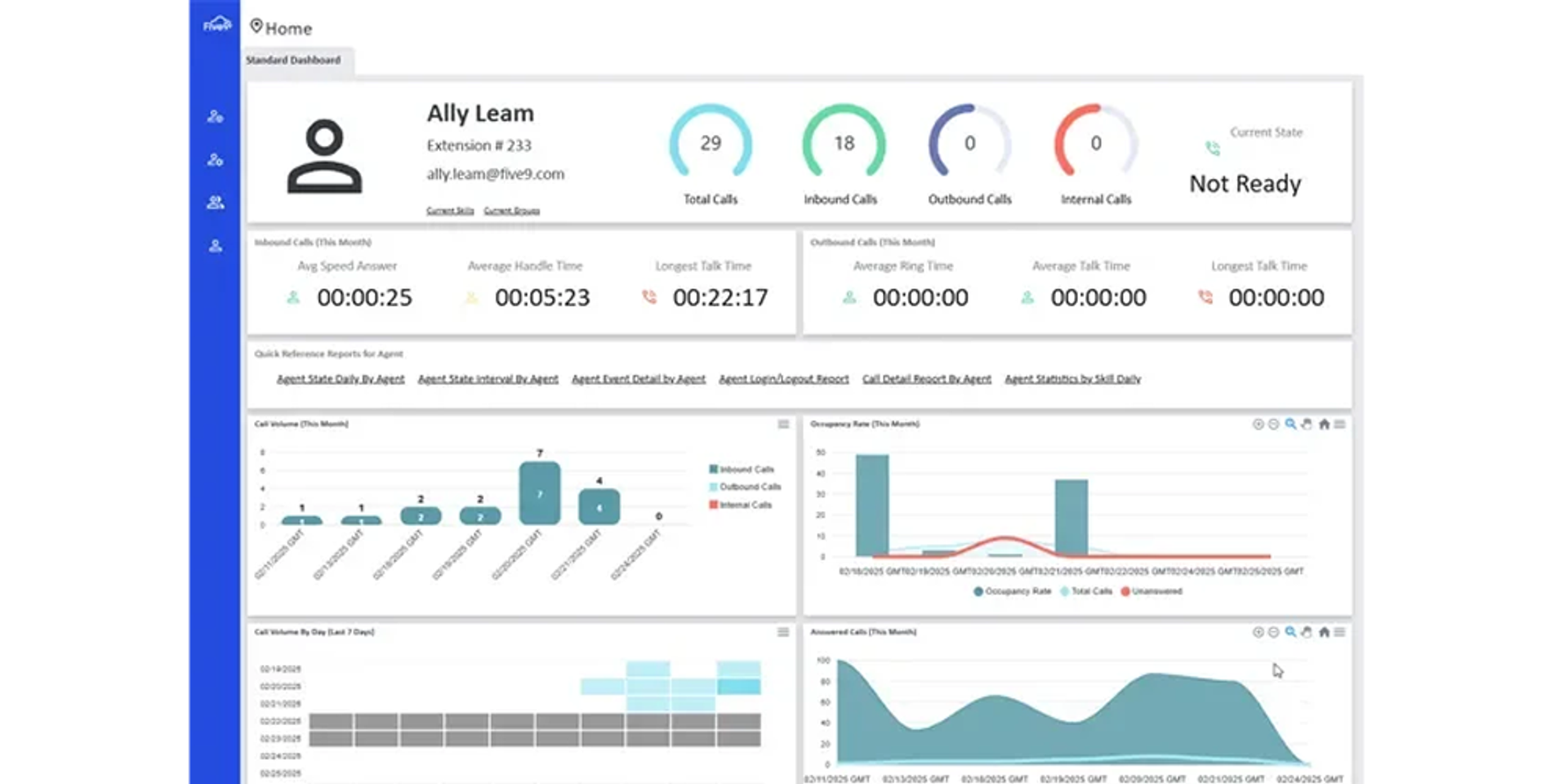
Caption: The Five9 interface displays key operational metrics such as total calls, average handle time, agent activity states, and interaction trends across support teams.
Five9 provides a cloud-based contact center platform designed to help organizations modernize legacy telephony infrastructure.
Many companies adopt Five9 as part of their transition from traditional IVR systems to cloud-based customer support environments with AI capabilities.
The platform combines telephony infrastructure with automation tools that support voice and digital customer interactions.
Key capabilities include:
Five9 is particularly useful for organizations introducing AI automation gradually while maintaining existing contact center infrastructure.
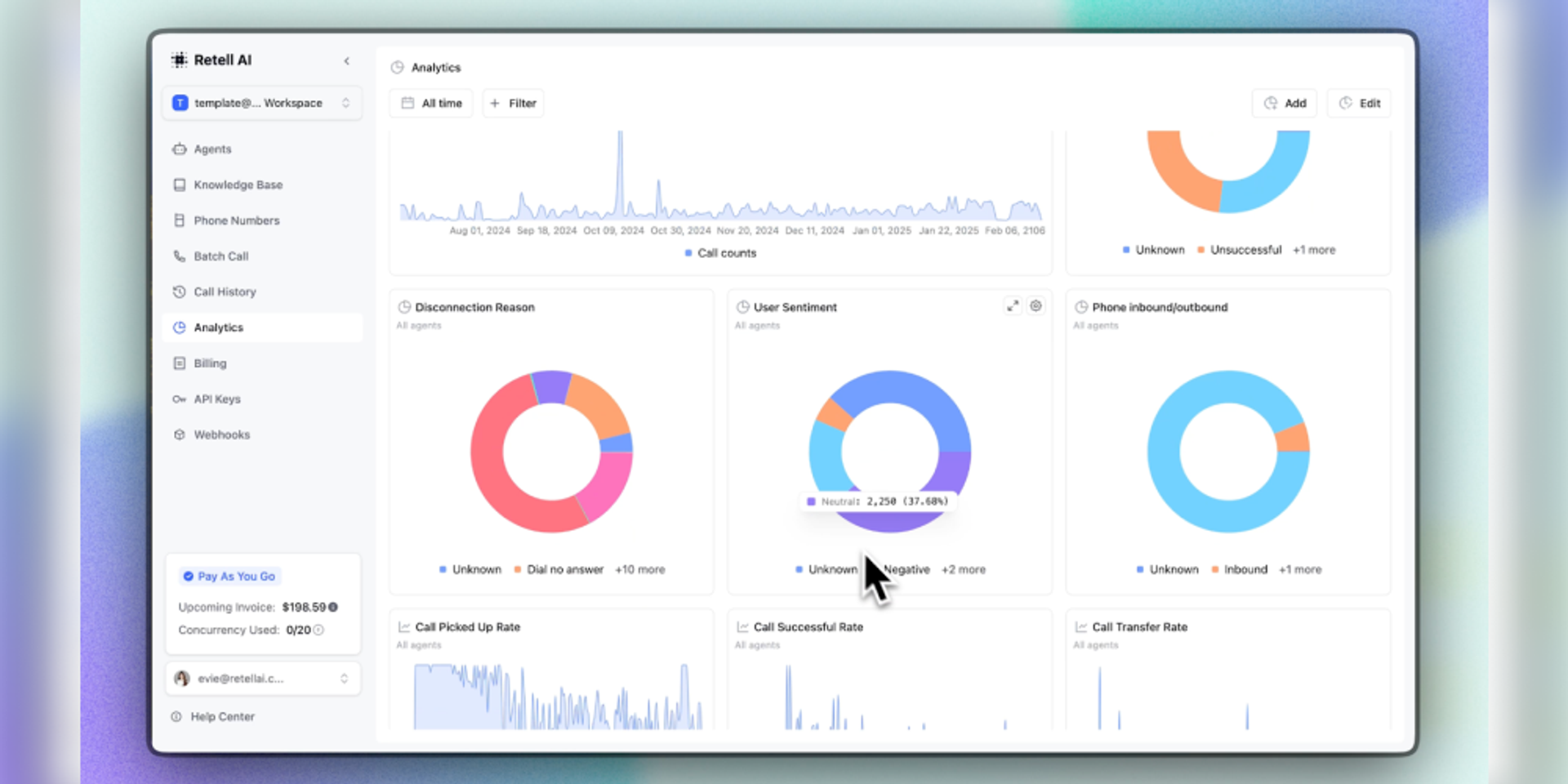
Caption: Retell AI provides visibility into automated voice interactions, including call success rates, sentiment signals, and inbound and outbound conversation activity.
Retell AI focuses on developer tools for building customizable voice AI systems.
The platform provides APIs and infrastructure that allow engineering teams to design highly flexible conversational automation solutions.
Retell emphasizes low-latency voice interactions and integration flexibility, making it appealing to companies building proprietary AI automation systems.
Key capabilities include:
Retell AI is best suited for organizations with strong internal engineering teams capable of building and maintaining custom conversational automation systems.
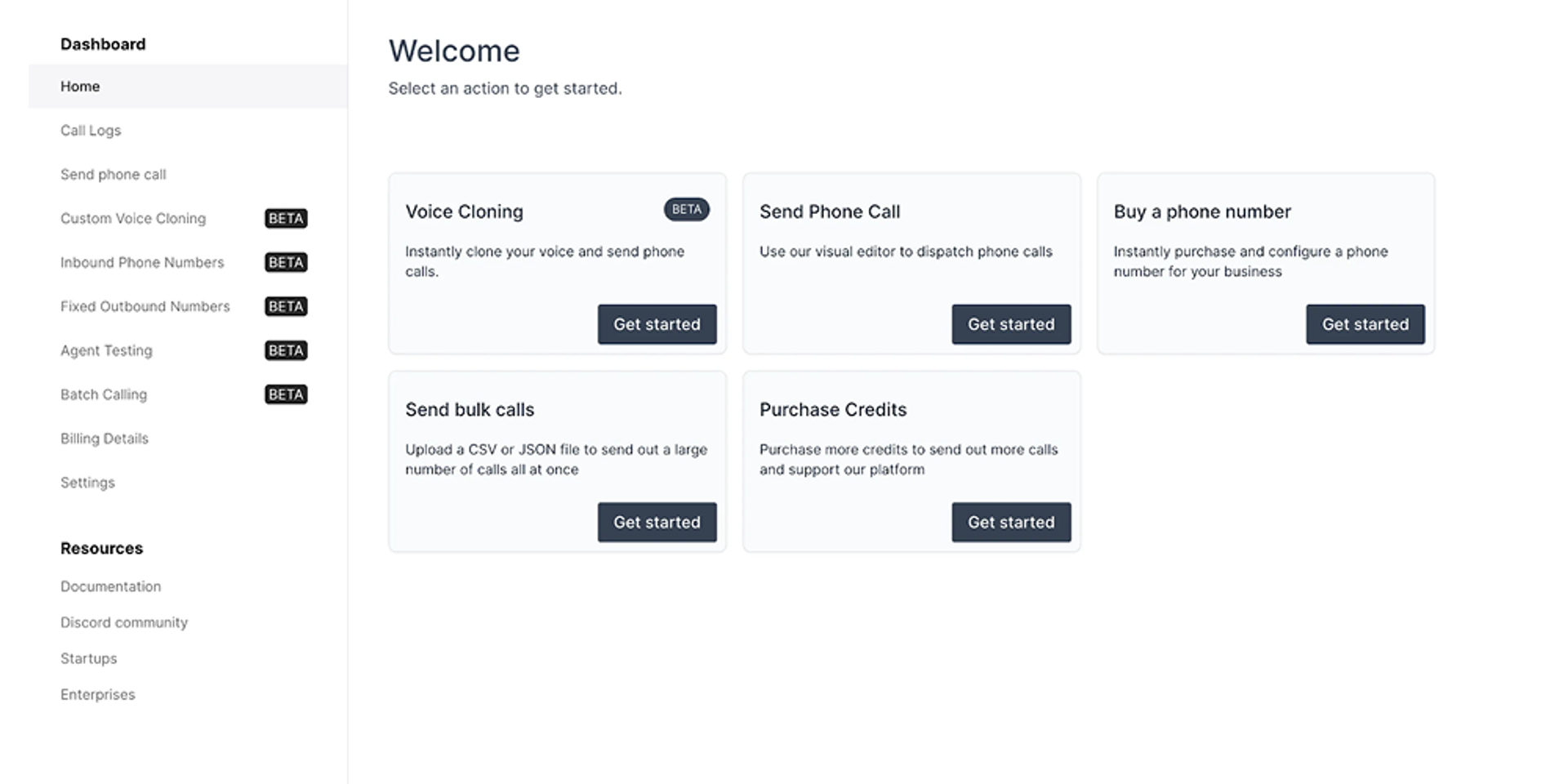
Caption: The Bland AI dashboard allows teams to manage automated calling workflows, configure voice agents, and deploy large-scale outbound call campaigns.
Bland AI is known for its ability to support extremely high volumes of automated phone calls across both inbound and outbound workflows.
The platform is designed for organizations that require large-scale call automation, such as customer outreach campaigns, appointment reminders, or automated notifications.
Bland AI emphasizes performance and scalability, enabling organizations to manage massive call concurrency levels.
Key strengths include:
Bland AI is commonly used by organizations running large automated outreach campaigns or operating customer engagement systems requiring high call concurrency.
Selecting the right platform requires understanding operational requirements rather than simply comparing feature lists.
Organizations should analyze their interaction volumes across voice, chat, messaging, and other channels before evaluating automation platforms.
A platform with three deeply integrated channels often performs better than one with many disconnected channels.
Different industries require different certifications.
Examples include:
Proof-of-concept deployments should run on real call recordings and realistic network conditions.
Beyond per-minute pricing, organizations should consider:
Enterprises often choose CallBotics because the platform is designed specifically for real-world contact center operations rather than experimental conversational AI deployments.
Many AI platforms demonstrate impressive conversational abilities in controlled demos but struggle when deployed in high-volume production environments. Contact centers operate under very different conditions. They require systems that can manage thousands of simultaneous interactions, integrate with operational infrastructure, and maintain consistent performance across multiple channels.
Built by teams with 17 years of contact center experience, CallBotics focuses on solving these operational challenges by providing an automation platform designed around the realities of enterprise customer service environments. Instead of treating voice automation as a standalone chatbot layer, the platform integrates AI agents directly into contact center workflows.
This approach allows organizations to automate repetitive interactions while maintaining full visibility into operational performance across voice, SMS, and chat channels.
Key differentiators include:
Because the platform is built for large-scale customer support operations, CallBotics is frequently deployed in environments where voice interactions remain a primary support channel and operational visibility is critical for managing performance.
Organizations evaluating conversational automation strategies may also explore broader industry guidance, such as:
Reviewing these resources alongside the CallBotics platform helps organizations evaluate which automation architecture best fits their contact center operations and long-term customer experience strategy.
Omnichannel voice AI platforms are becoming a critical component of modern enterprise customer service infrastructure.
Rather than relying on single-channel automation, organizations now require platforms that maintain context across multiple communication channels.
When evaluating solutions, enterprises should prioritize platforms that deliver:
Choosing the right platform ultimately depends on aligning AI capabilities with real customer interaction workflows.

Urza Dey (She/They) is a content/copywriter who has been working in the industry for over 5 years now. They have strategized content for multiple brands in marketing, B2B SaaS, HealthTech, EdTech, and more. They like reading, metal music, watching horror films, and talking about magical occult practices.
See how enterprises automate calls, reduce handle time, and improve CX with CallBotics.
CallBotics is an enterprise-ready conversational AI platform, built on 18+ years of contact center leadership experience and designed to deliver structured resolution, stronger customer experience, and measurable performance.