Lead generation in 2026 looks very different from even a few years ago. Buyers expect immediate responses, clear answers, and consistent follow-up across channels. At the same time, revenue teams are under pressure to improve conversion rates without adding headcount or operational complexity.
This shift has made AI Voice Agents for lead generation a core part of modern sales and contact center operations. These systems handle inbound and outbound calls in real time, qualify leads using structured logic, and pass only relevant conversations to human teams. The result is faster response, cleaner data, and more predictable pipeline performance.
As the category matures, the difference between experimental tools and production-ready platforms has become clear. Platforms designed around real contact center conditions, high call volumes, variable intent, and reliable escalation are setting the standard for how voice-led lead generation works at scale.
Traditional lead generation relied heavily on manual calling, delayed follow-ups, and fragmented data entry. Even strong sales teams struggled with response gaps during peak hours, after-hours inquiries, and volume spikes.
AI voice agents change this operating model.
Instead of waiting for a human callback, leads are contacted immediately. Conversations adapt in real time. Qualification happens during the first interaction. Outcomes are logged automatically, without manual updates or follow-up confusion.
For revenue teams, this means:
For buyers, it means faster answers, fewer transfers, and clearer next steps.
This is why AI voice agents are now positioned as frontline systems, not back-office automation.
This transition is reflected in Gartner’s latest projections, which estimate that 40% of enterprise applications will feature task-specific AI agents by 2026.
An AI voice agent for lead generation is a real-time conversational system that handles sales-related phone interactions from start to finish. It answers inbound calls or initiates outbound calls, understands intent, asks relevant follow-up questions, qualifies the lead using predefined logic, and records the outcome directly into business systems such as CRMs.
Unlike legacy IVR systems or scripted voice flows, modern AI voice agents:
In practice, they simulate the early stages of an SDR conversation while operating continuously and at scale.
CallBotics’ step‑by‑step guide to AI voice agent implementation explains how these AI agents handle natural conversations, adapt to context, and integrate directly into business workflows for reliable, real‑time resolution as compared to traditional systems.
At a functional level, AI voice agents rely on a small set of tightly integrated mechanisms. These mechanisms work together to handle the first live lead conversation without making sales teams wait for manual follow-up. The goal is not just to answer a call, but to understand intent, apply qualification rules, decide the right next step, and record the outcome immediately. When these parts work together properly, lead handling becomes faster, cleaner, and easier to scale across inbound and outbound workflows:
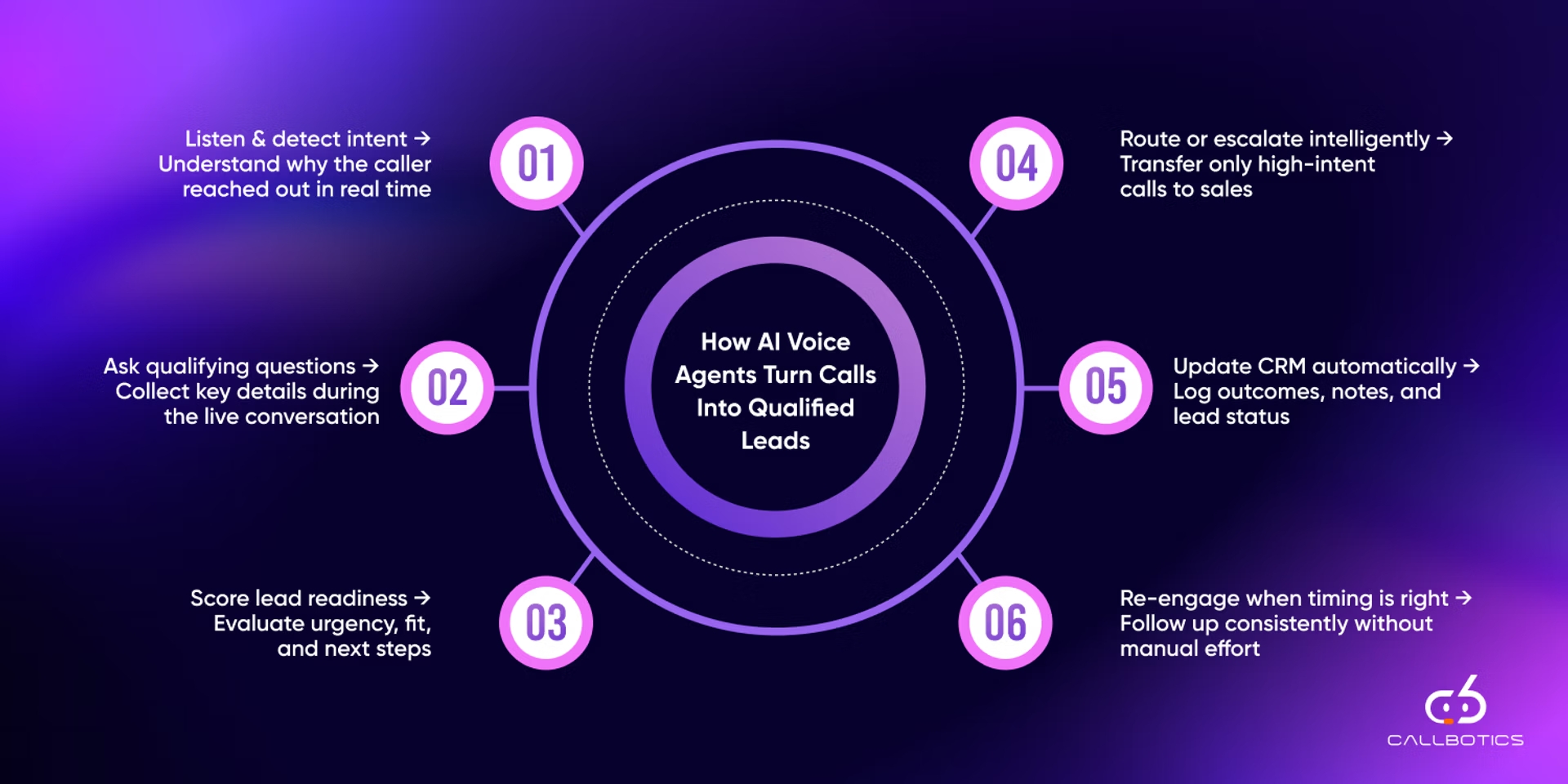
The agent listens in real time, converts speech to text, and identifies why the caller is reaching out or how they respond during outbound calls. This is the first step in understanding whether the conversation is about product interest, support confusion, pricing questions, rescheduling, or something else entirely. It also helps the system detect changes in direction when a caller starts with one request but reveals a different need during the call. Without accurate intent detection, everything that follows, including qualification, routing, and follow-up, becomes less reliable.
Based on business-defined criteria such as urgency, readiness, or service eligibility, the agent evaluates responses and assigns lead status. This allows teams to separate high-intent leads from low-fit or early-stage enquiries using the same criteria every time. Qualification can include budget, decision timeline, location, service need, account type, or any other field that matters to the business. Instead of leaving reps to sort through every conversation manually, the system decides who should be prioritized and why.
Qualified leads are routed to sales teams, scheduled for follow-up, or transferred live when appropriate. Low-intent calls are handled without creating noise for reps. This keeps strong leads moving quickly while preventing sales teams from being distracted by calls that are not ready for action. It also ensures that escalation happens for a reason, such as urgency, complexity, or a request that needs human judgment. The result is better handoffs, fewer unnecessary transfers, and clearer ownership of the next step.
Every interaction updates records automatically. Notes, outcomes, and next steps are logged automatically. This means lead status does not depend on whether someone remembered to update the CRM after the call. Teams get cleaner records, more reliable reporting, and better visibility into what happened on each interaction. It also reduces admin work for reps, which matters when lead volume is high and manual updates start creating delays or inconsistencies.
Leads that are not ready immediately can be re-engaged later using consistent conversation logic, keeping the funnel active without extra effort. This approach removes friction from the earliest stage of the sales cycle while preserving human judgment where it matters. Many leads do not convert on the first call, but that does not mean they should disappear from the funnel. Automated follow-up helps teams stay present without adding repetitive work, and it ensures that older leads are revisited with the same structure and context as the first interaction. That creates a more reliable pipeline over time instead of one driven by manual reminders and inconsistent outreach.
Explore how always-on voice agents can respond to every lead the moment they reach out. CallBotics.ai enables continuous coverage without added staffing overhead. For teams handling inbound enquiries, outbound follow-ups, or mixed lead flows, that means fewer missed opportunities and faster first contact. It also creates a more consistent lead handling process across peak hours, after-hours demand, and periods of sudden call volume. Instead of relying on delayed callbacks, teams can keep lead response active at all times.
In-line CTA: See how CallBotics helps sales teams qualify faster and keep CRM data clean.
One of the defining strengths of AI voice agents is their ability to adapt to different industries while maintaining consistent operational logic. What changes from industry to industry is not the underlying model, but the type of enquiry, the qualification criteria, and the next action that needs to happen after the conversation. In retail, that may mean turning promotion interest into a store visit or purchase, while in insurance it may mean collecting quote details and routing the lead correctly. Across all of these use cases, the value comes from the same outcome: faster response, better qualification, and fewer missed opportunities at the first point of contact.
AI voice agents help revenue teams move faster without sacrificing consistency. Instead of relying on delayed callbacks, manual note-taking, and uneven qualification, they create a more responsive and structured lead generation process. That means faster engagement, cleaner handoffs to sales, and better use of rep time across the funnel.
The platforms below represent different approaches to voice-led lead generation. Each has strengths depending on team size, industry, and operational complexity. Some are better suited to structured, high-volume lead handling, while others are stronger in analytics, personalization, customization, or multilingual coverage. The right choice depends on what your team actually needs the platform to do day to day, whether that is qualifying inbound calls, managing outbound follow-up, improving routing accuracy, or keeping lead data clean across systems.
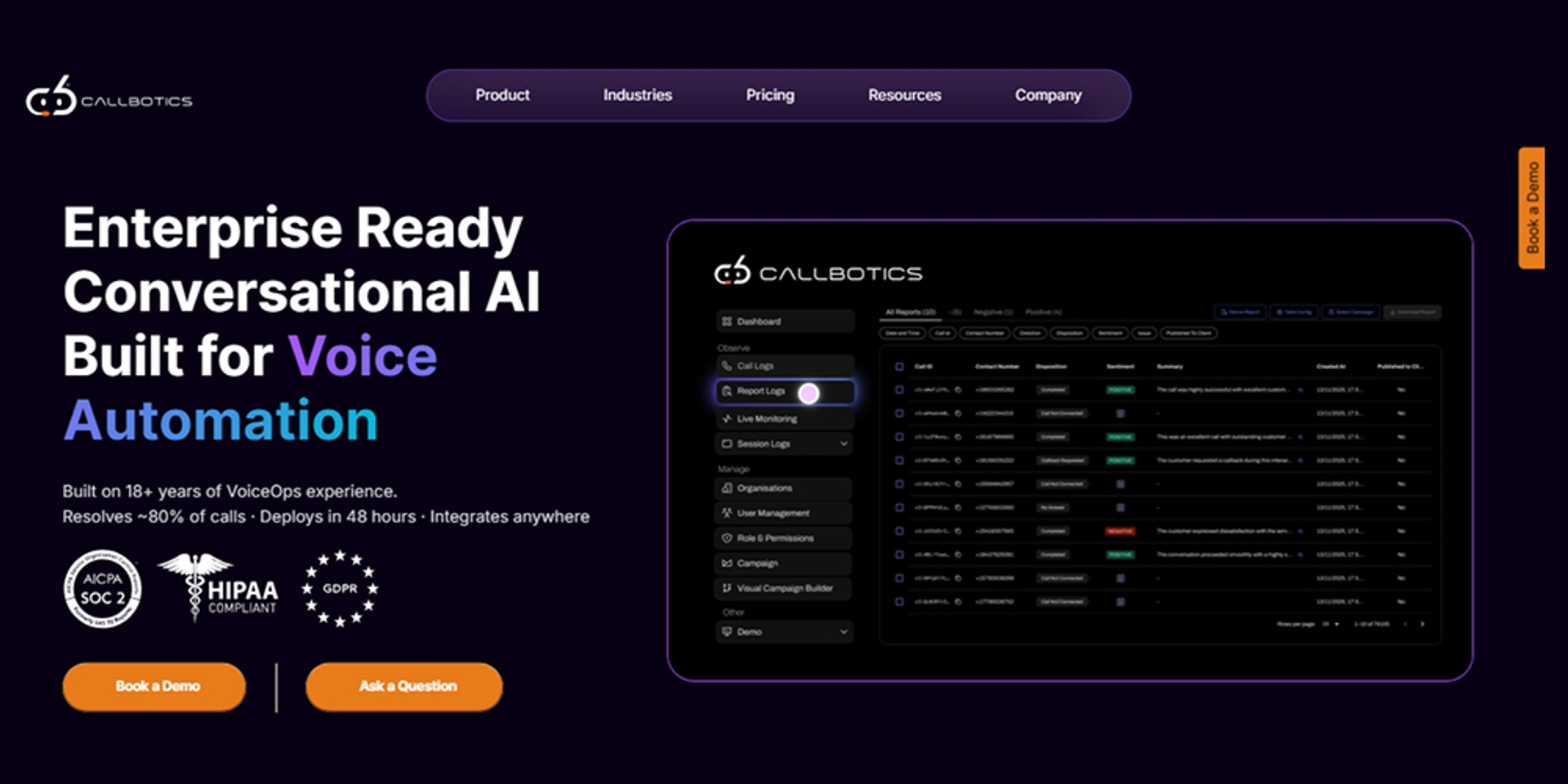
CallBotics approaches AI voice agents from an operational perspective. Built by teams with real contact center experience, the platform is designed for environments where lead volume, customer intent, and escalation needs can change quickly.
Rather than just answering calls or routing leads, CallBotics is built to manage structured lead conversations consistently. It captures intent, qualifies prospects based on predefined logic, handles clarifications naturally, and completes interactions with a clear outcome that sales teams can act on.
The platform is designed to go live in about 48 hours, helping teams move from planning to production without long rollout cycles. It also includes built-in visibility across conversations, giving operations and QA teams insight into lead outcomes, workflow performance, and areas for optimization.
For lead generation teams, this means cleaner handoffs, better CRM data, and more predictable funnel execution.
CallBotics is best suited for contact centers and enterprises that treat lead generation as an operational system rather than a series of disconnected touchpoints. It works particularly well for organizations managing call-heavy workflows where speed, consistency, and visibility directly impact conversion outcomes.
Teams that benefit most are those looking to:
In environments where lead generation must perform reliably under real-world conditions, CallBotics provides a stable and measurable foundation for AI-driven voice engagement.
CloudTalk makes sense for teams that want calling to fit neatly into the way they already sell and support customers. It is less about reinventing the whole process and more about making outreach easier to manage and easier to track. That can be useful for teams that want better day-to-day efficiency without changing how they already work.
For lead generation, CloudTalk feels like a practical choice for teams that live on the phone and want more structure around that activity. It helps keep calls visible, organized, and connected to the rest of the sales process. For companies that already have a clear outreach motion, that familiarity can be a real plus.
Teams that already rely on phone-based outreach and want more efficiency without changing their sales motion.
Observe.AI is stronger at helping teams understand conversations than at running the full lead process itself. Its value comes from showing what happened on calls, where conversations went well, and where things started to break down. That makes it useful for teams that want to improve results by learning from real interactions.
In lead generation, Observe.AI is often more helpful as a layer that improves performance over time. It gives teams a clearer view of common objections, stronger talk tracks, and patterns in qualification calls. For businesses focused on coaching and quality, that kind of insight can go a long way.
Teams that want stronger visibility into call performance, coaching, and quality trends.
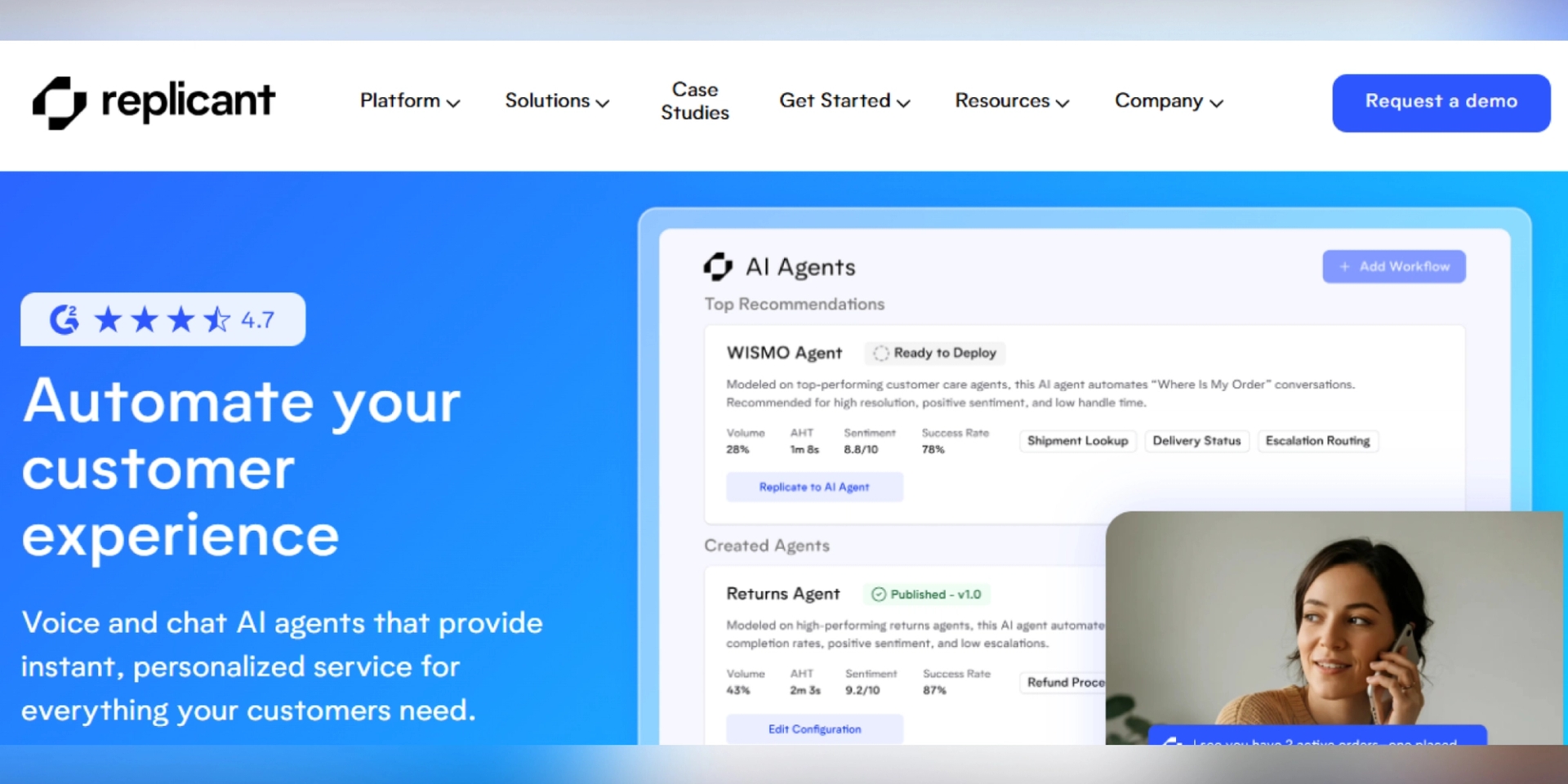
Replicant is a better fit for companies that deal with a lot of call volume and need things to stay steady when demand spikes. Its strength is in handling structured conversations in a reliable way, especially when human teams are already stretched. That makes it appealing for larger organizations that care about consistency as much as speed.
For lead-related work, Replicant works best when the conversation follows a fairly clear path. It helps teams keep routine follow-ups and inbound conversations moving without putting more pressure on staff. In that way, it is most useful for companies that want dependable volume handling more than a highly tailored sales experience.
Enterprises that need dependable automation for routine, high-volume lead and support conversations.
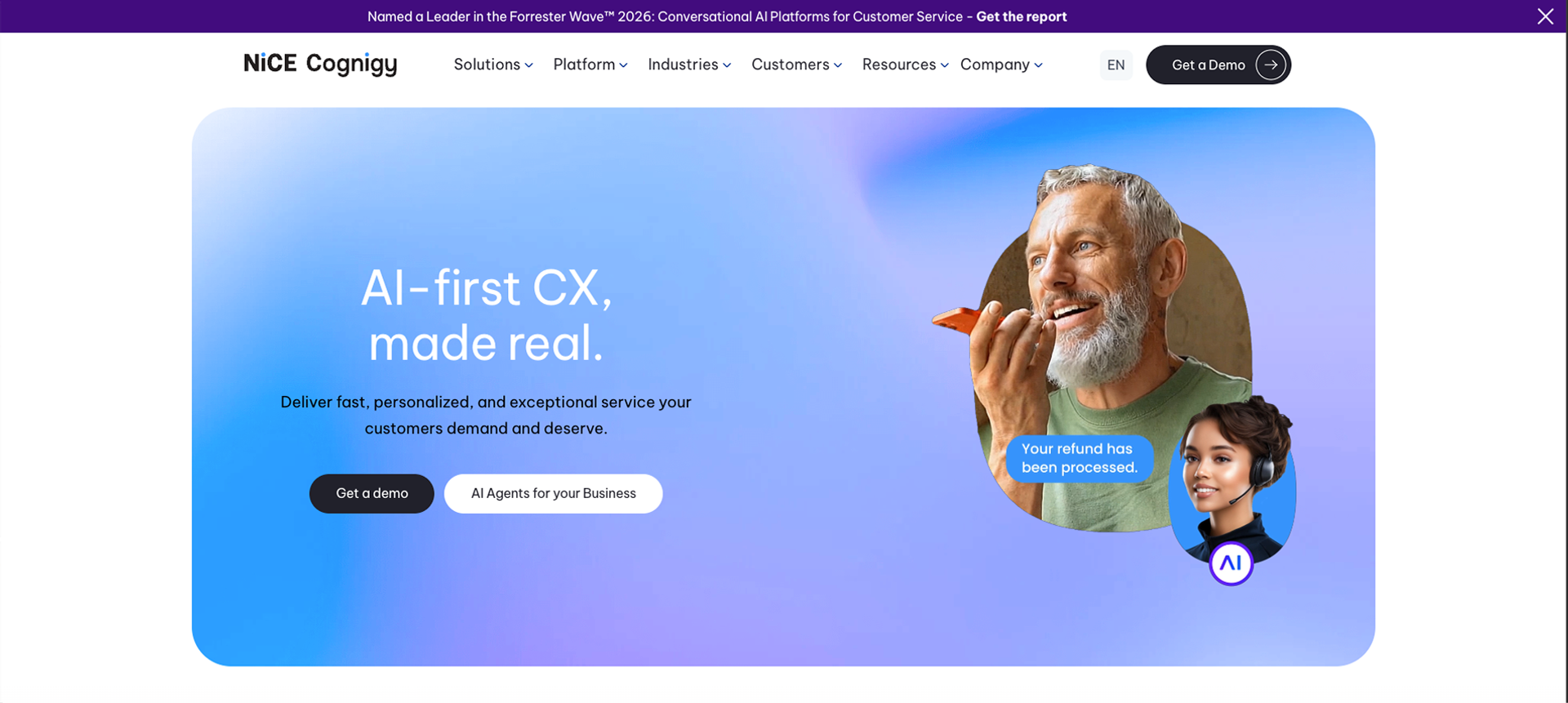
Cognigy.AI stands out because it gives teams a lot of room to shape conversations the way they want. It works well for companies that need more control and want to connect voice and digital interactions into a larger customer journey. That makes it a strong option for businesses with more complex needs across teams and systems.
For lead generation, Cognigy is a good match when a company wants to build around its own process instead of fitting into someone else’s setup. It gives teams more freedom in how they route, qualify, and follow up with leads. For organizations with the right internal support, that flexibility can be a big advantage.
Teams that need more control over conversation logic and have the resources to support customization.
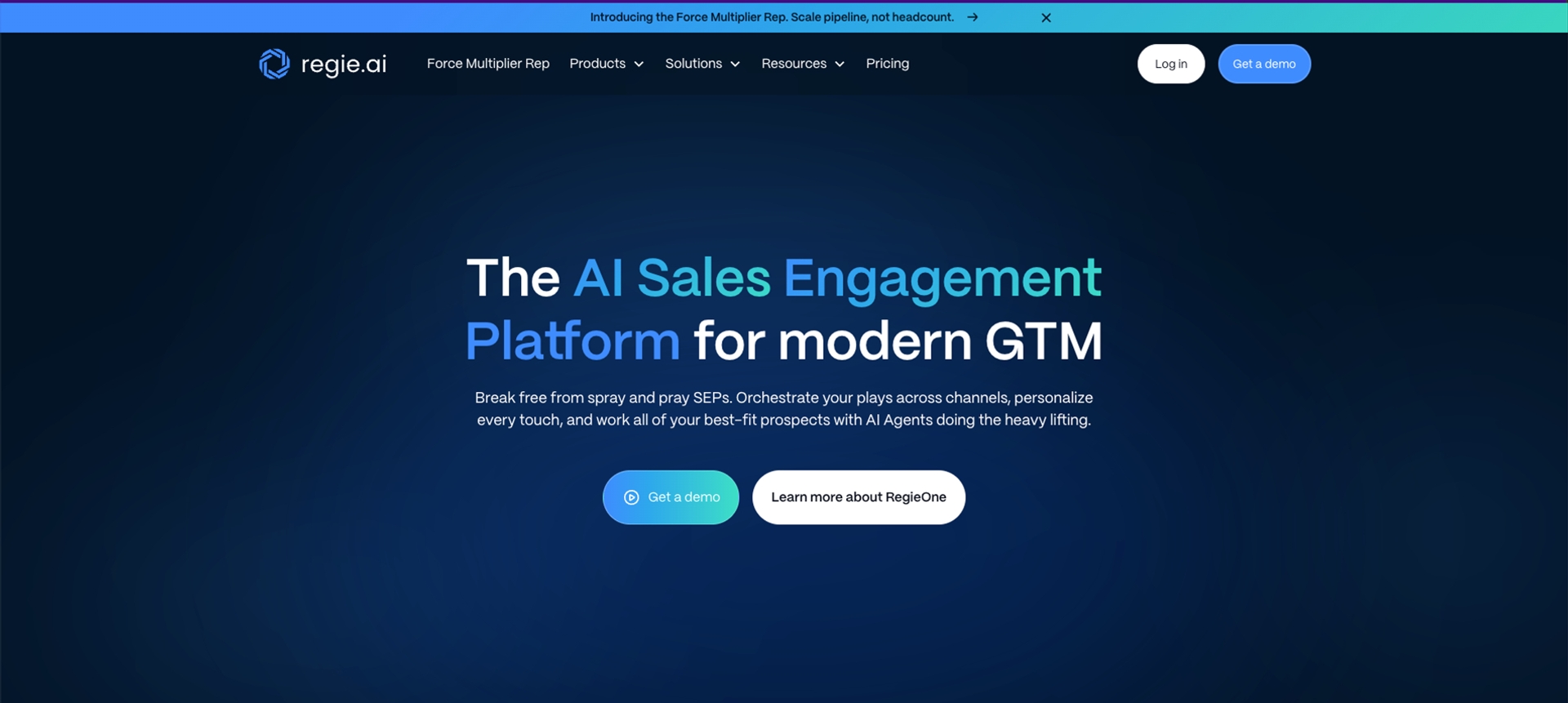
Regie.ai approaches the problem from a more sales-focused angle, especially by making outreach feel more personal. Its value lies less in handling large volumes of calls on its own and more in helping teams speak to the right people in the right way. That can matter a lot in B2B settings where context and timing really shape response rates.
In lead generation, Regie.ai is most useful for teams that care deeply about personalized outreach. It helps bring account context and buyer signals into the conversation so follow-ups feel more relevant. For sales organizations built around targeted engagement, it can make it a strong fit.
B2B sales teams that want lead outreach to feel more targeted and relevant.
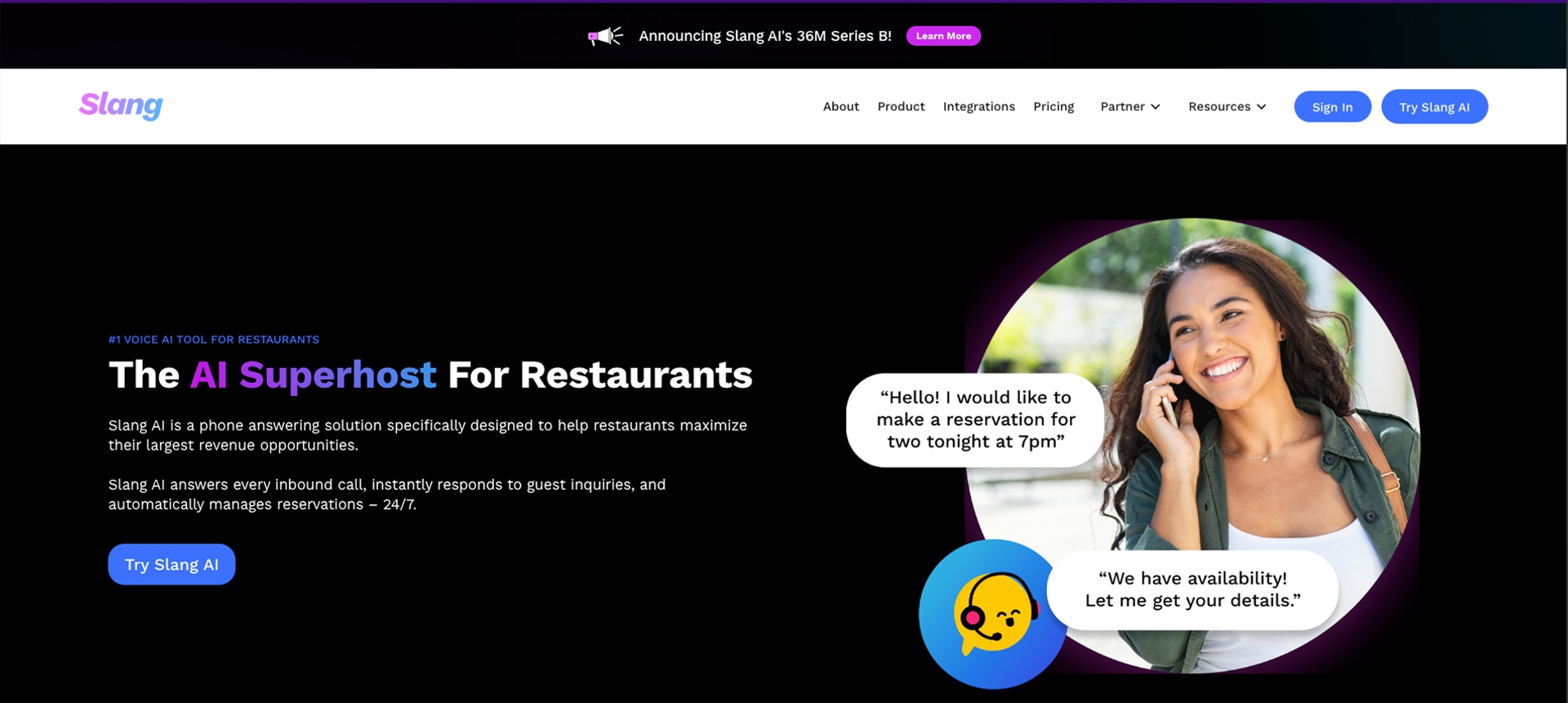
Slang.ai is a natural fit for businesses that get a steady stream of inbound phone calls and need to handle them well. Its strength is in helping answer common questions quickly and making sure people do not get stuck waiting or dropped along the way. That is especially useful in industries where fast response often decides whether interest turns into action.
For lead generation, Slang.ai works well when inbound demand is fairly predictable and needs to be handled consistently. It helps businesses capture interest without always needing more front-desk or support staff. For teams in hospitality, retail, or similar spaces, that kind of support can make a real difference.
Businesses with predictable inbound call patterns that want to qualify interest without adding staff.
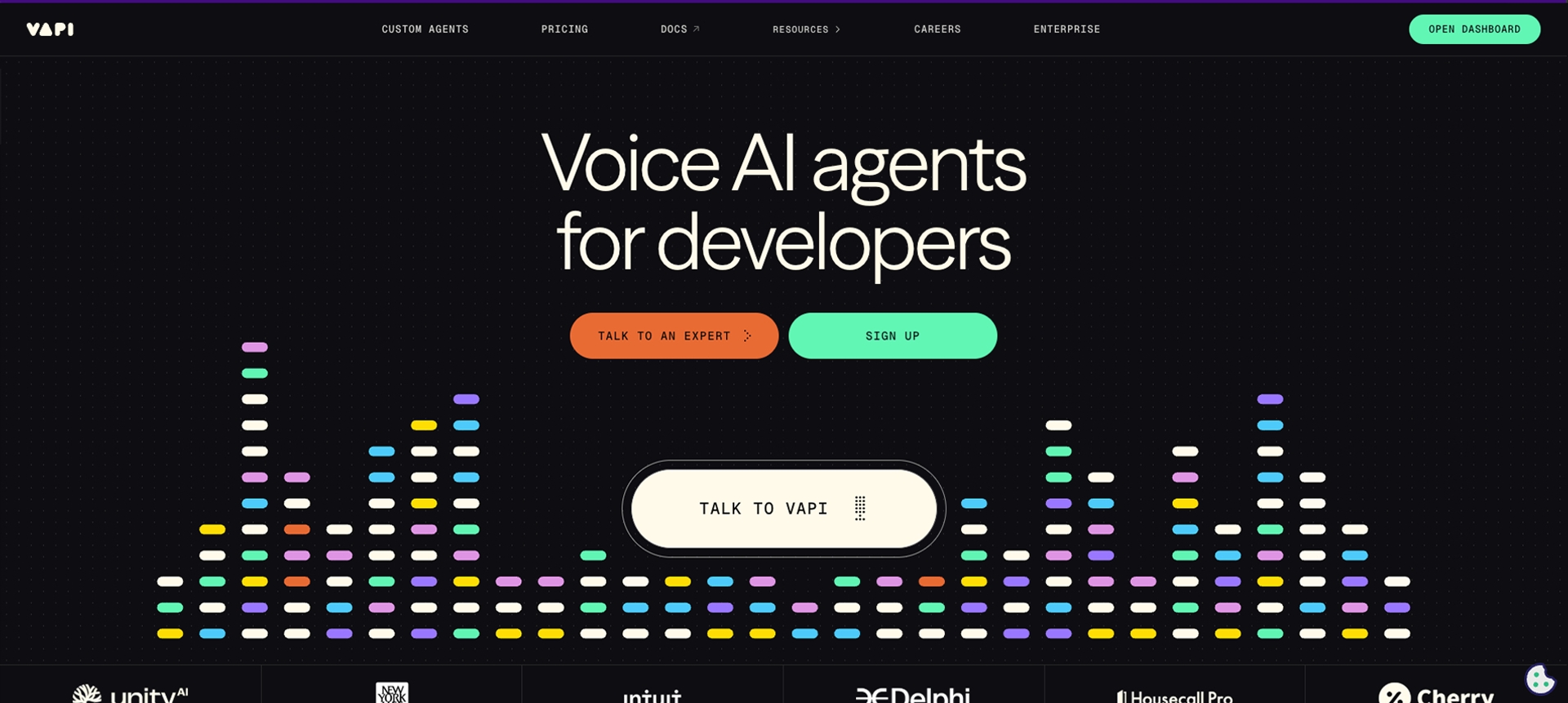
Vapi AI is more suited to teams that want to build things their own way from the ground up. Its appeal is in the freedom it gives, especially for companies that want voice conversations tied closely to their own systems and internal logic. That makes it a better fit for builder-led teams than for companies looking for something more ready-made.
In lead generation, Vapi AI is strongest when a business wants full control over how calls work and how information moves behind the scenes. It is less about simplicity and more about flexibility. For companies with strong technical teams, that freedom can be worth the extra effort.
Organizations with technical teams that want to build voice workflows their own way.
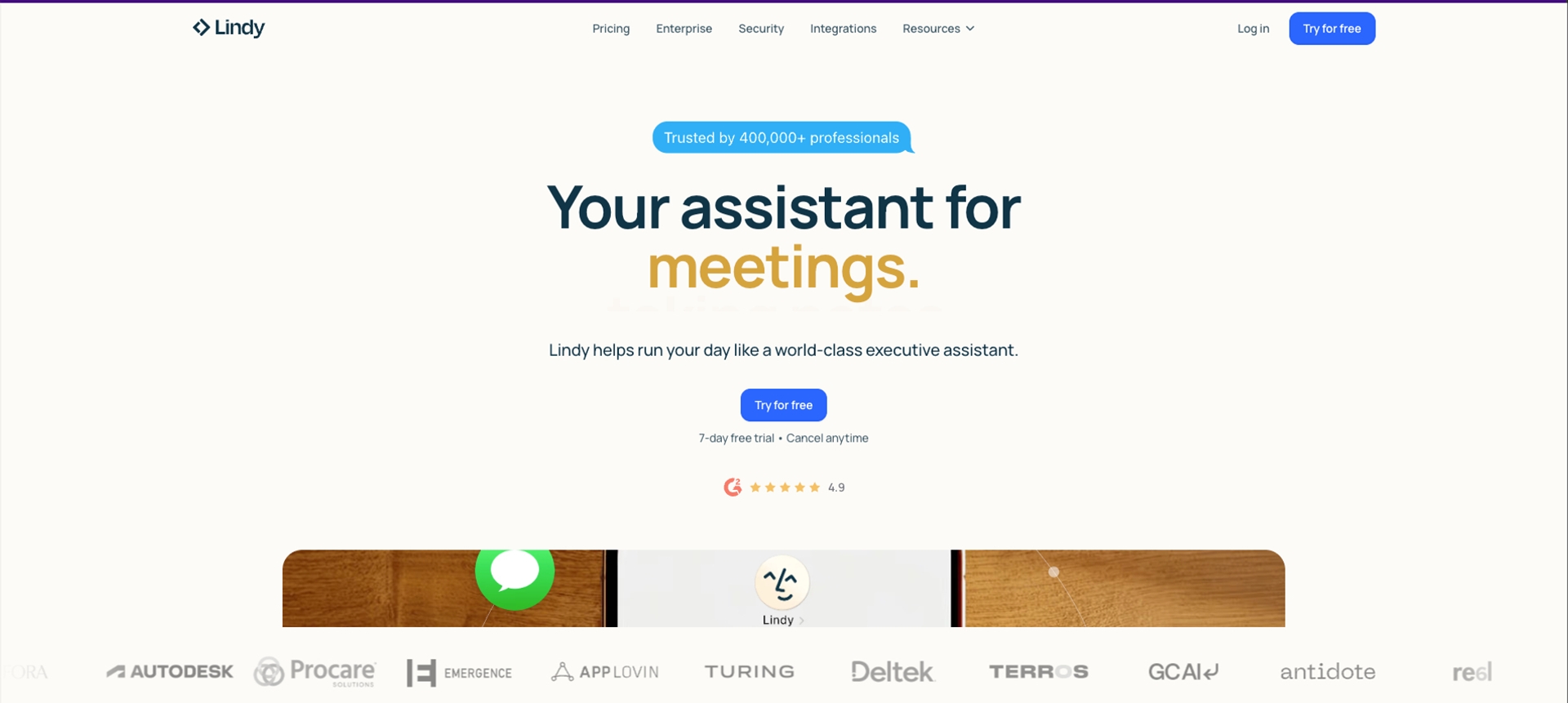
Lindy feels more approachable for teams that want to get started quickly without a complicated setup. It is better suited to businesses that want help with basic tasks like qualification, scheduling, and follow-up without needing a large rollout. That simplicity can be very attractive for smaller teams or teams testing new ways of working.
For lead generation, Lindy works best when the process is straightforward and the main goal is to save time. It gives teams a way to automate common steps without a lot of overhead. For growing businesses that want something easy to use, that can be a strong starting point.
Smaller teams that want an easy starting point for voice-led lead handling.
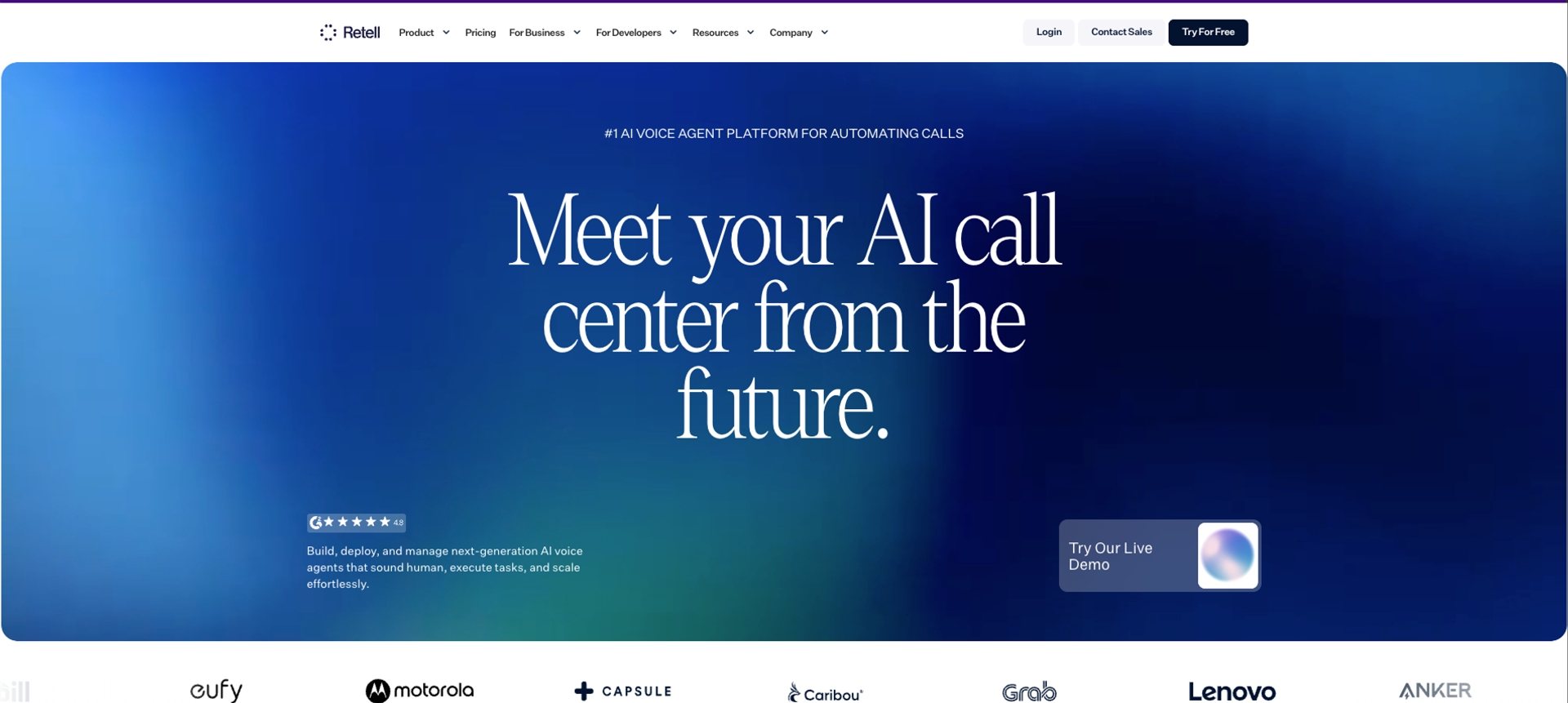
Retell AI stands out for teams that care a lot about smooth live conversations and serving people in different languages. Its strengths are easier to appreciate when calls need to feel responsive and natural across different markets. That makes it especially relevant for companies working across regions or serving a broad customer base.
For lead generation, Retell AI is a solid fit when both speed and language coverage matter. It supports teams that want consistent conversations, whether calls are coming in or going out. For global businesses, that balance can make it a very practical option.
Global teams that need fast, natural conversations across different regions and languages.
The table below highlights how leading platforms differ across core decision criteria that matter most for AI voice agents:
| Platform | Primary Strength | Deployment Speed | CRM Sync | Analytics Depth | Best Fit |
|---|---|---|---|---|---|
| CallBotics | End-to-end lead resolution | ~48 hours | Yes | Built-in, real time | Contact centers, call-heavy workflows |
| CloudTalk | Sales calling and outreach | Moderate | Yes | Basic | Sales teams with phone-first motion |
| Observe.AI | Conversation intelligence | Moderate | Indirect | Advanced | QA, analytics, coaching |
| Replicant | Enterprise-scale automation | Slower | Yes | Moderate | High-volume enterprises |
| Cognigy.AI | Workflow flexibility | Variable | Yes | Moderate | Custom conversational builds |
| Regie.ai | Personalized outbound sales | Fast | Yes | Limited | B2B outbound sales |
Selecting the right platform requires looking beyond demos and feature lists. The most effective evaluations focus on operational fit. Buyers should test whether the platform can handle the actual lead flow their teams deal with every day, not just a clean scripted scenario. That means checking how well it qualifies leads, manages interruptions, updates systems, and routes the conversation when the next step is not straightforward. A strong evaluation should also look at what happens under pressure, including peak volume, mixed lead quality, after-hours demand, and calls that need escalation or follow-up.
//Infographic//
Headline: How to Choose the Best AI Voice Agent for Lead Generation
//Reference//
Pilot testing with real lead traffic is often the most reliable way to assess these factors.
Explore CallBotics to see how voice agents can improve speed to lead across your funnel.CallBotics helps teams handle lead conversations without leaving response time, qualification, or follow-up to chance. It answers inbound calls or places outbound calls in real time, asks the right questions, captures what matters, and moves the conversation toward a clear next step. The result is faster lead response, cleaner handoffs, and a more reliable process for turning interest into pipeline.
Lead generation in 2026 rewards teams that respond first, qualify accurately, and operate without friction. AI Voice Agents for Lead Generation have become a core layer in achieving this consistency at scale.
The most effective platforms are built for real-world conditions, not ideal demos. They assume high call volumes, shifting intent, and the need for reliable escalation and visibility.
CallBotics was designed with these realities in mind. Built by operators with deep contact center experience, it resolves structured conversations end-to-end, goes live in about 48 hours, and makes every call measurable through built-in quality and analytics. For teams, this means predictable performance and lower operational complexity. For customers, it means faster answers and clearer resolution.

See how enterprises automate calls, reduce handle time, and improve CX with CallBotics.
CallBotics is an enterprise-ready conversational AI platform, built on 18+ years of contact center leadership experience and designed to deliver structured resolution, stronger customer experience, and measurable performance.