Customer experience is now the strongest differentiator for modern businesses. Customers expect fast, accurate, and consistent responses across phone calls, inbound calls, and outbound calls, regardless of volume or business hours. Meeting those expectations at scale is where AI voice assistants have become essential.
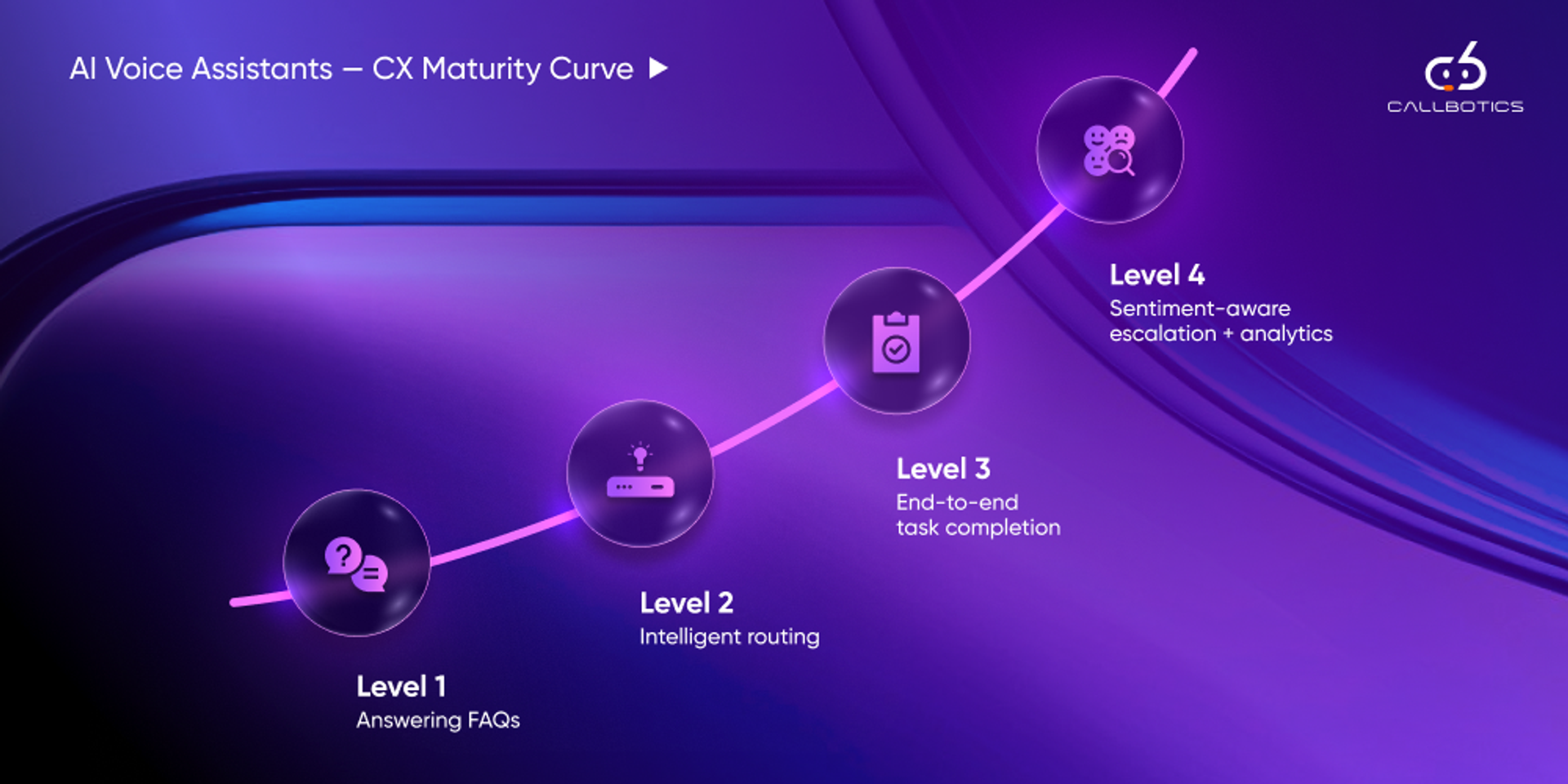
The best AI voice assistants for CX in 2026 do far more than answer FAQs. They manage real customer conversations, understand intent, and perform tasks such as customer authentication, order status updates, and lead qualification. By combining natural language processing, automatic speech recognition, and voice automation, these systems reduce wait times, handle high call volumes, and improve service quality without increasing operational costs.
When deployed correctly, AI-powered voice assistants help contact centers optimize customer interactions, support human agents, and deliver personalized support across the entire customer journey.
In this guide, we break down how modern AI voice assistants work, the key features that matter for CX, and which platforms are leading in 2026, including why CallBotics.ai is increasingly chosen for real-world enterprise operations.
AI voice assistants in 2026 are advanced voice AI systems designed to manage complete customer interactions, not just trigger voice commands or route calls. They combine speech recognition, natural language understanding, and voice technology to convert spoken language into actions across existing systems.
Unlike earlier voice bots or basic AI voice bots, modern AI voice agents can:
These capabilities allow AI phone agents to handle routine support calls, answer FAQs, and manage repetitive customer interactions. As a result, teams reduce missed calls, shorten wait times, and improve customer satisfaction while allowing traditional systems to focus on cases that require empathy or judgment.
In the next sections, we’ll explore the benefits, challenges, and top platforms shaping AI voice assistants in 2026, with a practical focus on customer experience and operational impact.
AI voice assistants improve customer experience when they make conversations faster, clearer, and more consistent. The best AI voice agents manage real customer interactions across inbound calls and outbound calls, even during high call volumes.
Key benefits include:
AI voice assistants handle routine tasks like answering FAQs, checking order status, or qualifying leads outside business hours. This reduces wait times, prevents missed calls, and maintains service quality during peak demand.
By integrating with customer relationship management systems and other existing systems, AI voice assistants access customer data to deliver personalized support without customers repeating themselves, improving customer satisfaction.
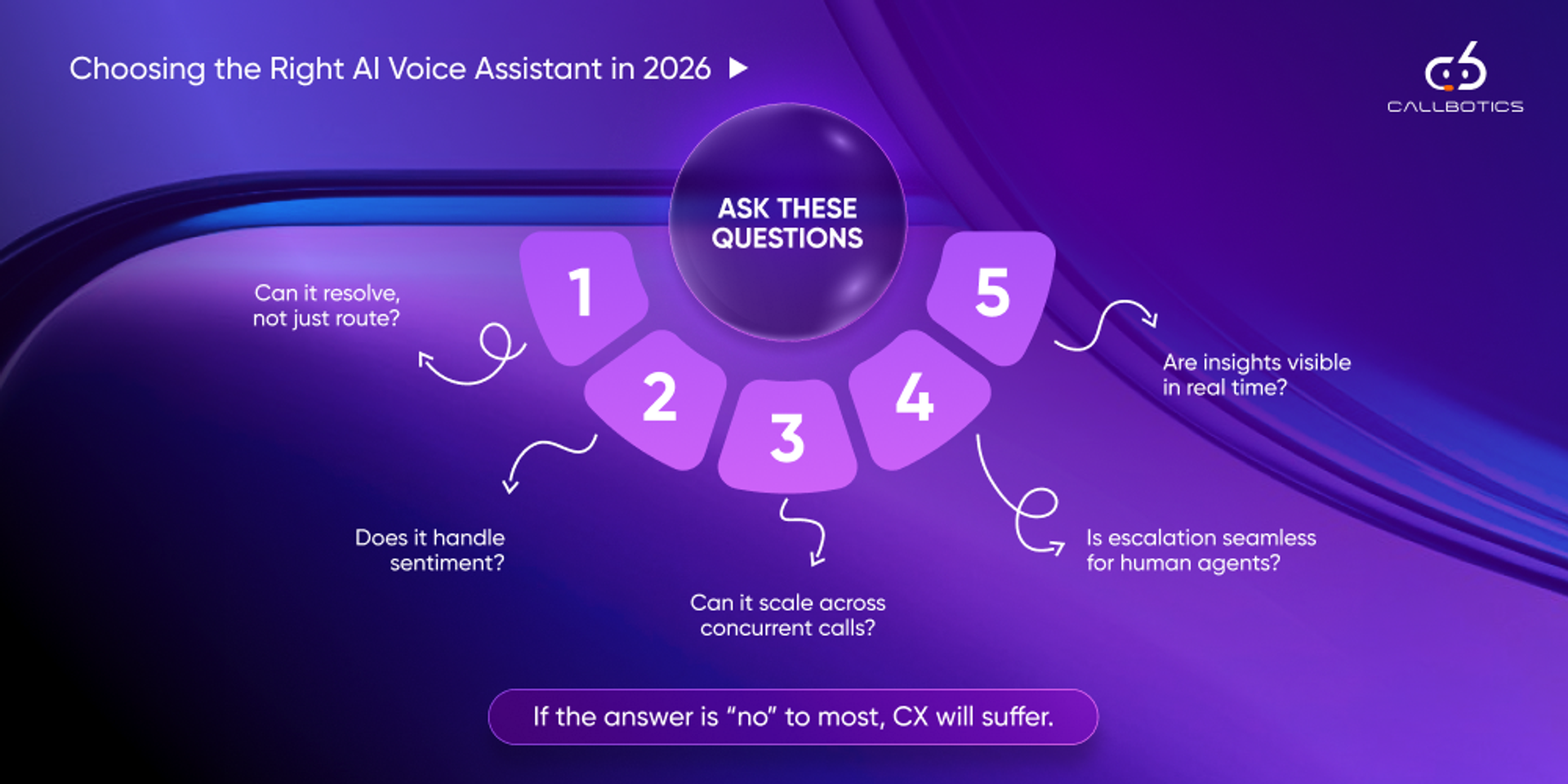
AI voice agents intelligently route calls and complete tasks end-to-end. When escalation is needed, context is preserved for human agents, ensuring consistent service across customer conversations.
Using natural language understanding and defined conversation flows, AI delivers accurate responses regardless of time or volume, improving trust and overall customer experience.
With real-time analytics, teams can understand customer intent, spot friction, and continuously optimize customer interactions instead of relying on delayed reports.
By automating predictable interactions and managing concurrent calls, AI-powered voice assistants reduce operational costs.
AI voice assistants can fall short when not designed for real-world conditions.
Common challenges include:
These challenges affect customer satisfaction, agent workload, and scalability. Platforms that succeed in 2026 balance voice automation, intelligent escalation, and strong analytics to support real customer conversations.
AI voice assistants differ most in how well they perform under real contact center conditions. Some focus on conversational polish or developer flexibility. Fewer are designed to resolve customer conversations end-to-end at scale.
Below is a practical CX-oriented view of the leading platforms in 2026:
CallBotics.ai is built specifically for production contact center environments. Instead of positioning AI as a layer on top of calls, it embeds AI directly into call flows, handling structured interactions end to end and escalating only when judgment is required.
CallBotics.ai focuses on outcomes customers feel: shorter wait times, fewer handoffs, and clear resolution. Calls do not stall halfway through automation. Either the AI completes the task or escalates with full context.
PolyAI is known for producing very natural-sounding conversations. It excels in customer-facing environments where voice quality and conversational flow are a top priority.
Cognigy is an enterprise-grade automation platform with strong orchestration capabilities across channels.
Dialogflow remains a popular choice for teams already embedded in the Google ecosystem.
Talkdesk AI works best for organizations already using the Talkdesk contact center platform.
Vonage AI focuses on programmable communication and voice automation.
VoiceSpin is commonly used by sales and outbound-focused teams.
Lindy is positioned as a productivity assistant rather than a full contact center solution.
Synthflow targets teams that want quick deployment using no-code tools.
VAPI is a developer-first platform built for teams who want full control.
| Platform | Best For | CX Depth | Setup Effort |
|---|---|---|---|
| CallBotics.ai | Contact centers, Enterprise organizations. | High | Low |
| PolyAI | Voice realism | High | Medium–High |
| Cognigy | Enterprise orchestration | Medium | High |
| Dialogflow | Enterprise orchestration | Medium | High |
| Talkdesk AI | Talkdesk users | Medium | Medium |
| Vonage AI | Programmable voice | Medium | High |
| VoiceSpin | Outbound sales | Low–Medium | Medium |
| Lindy | Productivity | Low | Low |
| Synthflow | Simple pilots | Medium | Low |
| VAPI | Developers | Medium | High |
Most AI voice assistants promise automation. CallBotics.ai focuses on outcomes.
What sets CallBotics.ai apart is that it was designed around real contact center conditions, not ideal scenarios. It assumes high call volumes, shifting customer intent, peak traffic, and the need for reliable escalation to human agents.
CallBotics.ai stands out because it:
For customers, this means fewer transfers, shorter wait times, and clearer resolution. For teams, it means predictable performance, faster deployment, and lower operational complexity.
CallBotics.ai strengthens how teams operate by removing friction from routine interactions and preserving human judgment where it matters most.

See how enterprises automate calls, reduce handle time, and improve CX with CallBotics.
CallBotics is an enterprise-ready conversational AI platform, built on 18+ years of contact center leadership experience and designed to deliver structured resolution, stronger customer experience, and measurable performance.