If you’re looking to automate inbound and outbound calls using AI voice agents, it’s no surprise that Bland AI is already on your shortlist.
But it’s also not surprising that you’ve landed here to explore alternatives. As AI voice agents move from pilots to everyday operations, many teams want to monitor how pricing scales, the setup effort, and whether the platform fits real call workflows without heavy engineering.
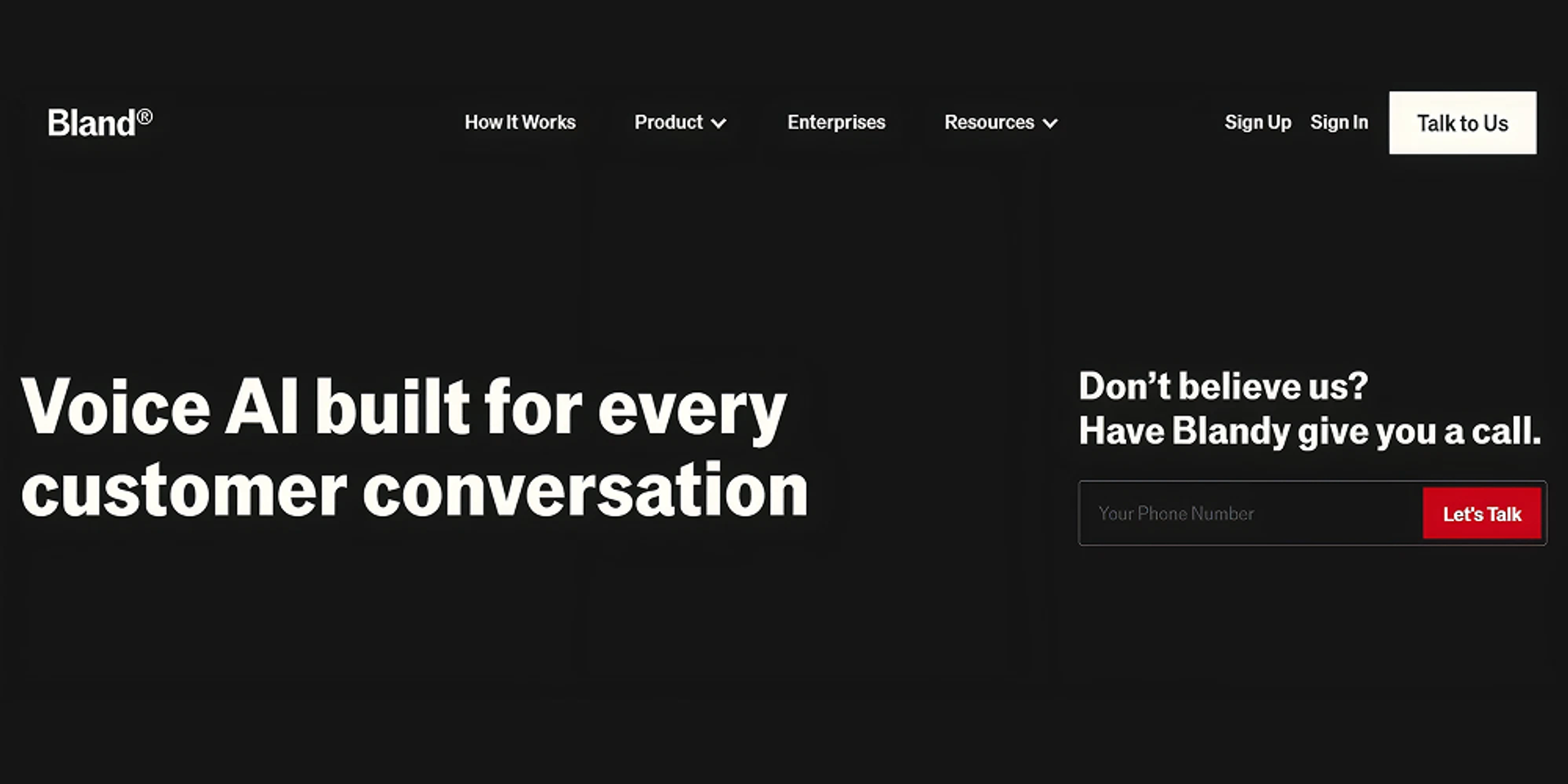
Caption: Bland AI offers robust voice AI built for every customer conversation
Bland AI is enterprise-oriented and relies on conversational pathways to design and deploy AI agents. According to one of Bland AI’s product pages, teams can “work with a dedicated solutions engineer who can build you a live agent in weeks.” This may suit certain use cases, but several alternatives offer a better fit, including faster deployment (in days, not weeks), pricing transparency, deeper workflow support, and readiness for both SMB and enterprise customers.
Below, we review the best Bland AI alternatives in 2026, comparing features, pricing models, and overall fit so you can make an informed choice.
Teams compare Bland AI competitors primarily to answer these practical questions:
In practice, these questions usually point back to three underlying challenges.
Usage-based platforms can be hard to forecast when call volume grows. When pricing is tied to minutes, tiers, or add-ons, many teams struggle to model true cost per call as automation increases.
Example: What would holiday season support pricing look like?
Some platforms offer strong conversational control, but real outcomes depend on whether the agent can complete end-to-end workflows. That includes authentication, backend lookups, updates, exception handling, and clean handoffs when a human is required.
Example: Can the AI only answer questions, or can you actually customize it to process refunds and returns in your backend?
Many voice AI tools are built either for enterprise programs with long rollout cycles or for developer teams prototyping quickly. Most teams often need a middle ground: fast deployment, predictable pricing, and enough workflow depth to replace repetitive calls in production.
Also Read: Bland AI Pricing: Plans, Usage Rates & How It Compares to CallBotics
The table below shows how leading Bland AI competitors differ across evaluation criteria.
| Platform | Pricing behavior | Setup requirement | Takeaway |
|---|---|---|---|
| CallBotics | Predictable usage-based tiers | Low to moderate | Built for ongoing SMB operations with clear cost control. |
| Retell AI | Usage-based with modular costs | High (engineering-led) | Works best when teams can build and maintain custom logic. |
| Synthflow | Tiered plans | Low | Faster setup, but depth depends on plan limits. |
| PolyAI | Custom enterprise pricing | High | Designed for large contact centers, not SMB environments. |
| Sierra | Custom enterprise pricing | High | Best for enterprise CX teams deploying AI automation across channels. |
| VAPI | Pay-as-you-go infra + model costs | High (engineering-led) | Suited for teams building voice systems from scratch. |
| Decagon | Custom enterprise pricing | High | Enterprises automating complex support with tool-using agents (including voice). |
Caption: Comparison of Bland AI alternatives based on pricing, setup difficulty, and best-fit scenario
Key takeaway: The right alternative depends less on the number of features and more on the level of control, cost predictability, and operational ownership your team wants.
Among the Bland AI alternatives, CallBotics, Retell AI, and Synthflow stand out for their distinct approaches to voice automation. CallBotics is designed for enterprises that need AI voice agents to perform reliably in live contact center environments. Retell AI suits teams that want programmatic control over real-time conversations, while Synthflow focuses on quick setup through no-code voice workflows.
The remaining options (VAPI, PolyAI, Sierra AI, and Decagon) are typically evaluated for more specific needs. For instance, VAPI appeals to teams building custom voice infrastructure, PolyAI targets large contact centers, and Sierra AI and Decagon focus on AI-driven customer support workflows beyond basic voice automation.
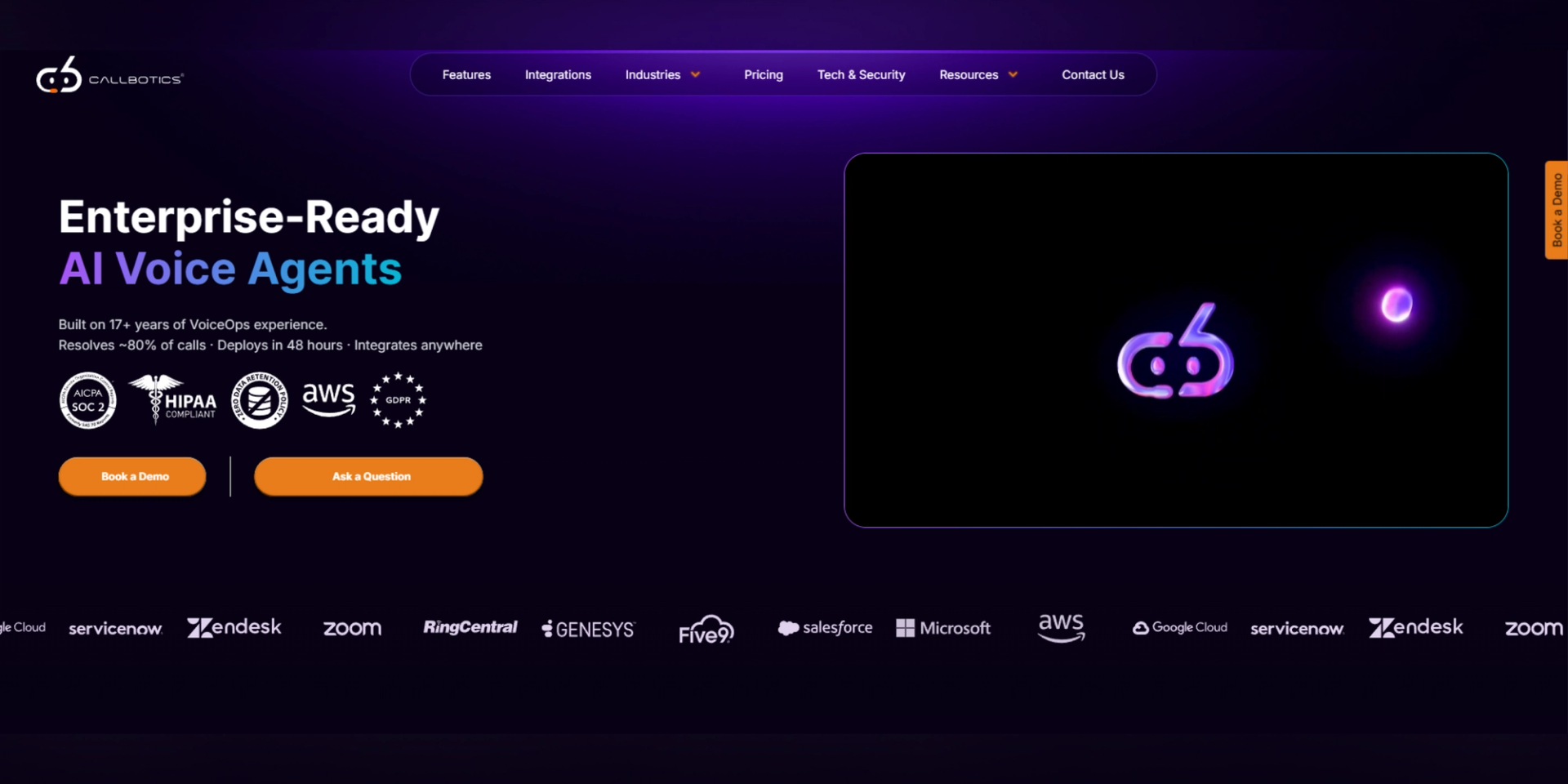
Caption: CallBotics is an enterprise voice AI platform built for production contact center workflows
CallBotics is an enterprise AI voice agent platform for contact centers and call-heavy workflows. It’s built from inside the contact center world, shaped by teams with 17+ years of hands-on voice operations experience.
Instead of optimizing for demos, CallBotics focuses on resolution under real production pressure: fluctuating call volume, complex multi-step workflows, strict compliance requirements, and measurable outcomes.
Where it fits: CallBotics is well-suited to call-heavy workflows, such as contact centers and compliance-driven industries, including healthcare, insurance, and complex support teams. It handles routine inquiries, transactional calls, and multi-step processes while integrating directly with existing contact center systems.
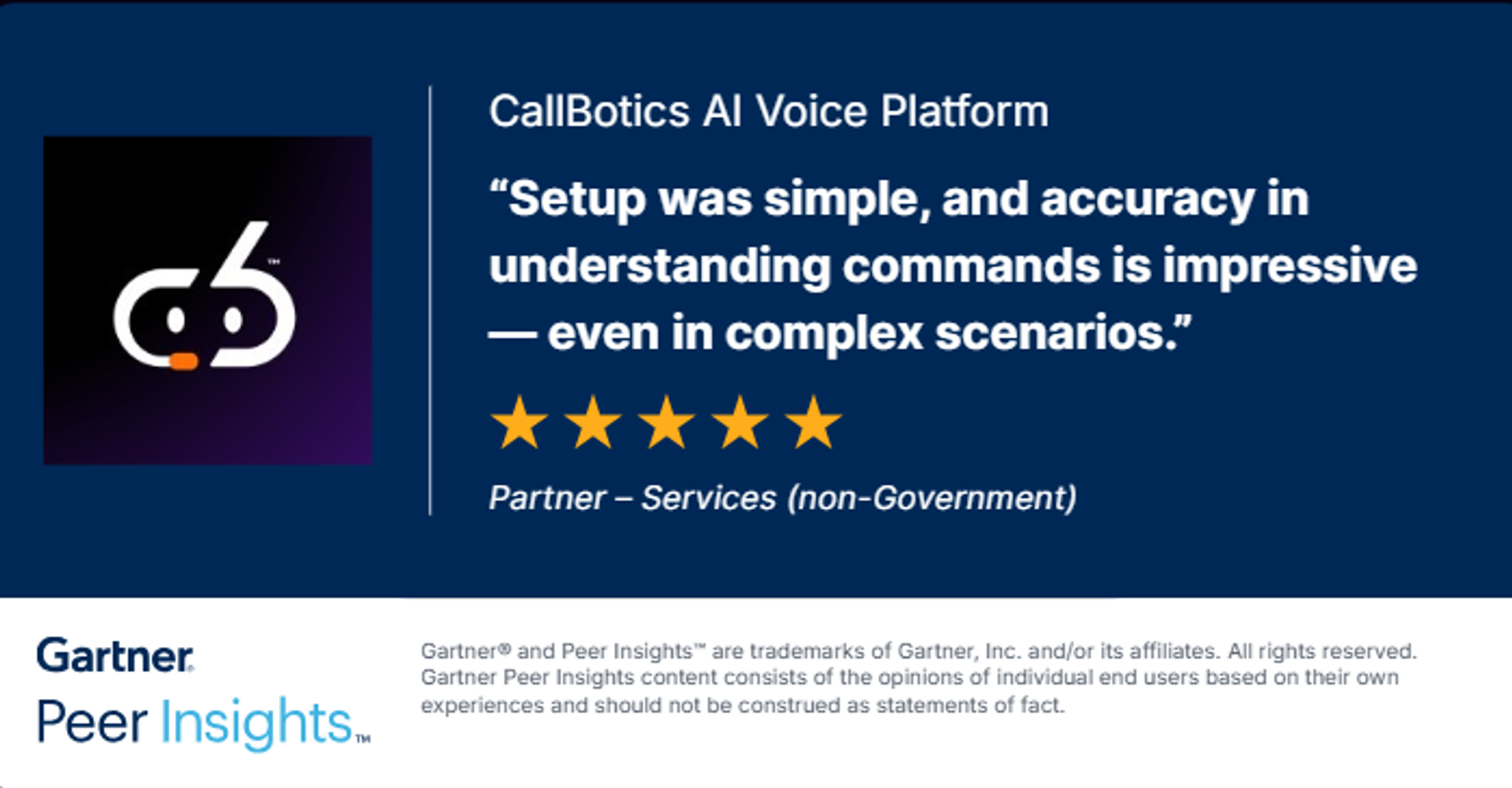
Caption: CallBotics client testimonial from Gartner Peer Insights
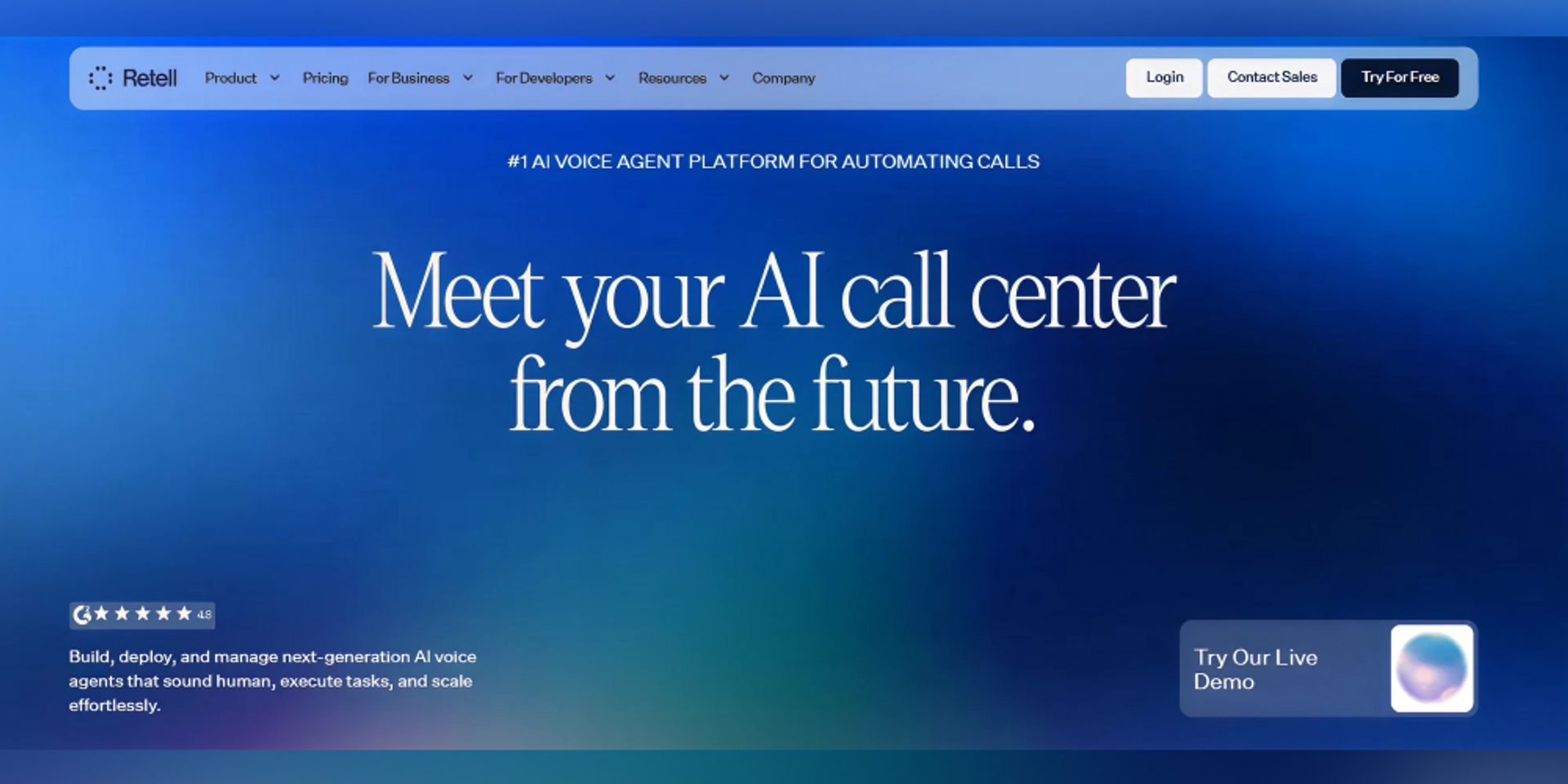
Caption: Retell AI provides developer-focused voice agents for real-time conversational automation
Retell AI is a pay-as-you-go platform for real-time voice agents that supports fast iteration. It’s commonly used by teams that want flexibility and can manage an engineering-led setup.
Where it fits: Technically mature teams that want to build and maintain custom logic for voice workflows.
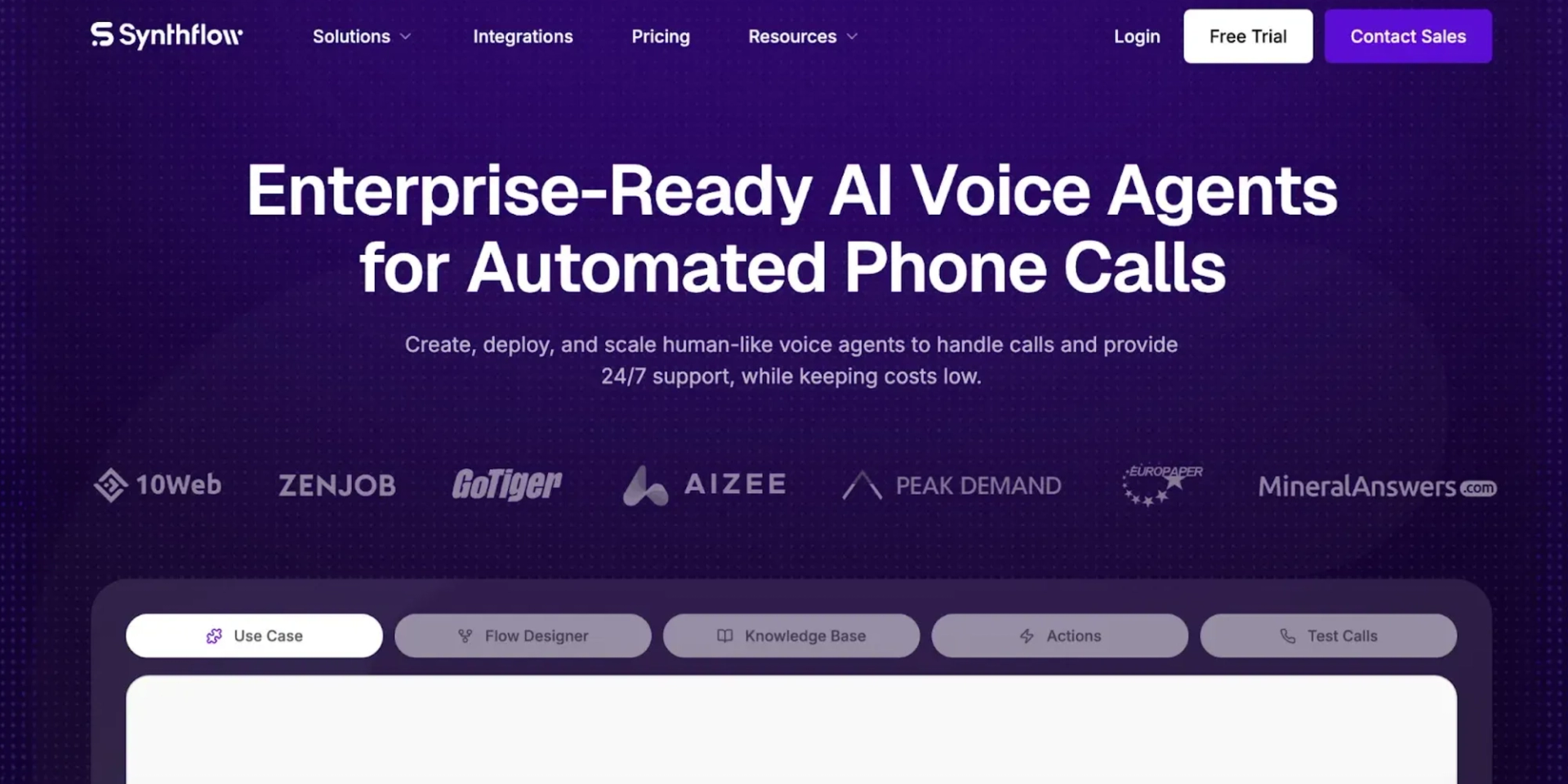
Caption: Synthflow is a no-code voice AI platform for building and deploying call workflows quickly
Synthflow is a no-code voice automation platform centered on a visual flow builder. It’s typically used for structured, lower-complexity call flows where setup speed is critical.
Where it fits: Teams that want to launch basic inbound or outbound automation quickly, without extensive engineering.
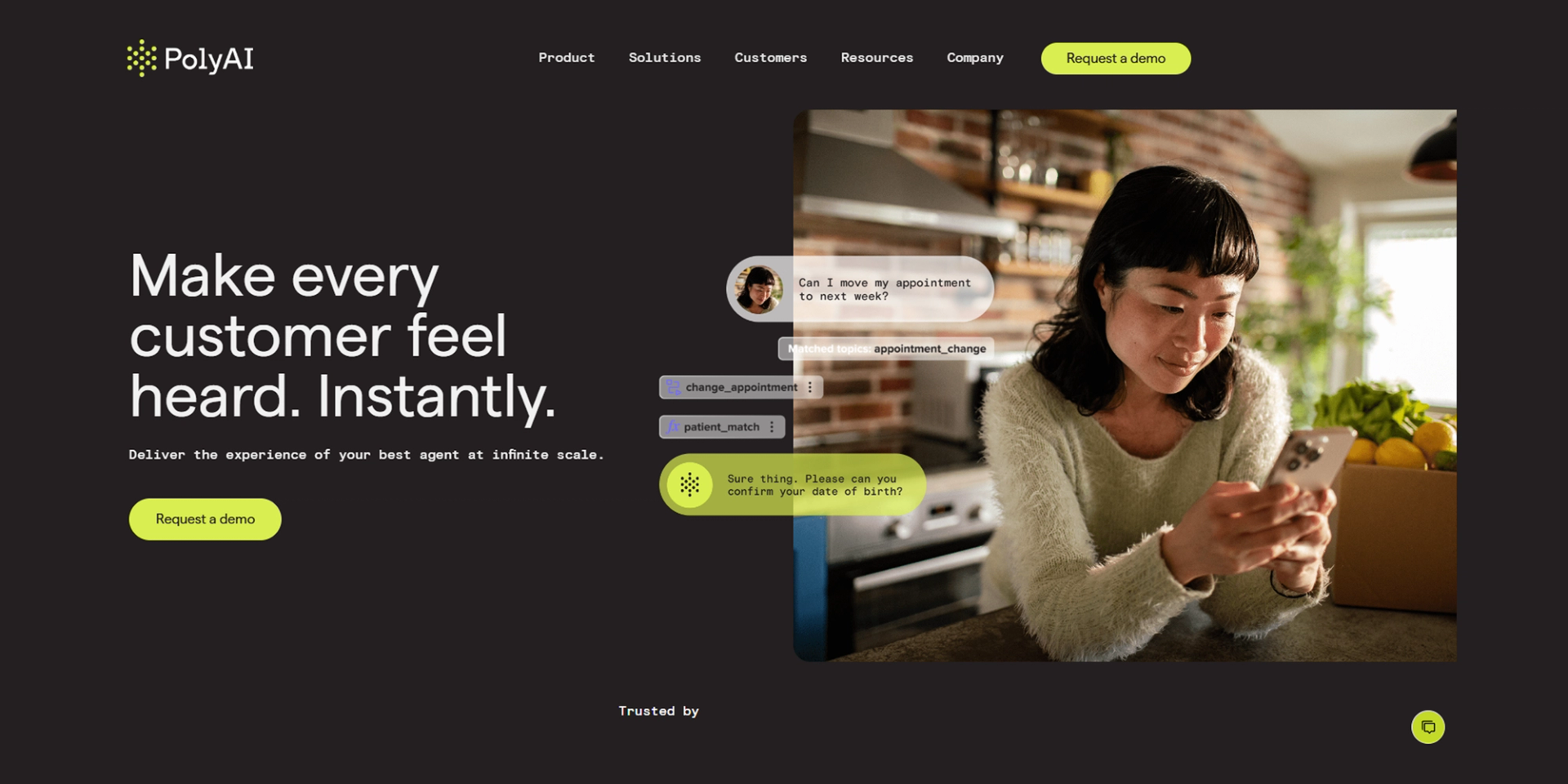
Caption: PolyAI delivers PolyAI is a customer-led conversational platform for enterprise
PolyAI is an enterprise-focused voice assistant platform built for large contact centers. It’s often evaluated for conversational quality and multilingual support in high-volume environments.
Where it fits: Large enterprises with established contact center operations and long deployment cycles.
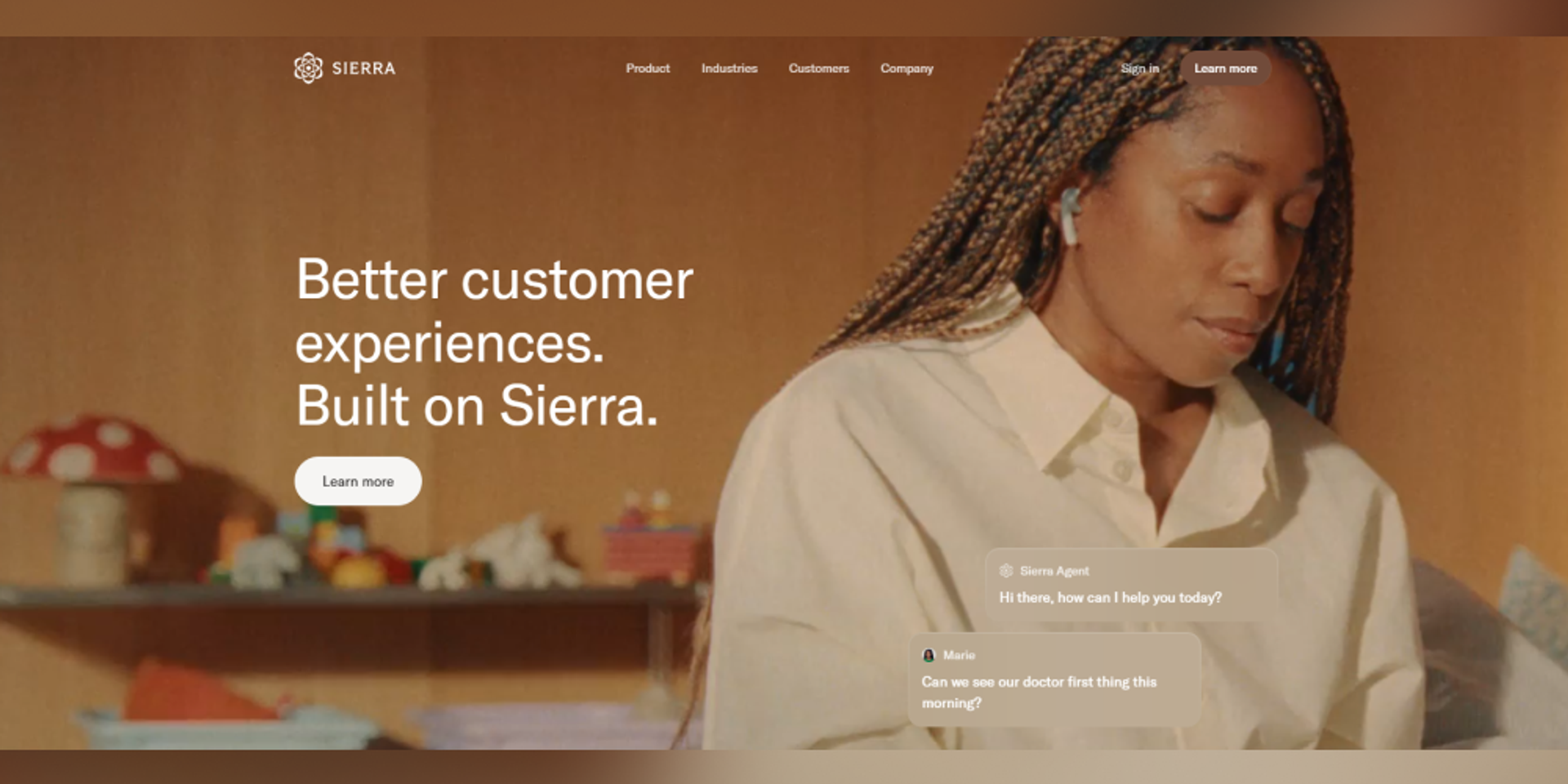
Caption: Sierra AI focuses on AI-driven customer support automation across enterprise workflows
Sierra AI positions itself as an AI agent platform for customer experience across channels, including voice. The emphasis is on service resolution across enterprise workflows and deep system actioning.
Where it fits: Very large enterprises that want AI agents embedded across customer service operations, not just voice.
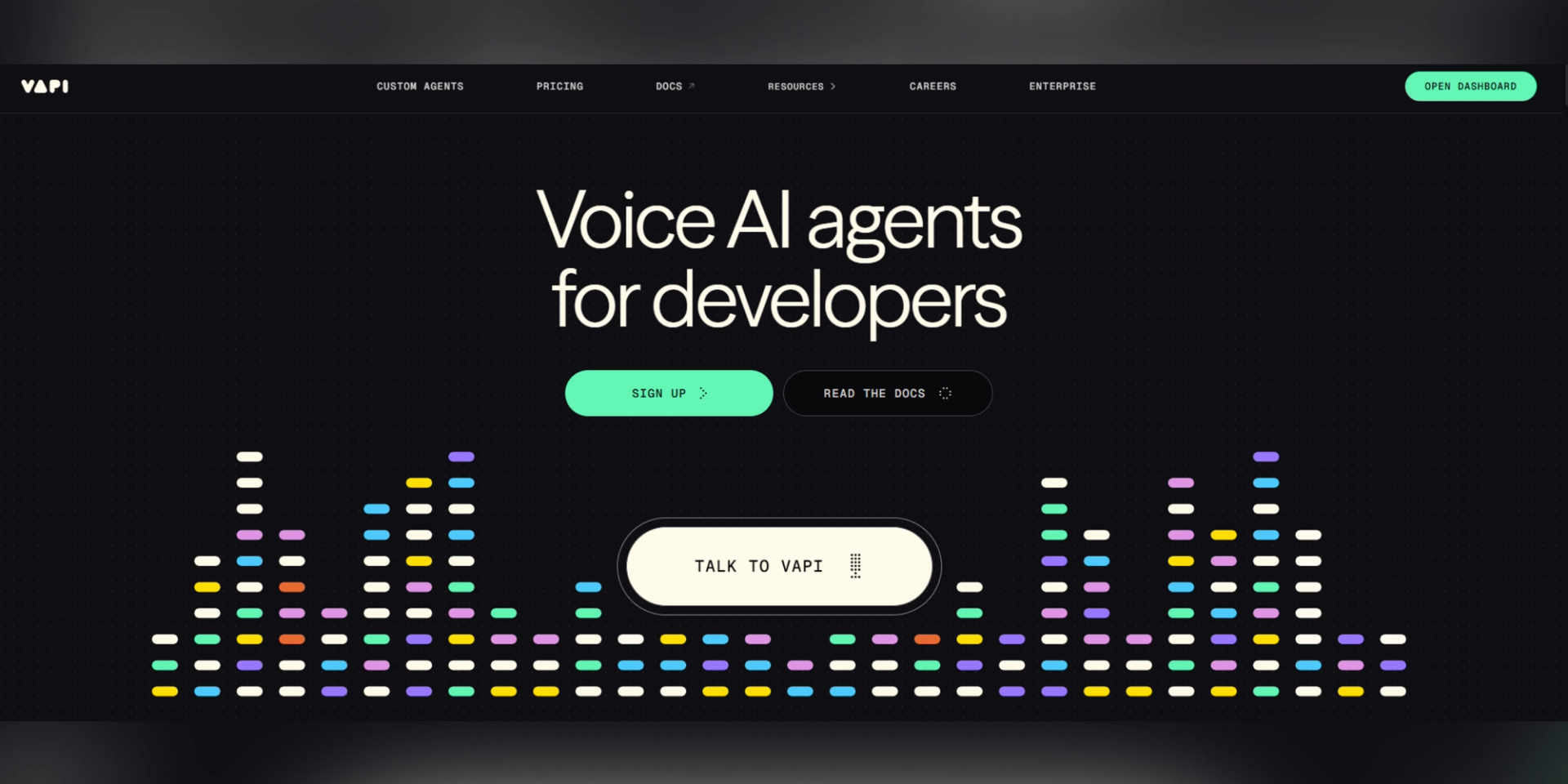
Caption: VAPI offers API-first voice AI tools for teams building custom voice infrastructure
VAPI is an API-first voice infrastructure toolkit that gives teams granular control over models, routing, and telephony. It’s powerful, but typically requires engineering ownership for build and maintenance.
Where it fits: Product and engineering teams building custom voice systems as part of an application.
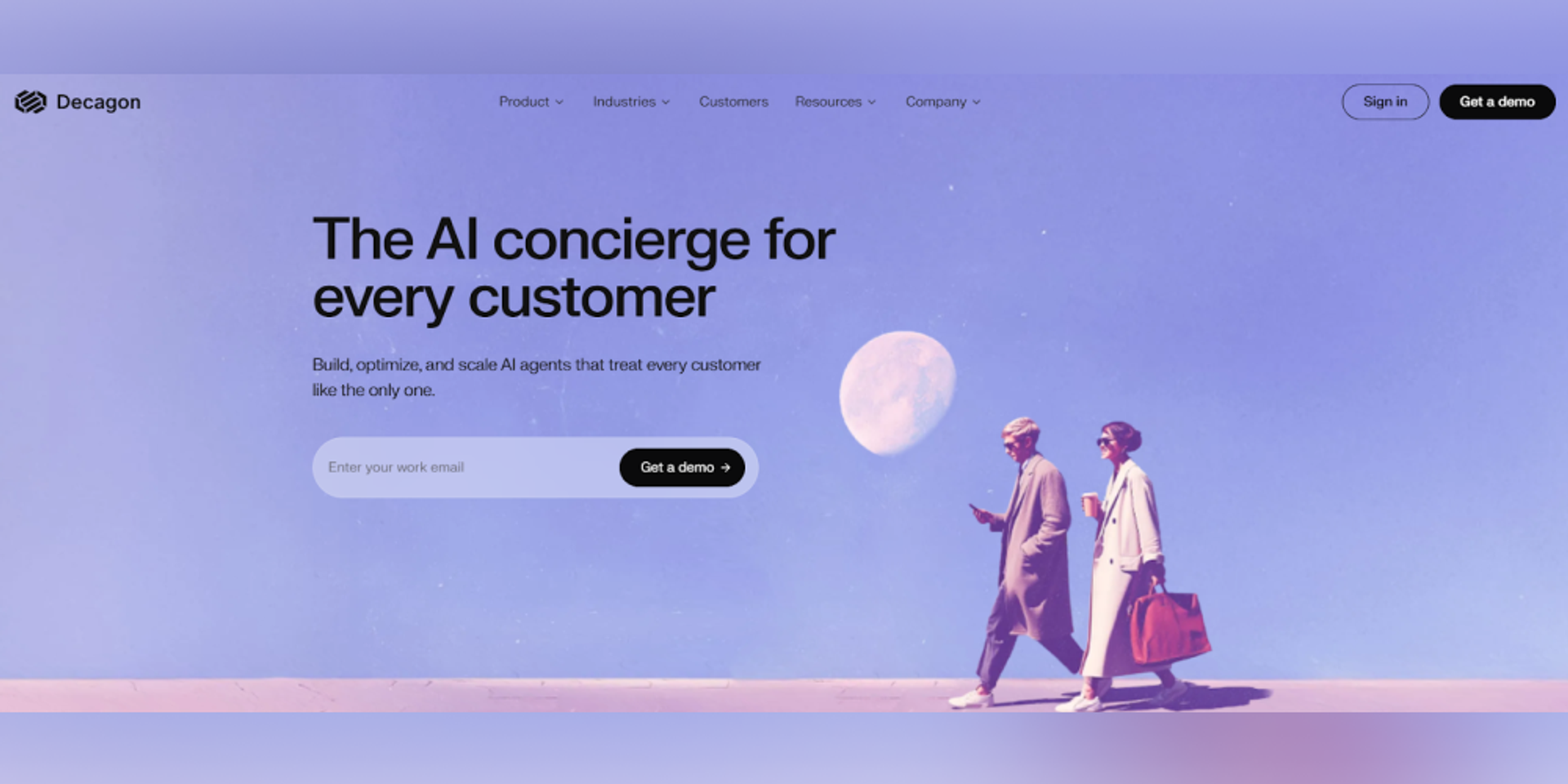
Caption: Decagon provides AI agents for automating customer support operations at scale
Decagon focuses on AI agents for customer support automation, including voice, with an emphasis on reasoning and tool use. It is positioned as an enterprise solution for resolving issues end-to-end across systems.
Where it fits: Enterprises with complex support environments that want agents capable of taking backend actions.
The best platform is the one that fits your operations once calls go live across real volume, edge cases, and the systems your agents already rely on. Use the checklist below to evaluate any Bland AI alternative.
Also Read: Step-by-step guide to AI Voice Agent Implementation in 2026
CallBotics emerges as the best alternative to Bland AI. When evaluated against the criteria above (Workflow completion, iteration speed, analytics visibility, pricing predictability, and compliance), CallBotics stands out as a platform designed for real operational ownership, not just conversational performance.
| Criteria | Bland AI | CallBotics |
|---|---|---|
| Ease of use | Requires structured setup and ongoing tuning, often with support from solutions engineers | Designed for operational teams with white-glove onboarding and minimal internal setup |
| Industry specialization | General-purpose voice automation across use cases | Built specifically for contact centers and call-heavy workflows, including regulated environments |
| Pricing transparency | Tiered and usage-linked pricing that can become harder to forecast as volume grows | Predictable pricing tiers designed for clearer cost control and ROI planning |
| Customization | Strong conversational control through pathways, but deeper workflow logic may require engineering effort | Workflow-driven automation designed around end-to-end resolution and system integrations |
| Deployment speed | Typically measured in weeks, depending on setup and complexity | Production-ready deployments in about 48 hours using existing SOPs and call data |
| Accuracy in live operations | Performance depends heavily on workflow design and ongoing tuning | Optimized for stable resolution and consistent performance in live contact center conditions |
Caption: Comparison of Bland AI and CallBotics
If you’re deciding between Bland AI competitors, don’t optimize for what seems to be the best in a demo. Look for what stays stable when call volume spikes, edge cases arise, and your team needs measurable outcomes.
Before you commit, validate one high-volume workflow end-to-end. Confirm if the agent can complete the workflow, not just talk through it. Check how quickly your team can iterate without engineering stepping in. Factor in the required infrastructure and the integrations that the agent needs access to.
The best choice is a platform that delivers reliable call resolution, predictable costs, and clear control, so you can continuously improve performance.
Among the options reviewed, CallBotics stands out as the most production-ready alternative, with strengths that matter in live environments:
For teams that need AI voice agents to operate reliably in production, CallBotics is the strongest choice.

Urza Dey (She/They) is a content/copywriter who has been working in the industry for over 5 years now. They have strategized content for multiple brands in marketing, B2B SaaS, HealthTech, EdTech, and more. They like reading, metal music, watching horror films, and talking about magical occult practices.
See how enterprises automate calls, reduce handle time, and improve CX with CallBotics.
CallBotics is an enterprise-ready conversational AI platform, built on 18+ years of contact center leadership experience and designed to deliver structured resolution, stronger customer experience, and measurable performance.