Voice and chat assistants are now a core part of modern customer service operations, helping teams handle higher volumes, improve response times, and operate more efficiently. As AI voice technology matures, these platforms are also being applied to revenue-critical workflows where reliability, voice quality, pricing predictability, and scalability matter just as much as automation itself.
SynthFlow AI is a well-known and capable platform in this space, and for many teams, it delivers strong results. At the same time, no single solution is the right fit for every organization. Different teams have different operational realities, growth plans, and expectations around control, customization, and enterprise readiness.
As requirements evolve, some organizations explore alternative platforms that better align with their long-term needs. This guide walks through the top 10 Synthflow.ai alternatives to consider in 2026, helping you evaluate options based on fit rather than feature checklists.
SynthFlow is a no-code AI voice platform commonly used to automate phone-based interactions, including inbound and outbound calling, as well as basic conditional workflows. Its visual flow builder, pre-built templates, and simple integrations make it accessible for small teams and early-stage deployments that want to launch voice automation quickly without heavy engineering effort. As usage expands, however, operational requirements often become more complex, prompting some teams to evaluate whether the platform continues to align with their long-term needs.
Teams typically explore alternatives when they require:
Also Read: A Complete Guide To Synthflow Pricing: Offers And Add-Ons
While evaluating alternatives, it is important that the voice automation platform meets the main criteria your enterprise sets for selecting the provider. Here’s a quick overview of the top 9 Synthflow.ai alternatives with their pricing and key features that made it to our list:
| Product Name | Pricing | Key Features |
|---|---|---|
| CallBotics | Predictable, usage-based ; Transparent tiers | High-quality conversational voice AI; Deep CRM integrations; Dynamic workflows; Enterprise-ready analytics |
| Retell AI | Usage-based; Minutes + infra costs | Low-latency voice responses; Developer-first APIs; Real-time streaming conversations |
| Vapi | Pay-as-you-go; Infra + model usage | Highly flexible voice stack; Custom LLM control; Strong developer customization |
| PolyAI | Custom enterprise pricing | Natural enterprise-grade voice assistants; Multilingual support; Contact-center focus |
| Bland AI | Usage-based; Per-minute pricing | Fast setup voice agents; Outbound calling; Simple automation flows |
| Fin | Bundled with Intercom plans | AI support agent; Tightly integrated with the Intercom ecosystem |
| Replicant | Custom enterprise pricing | Autonomous contact center agents; High-volume inbound call handling |
| Goodcall | Subscription-based | SMB-focused AI phone answering; Appointment handling; Basic automation |
| qCall.ai | Usage-based | AI calling workflows; Outbound campaigns; Configurable call logic |
Comparison table for top Synthflow.ai Alternatives in 2026
Most enterprises using Synthflow.ai face cost inefficiency and operational challenges, especially if they are a rapidly growing team trying to scale. Below is a list of 9 Synthflow.ai alternatives, with CallBotics as the number one choice, meeting the maximum criteria, for you to choose from:
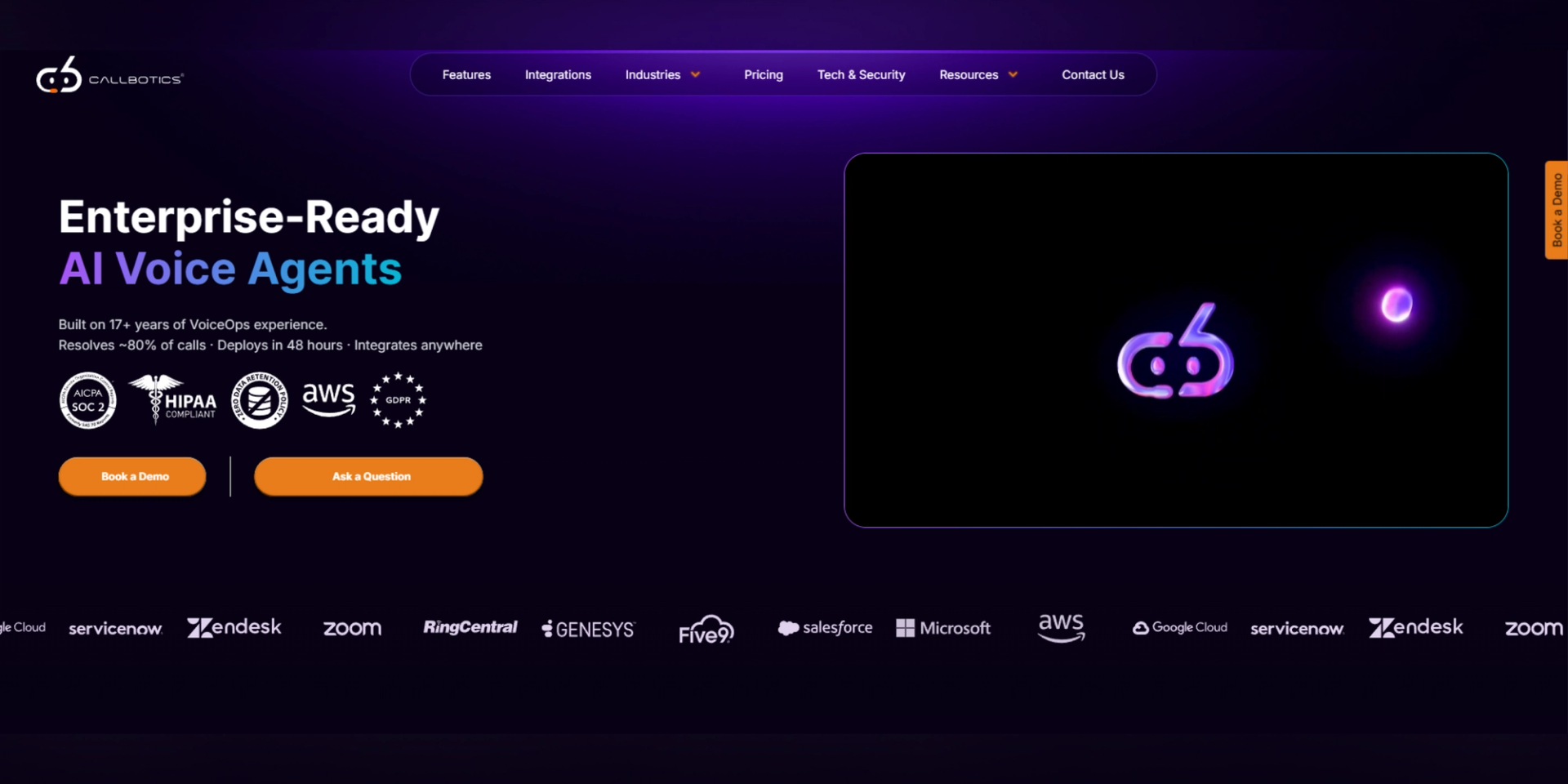
CallBotics homepage
CallBotics is purpose-built for enterprise call automation. It turns SOPs, PDFs, and call recordings into production-ready AI agents in about 48 hours. The platform comes from a team with seventeen years of hands-on contact center experience and supports enterprises that have moved beyond experimentation and operate at real contact center scale.
Many AI-led voice automation tools sound convincing until they face live production pressure. CallBotics is designed for operating conditions such as fluctuating call volumes, strict compliance requirements, and complex workflows that define enterprise environments.
CallBotics focuses on end-to-end resolution, scalable deployment, and smooth customer interactions. AI assistants handle real-time transcription, maintain conversational quality, and support low-latency call handling with fast, reliable responses.
Want to know more about what we can do for you? Book a Demo!
CallBotics has a hybrid pricing model with transparent usage tiers as the scale of operations increases. It also offers flexible pricing based on call volume, automation coverage, and other enterprise requirements.
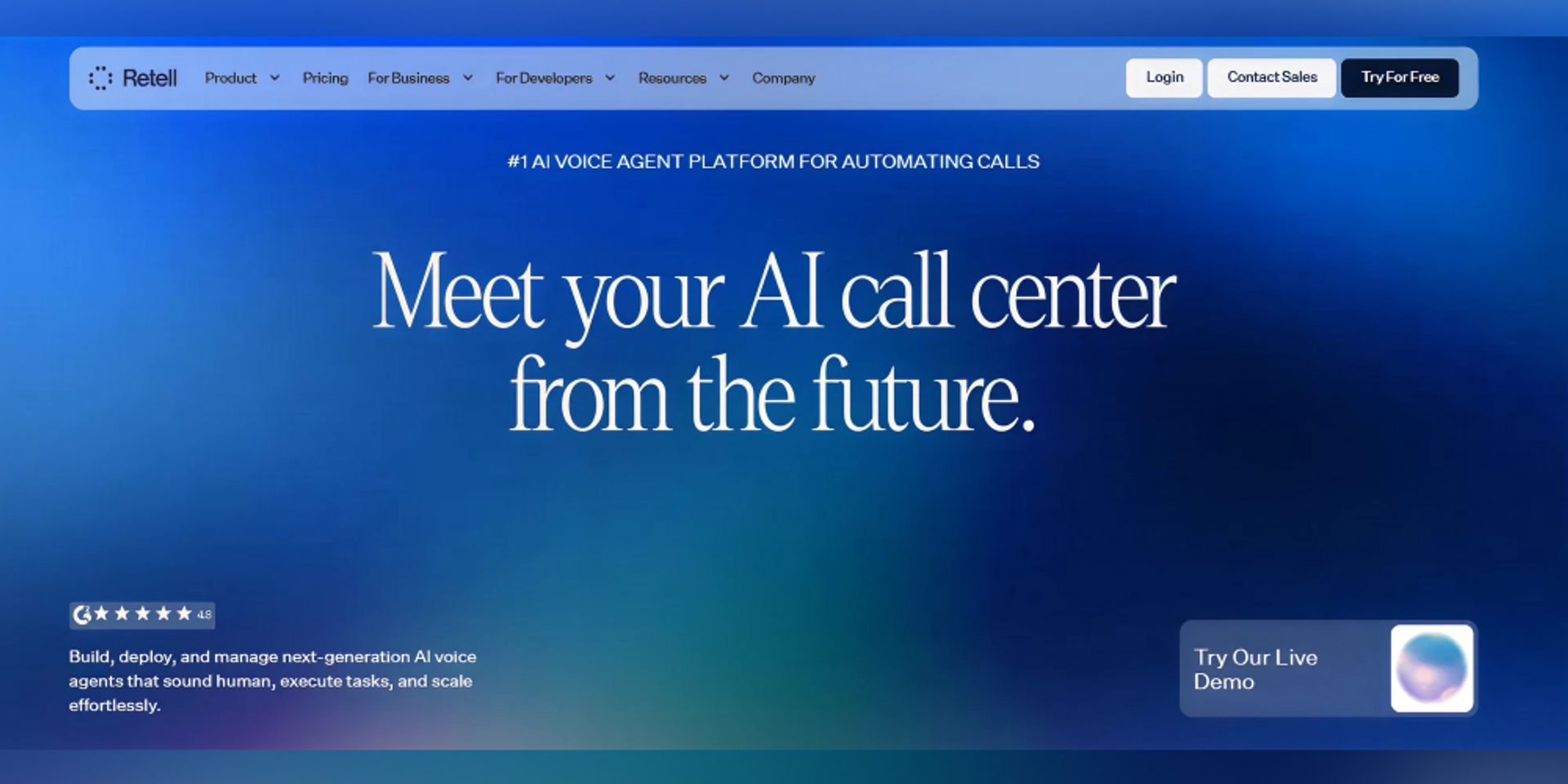
Retell AI homepage
Retell AI is a conversational AI platform designed for businesses looking to automate voice, chat, and SMS interactions with LLM-powered voice agents. These agents are capable of handling calls and initiating message workflows by seamlessly integrating into existing systems.
Retell AI’s Voice Agent Automation is natural, and almost-human-like, and the LLM-native agents respond within 600 milliseconds. It is suitable for teams with a certain knowledge of coding and that handle large volumes of calls from across the globe.
Retell AI has a modular pricing model with flexible options for startups and enterprise teams. It offers $10 in free credits, which is equivalent to up to 60 minutes of call time. The enterprise plan offers more features and volume-based discounts.
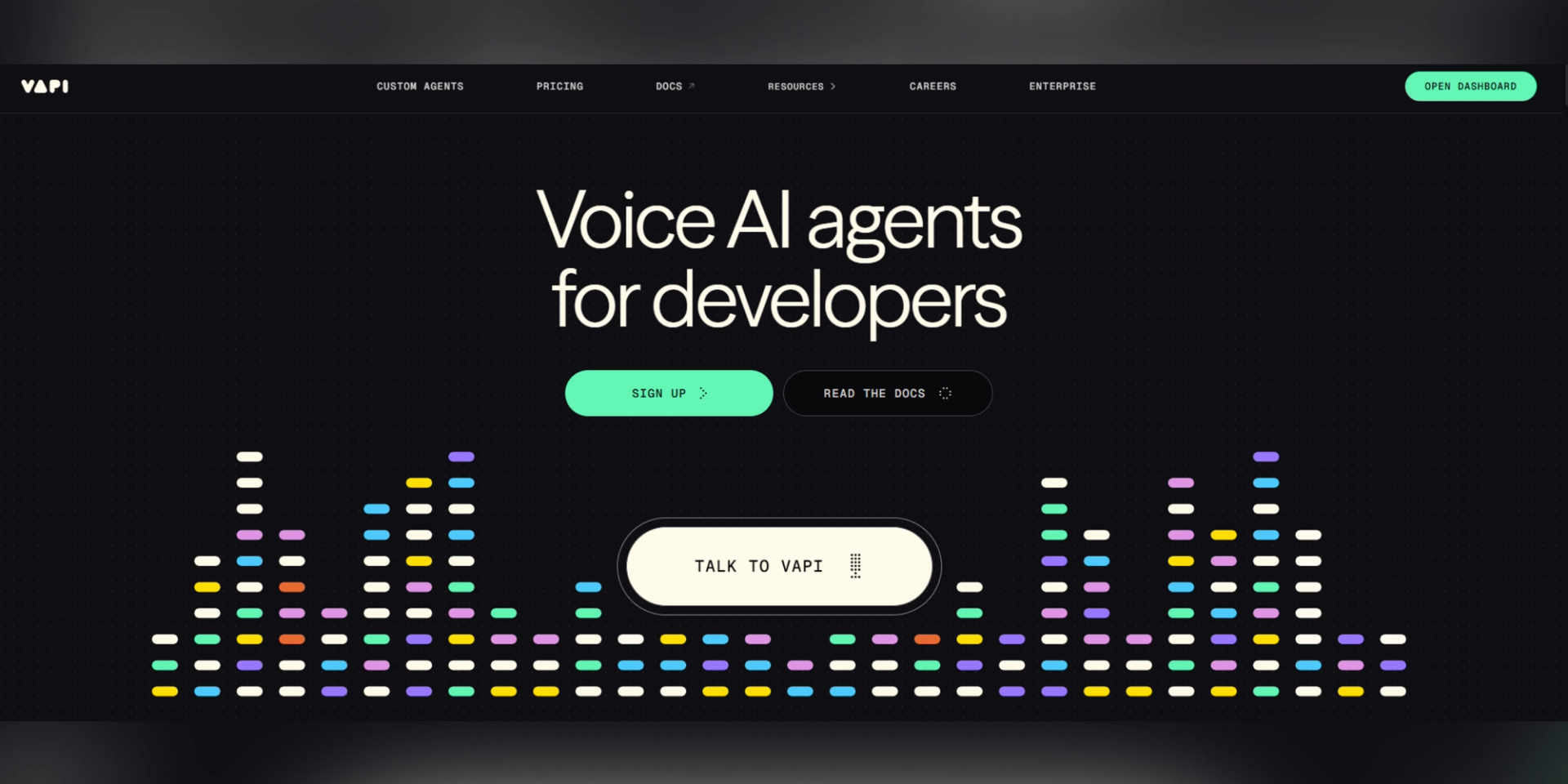
Vapi AI homepage
Vapi AI is an AI voice platform, great for teams with developer-level skills. The platform has a comprehensive suite of tools for anyone to create, test, and deploy voice assistants. The platform is built to handle more than 1 million concurrent calls.
Its voice agents are highly sophisticated with customizable external integrations, have a low latency of up to 500 ms, and simulate the flow of natural human conversations well, i.e., the agents can pause and wait politely when interrupted.
Read all about Top Vapi alternatives in 2026 for production-ready Voice AI in this blog
Vapi AI offers pay-as-you-go plans with call hosting starting at $0.05 per minute and SMS/Chat at $0.005 per message. Each add-on incurs additional cost. The total cost of the plan is on the expensive side.
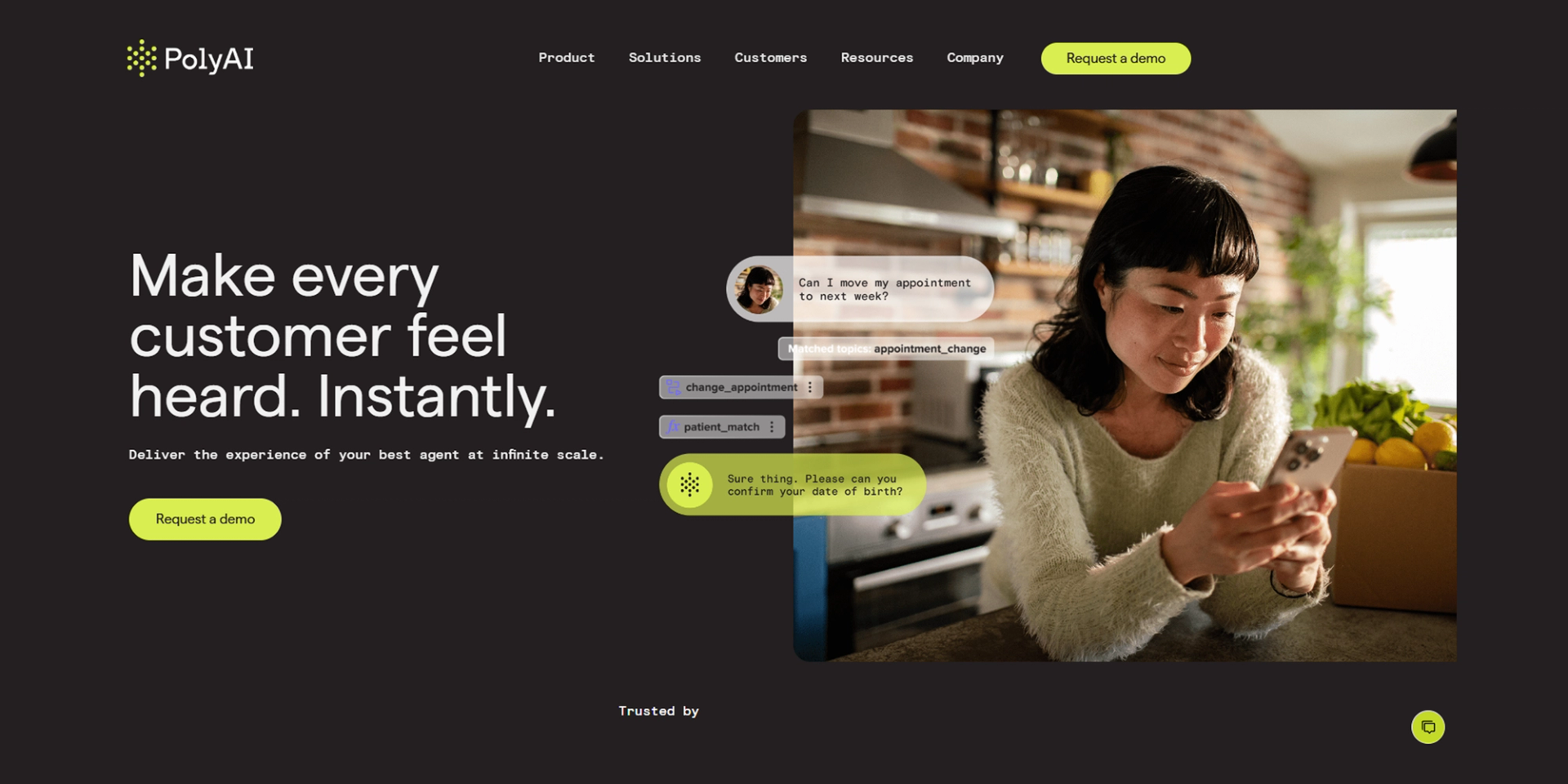
PolyAI homepage
PolyAI develops customer-facing voice assistants for various industries, including insurance, restaurants, banks, hotels, telecom, and retail. Its advanced agentic AI-based assistants help enterprises to reduce wait times, free up customer care staff, and improve overall user experience. The companies can automate inbound calls by plugging the API into existing CRMs and contact center stacks.
PolyAI’s official website has no pricing plans displayed publicly. Pricing is available only on a quote based on customization, volume, use case, and integration requirements.
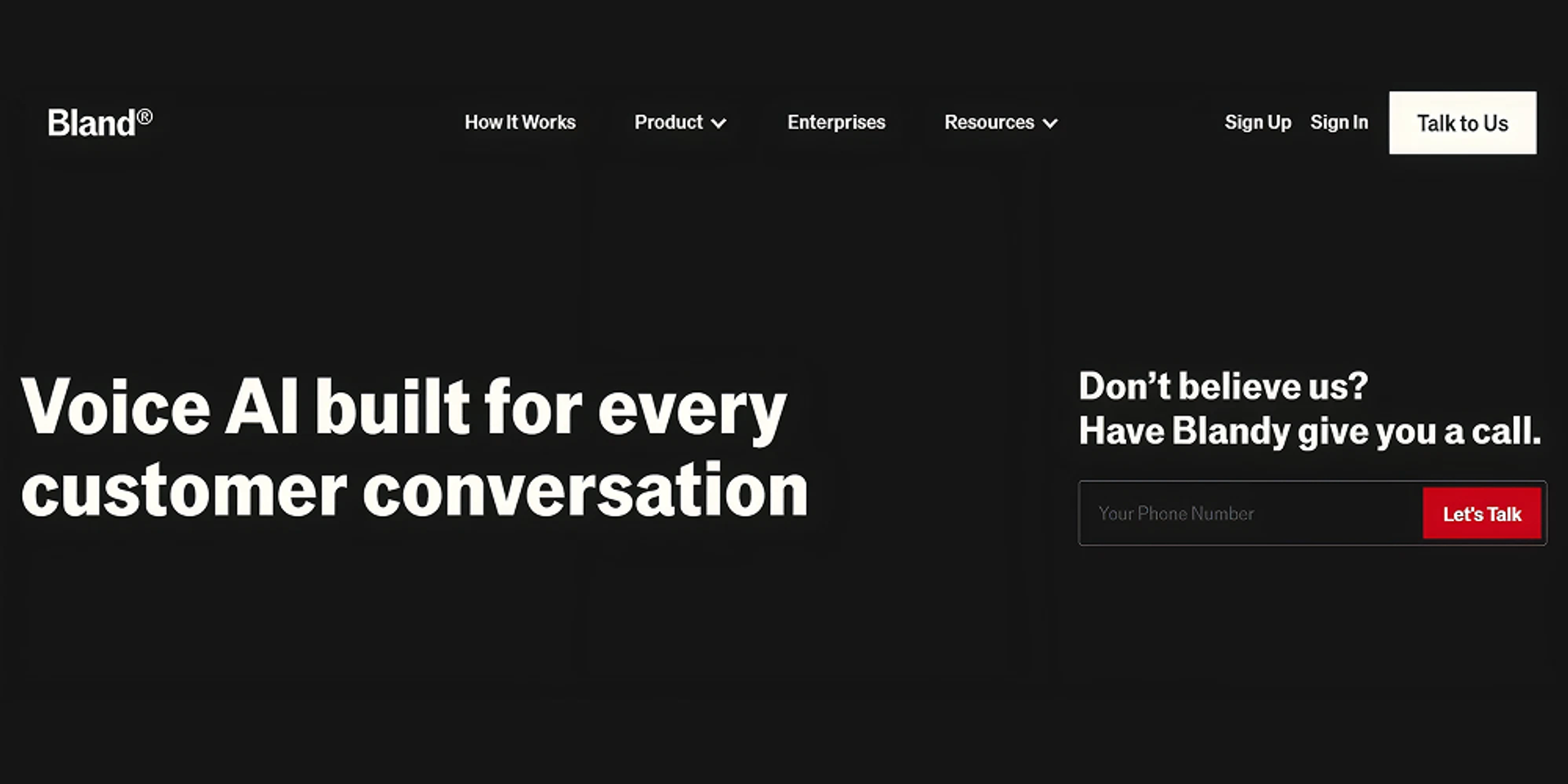
Bland AI homepage
Bland AI is a developer-focused AI voice assistant platform. It provides a do-it-yourself toolkit for your team to create voice agents. The ‘voice agent-building’ toolkit consists of webhooks, pathways, voice cloning, GPT-4 prompts, and memory stores. The platform offers high customization and control for developers to custom-build the voice agents from scratch. It comes with a basic drag-and-drop builder for creating simple call flows.
Other than that, it requires heavy reliance on engineering teams to build voice agents. Although the setup is smooth and integrations deep, users have complained about the tool not performing well and sounding bot-like in real-world case scenarios.
Bland AI’s official website doesn’t state its pricing plans or call per-minute charges. Pricing quotes are available on demand.
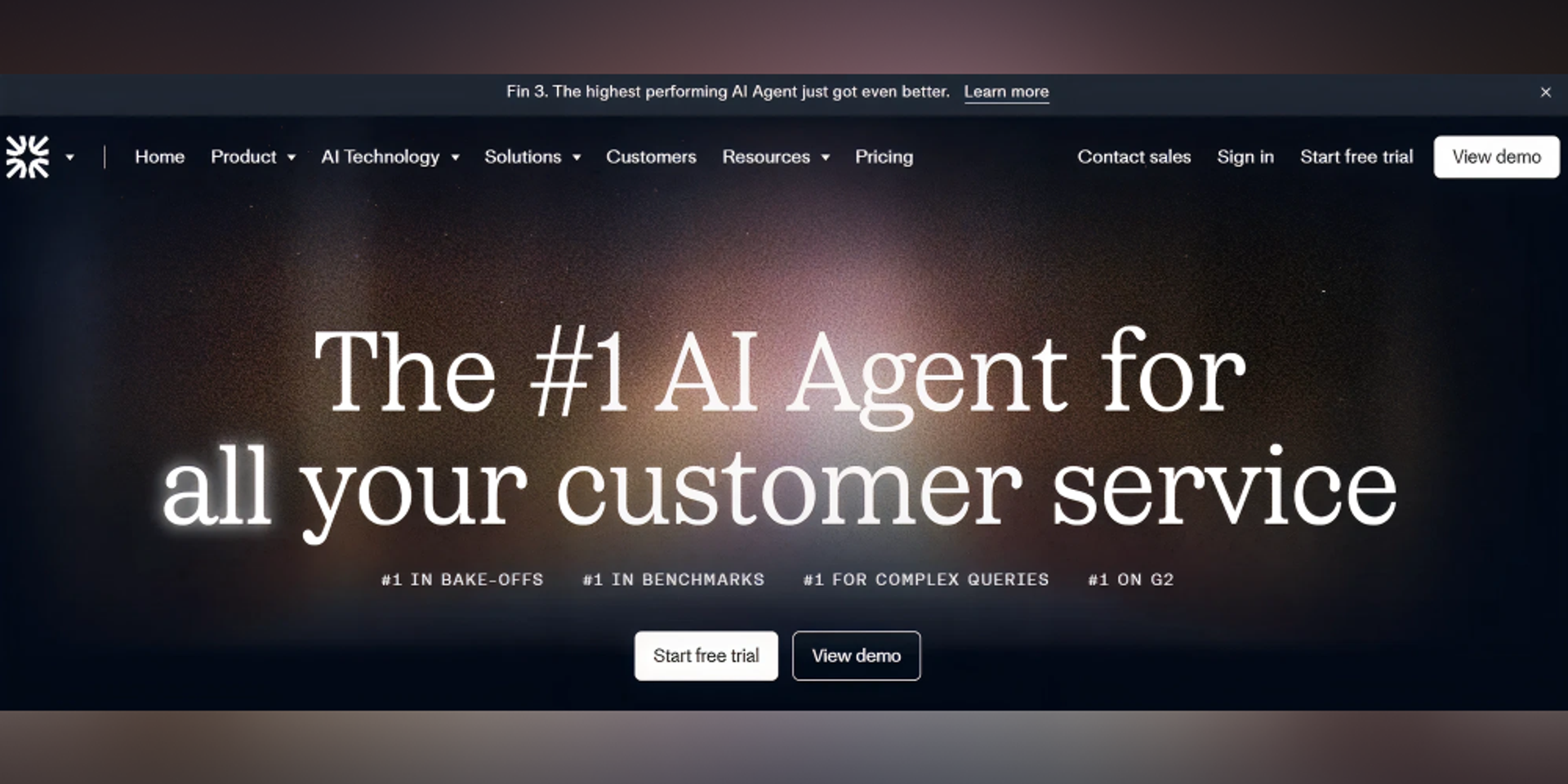
Fin homepage
Fin is a well-known AI voice and chat agent for customer service automation. It was developed by Intercom as a support agent providing natural language responses by pulling out data from the company’s knowledge base.
The platform can handle advanced workflows, but setting it up requires considerable tailoring, planning, and effort from the teams. It is more suitable for businesses interested in adopting the larger Intercom ecosystem.
Fin AI charges $0.99 per resolved conversation. It also has a monthly minimum monthly usage requirement in place, and charges extra for gated add-ons like Copilot, Intercom seat licenses, advanced reporting, etc.
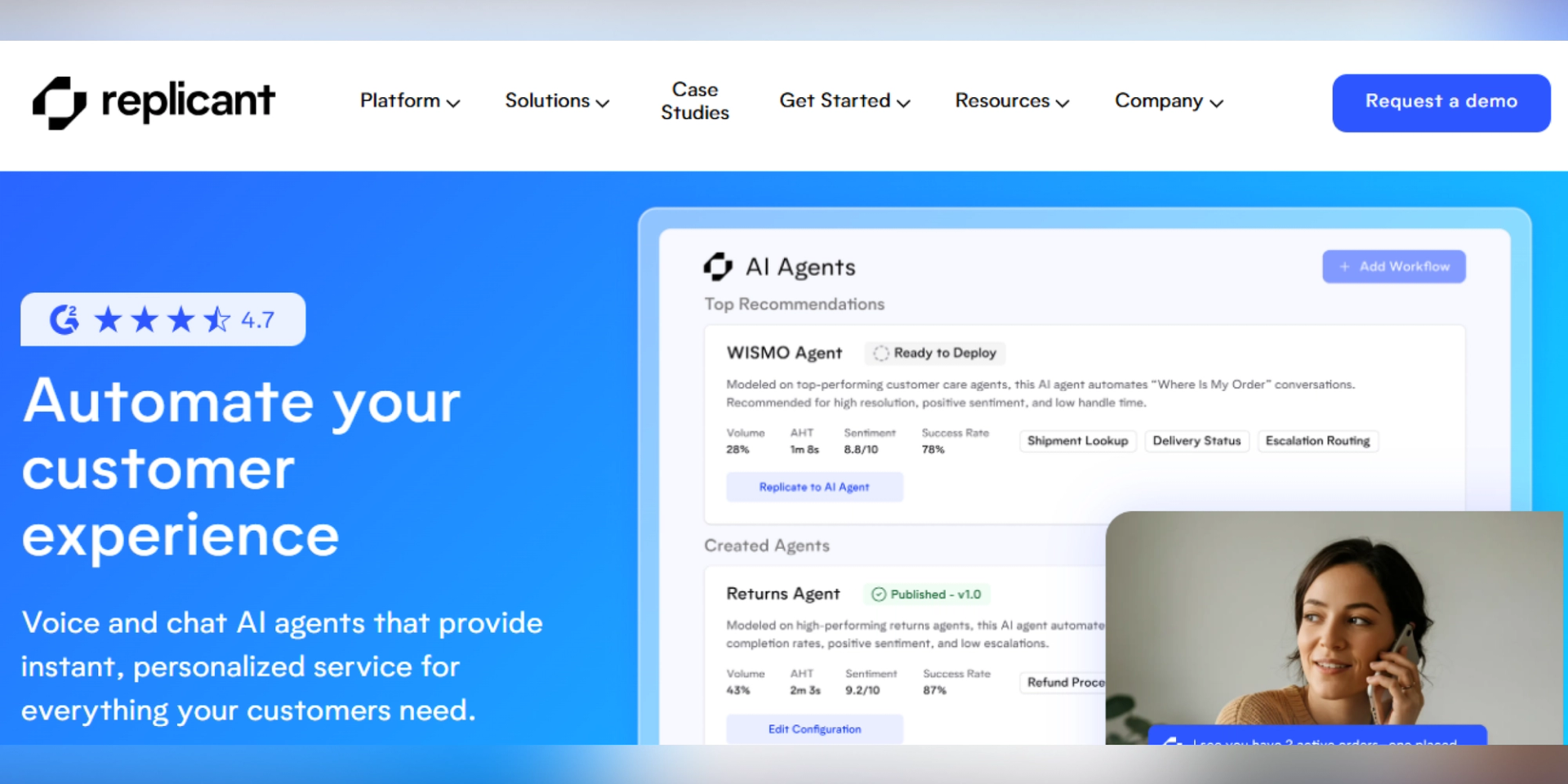
Caption: Replicant homepage
Replicant is an agentic AI-based customer service platform that automates complex conversations by replicating the top-performing human agents within the organization. The platform offers end-to-end customer issue resolution with complete visibility over how the interactions were handled.
It offers enterprise-level automation to handle repetitive calls for authentication, order status, appointment changes, etc. It is suitable for large contact centers with dedicated IT teams.
Replicant's official website has no publicly available information on its pricing model. It offers custom quotes to enterprises based on their requirements.
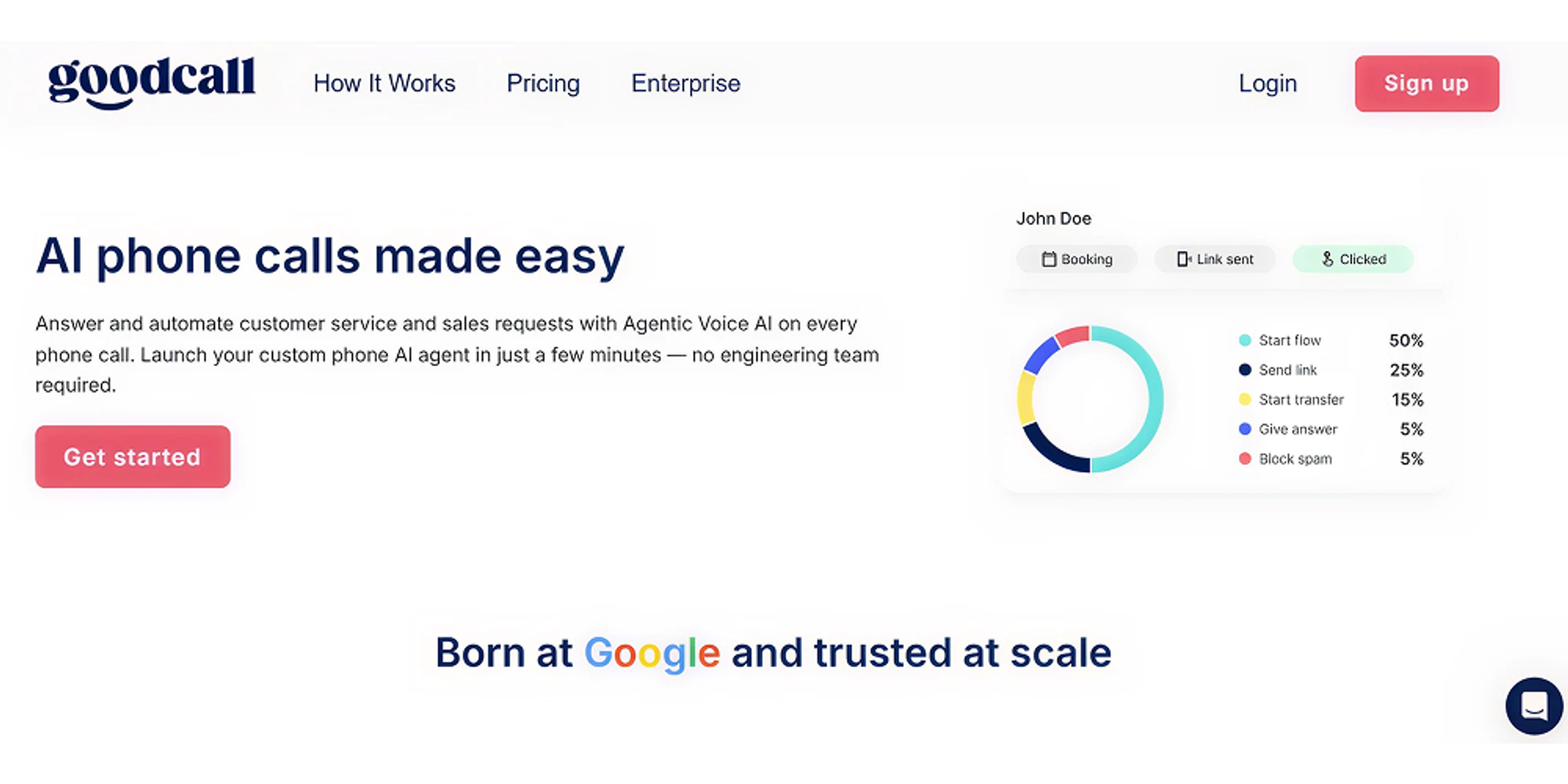
Caption: Goodcall homepage
Goodcall is a conversational AI platform catering to small businesses. It deploys phone-powered assistants for handling inbound calls, capturing leads, and booking appointments. It is not suitable for businesses that engage in sophisticated and complex customer-service processes with deep integrations.
Goodcall has a standard tier-based pricing model. Its starter pack comes at a monthly subscription plan of $66, the Growth plan is priced at $108 monthly, and the Scale plan at $208 monthly.
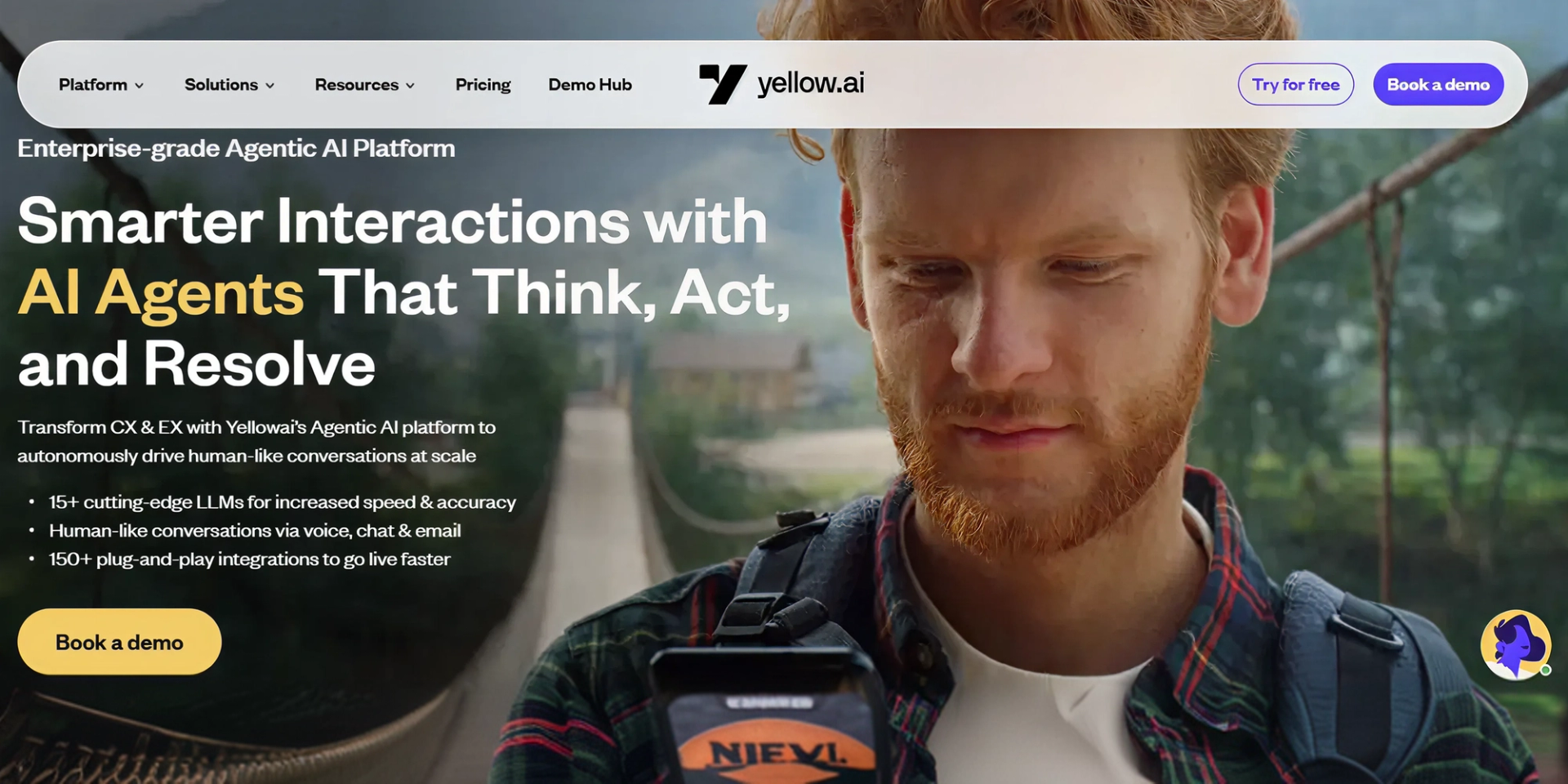
Caption: Yellow AI Homepage
Yellow.ai is a conversational AI platform that supports voice and chat automation with a strong emphasis on multilingual coverage. It is commonly used by organizations operating across regions that need consistent customer experiences across languages and channels. The platform enables teams to deploy and test AI agents in multiple languages and regional variations, though the depth of voice-led resolution can vary depending on the workflow complexity and use case.
Yellow.ai typically uses tiered pricing based on channels enabled, languages supported, and total interaction volume.
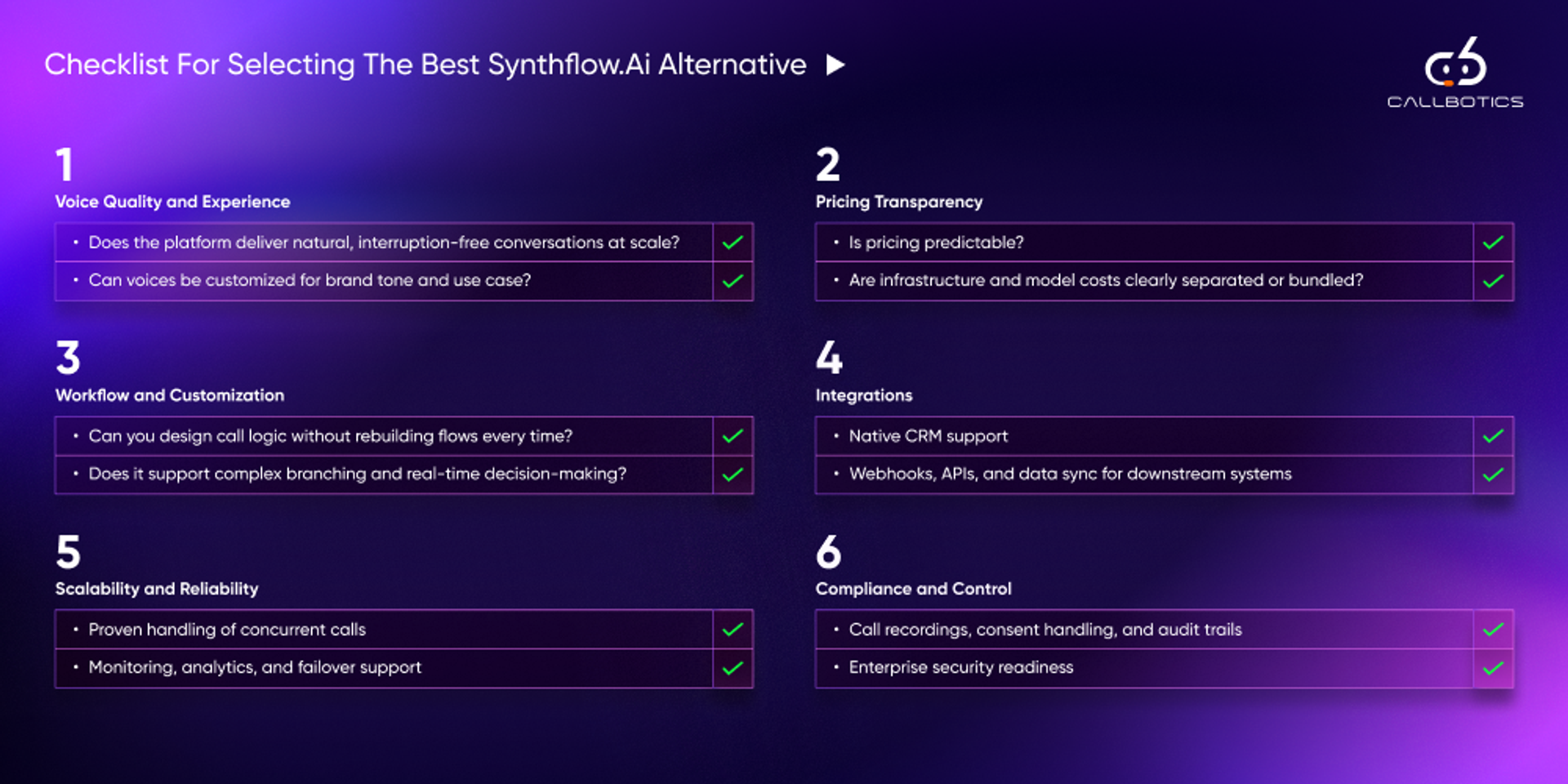
The best AI voice platform for any organization would be the one with the true operational fit. Here are a few criteria points that can come in handy during platform evaluation:
Also Read this step-by-step guide to AI Voice Agent Implementation in 2026
CallBotics is built for teams that have moved beyond pilot programs and are deploying AI voice automation in live, revenue-critical environments. Instead of focusing on do-it-yourself configuration, the platform emphasizes operational reliability, scalability, and direct integration into real business workflows, making it well suited for production use at scale.
Automate your user experience and customer service. Let CallBotics manage your calls. Book a demo today or contact us to transform your voice operations.

Urza Dey (She/They) is a content/copywriter who has been working in the industry for over 5 years now. They have strategized content for multiple brands in marketing, B2B SaaS, HealthTech, EdTech, and more. They like reading, metal music, watching horror films, and talking about magical occult practices.
See how enterprises automate calls, reduce handle time, and improve CX with CallBotics.
CallBotics is an enterprise-ready conversational AI platform, built on 18+ years of contact center leadership experience and designed to deliver structured resolution, stronger customer experience, and measurable performance.