Vapi has earned strong adoption as a flexible platform for teams experimenting with voice AI and rapid prototyping. Its developer-friendly approach and speed to first interaction make it an attractive option during early exploration and proof-of-concept phases.
However, as voice AI moves from pilots into production, teams often discover that their requirements evolve. Factors like operational stability, predictable scaling, deeper integrations, and production-grade support start to matter more than speed alone. As a result, many organizations begin evaluating Vapi alternatives that are better aligned with enterprise workflows, long-term deployment needs, and real-world contact center operations.
This guide breaks down the leading Vapi alternatives in 2026, highlighting how each platform differs in capabilities, pricing models, and operational fit so teams can choose the best Vapi alternative that supports their production goals, not just their first use case.
Vapi is a popular choice for teams looking to quickly explore voice AI, especially during early prototyping and experimentation. As organizations move toward production use, some teams reassess their platform needs based on scale, predictability, and operational readiness. This is where businesses begin evaluating alternatives that better align with long-term contact center requirements.
Common reasons teams explore Vapi alternatives:
When evaluating alternatives, it's important to consider how well the platform integrates with your existing tools, such as CRM, telephony, and ticketing systems, to ensure a seamless deployment.
Want to see what production-grade voice AI actually looks like? Book a demo and see how CallBotics.ai performs in live contact center environments.| Platform | Best For | Pricing Model | Enterprise Readiness |
|---|---|---|---|
| CallBotics.ai | Production voice AI at scale | Hybrid, predictable | Very High |
| Poly.ai | Customer service automation | Enterprise contracts | High |
| Replicant | Contact center automation | Enterprise contracts | High |
| Observe.AI | Analytics + QA | Per-seat + usage | Medium |
| Five9 IVA | Five9 ecosystem users | Bundled | Medium |
| Talkdesk AI | Omnichannel CCaaS | Subscription | High |
| Kore.ai | Conversational AI platform | License-based | High |
| Cognigy | Large enterprise orchestration | Enterprise | High |
| LivePerson AI | Messaging-first AI | Enterprise | Medium |
| Yellow.ai | Multilingual automation | Tiered | Medium |
Below is a curated list of the top Vapi alternatives in 2026, reviewed through the lens of real-world contact center operations. When evaluating these platforms, it's crucial to assess the underlying voice stack for flexibility and control, and to ensure high reliability for production deployments. Each platform is evaluated on voice quality, scalability, integration depth, pricing approach, and suitability for production use, with special attention to call flow design and management as critical factors in creating seamless and effective voice solutions. This helps teams understand where each solution fits as they move from pilot to live deployment.
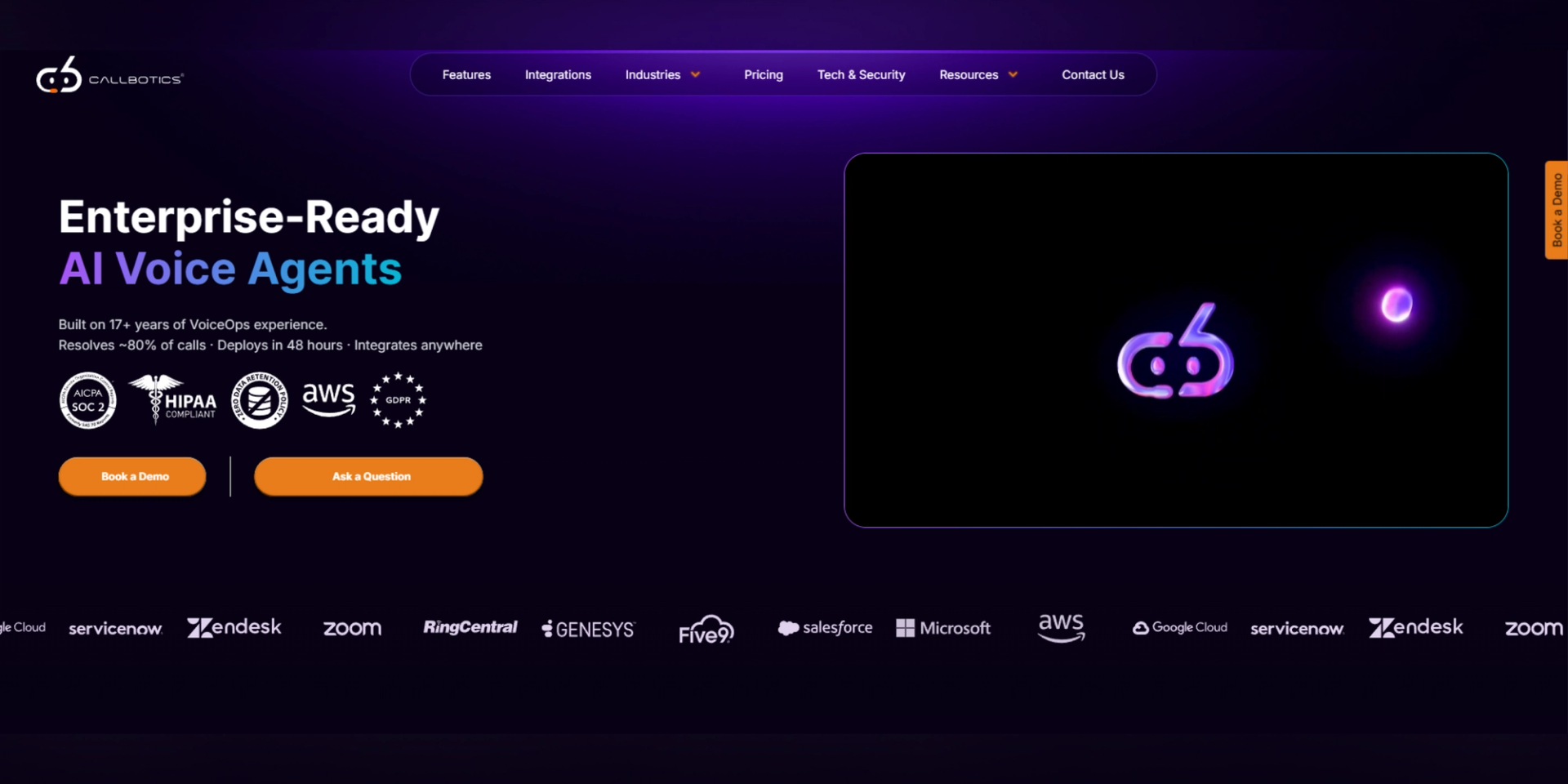
CallBotics.ai is built for enterprises that have moved past experimentation and need AI to perform reliably in live contact center environments. Unlike platforms optimized for demos or narrow use cases, CallBotics is designed around real operational pressure: fluctuating call volumes, complex workflows, compliance requirements, and strict resolution SLAs.
The platform is shaped by teams with over 17 years of hands-on contact center experience, which shows in how it handles the small operational nuances that often break AI in production. CallBotics features real-time transcription and advanced speech recognition for accurate, low-latency call handling and is optimized for fast responses, ensuring seamless customer interactions. Instead of focusing only on conversation quality, CallBotics prioritizes end-to-end resolution, seamless system integration, and predictable performance at scale.
CallBotics.ai focuses on production readiness and measurable outcomes, not surface-level automation.
Enterprise contact centers using CallBotics.ai have reported that the platform offers more control and full control over deployment, allowing organizations to customize their voice AI stack to meet specific business needs. This flexibility ensures that solutions are tailored to each organization's requirements. Key benefits include:
Pros
Cons
Hybrid pricing with transparent usage bands designed for scale.Flexible models based on call volume, automation coverage, and enterprise requirements.
Evaluating Vapi alternatives for real-world scale? Book a demo now and explore how teams moving from pilot to production benchmark CallBotics.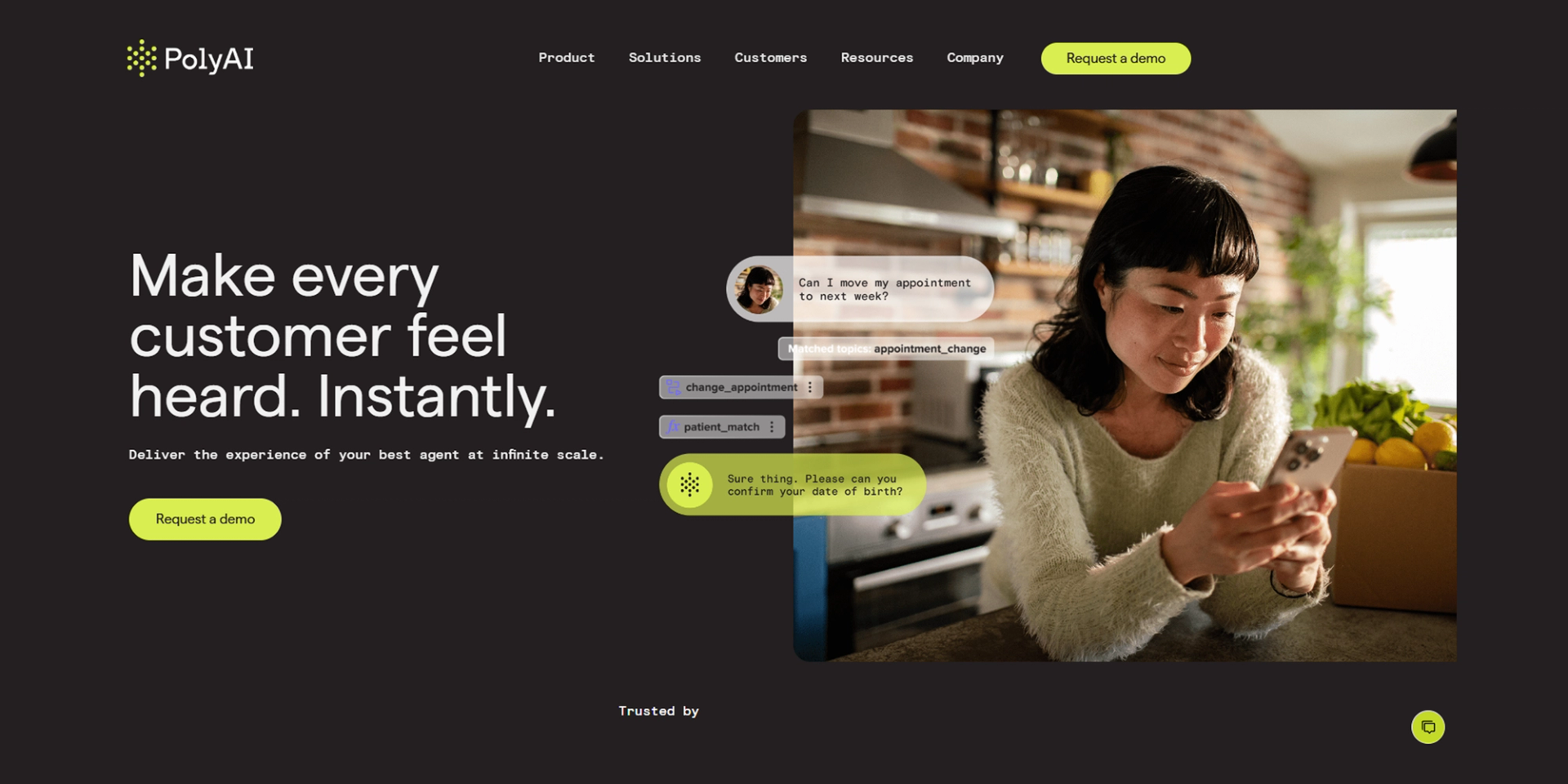
Poly.ai is an enterprise conversational AI platform focused on inbound customer service automation, best known for its strong natural language understanding and polished dialog design. Poly.ai enables the design and management of conversational pathways, allowing businesses to customize how customer interactions unfold for different scenarios or user needs. It is commonly adopted by large brands that prioritize brand-safe, high-quality conversational experiences as a replacement for traditional IVRs, particularly in predictable inbound service environments.
Large enterprises focusing on premium inbound voice experiences where conversation quality is prioritized over operational speed or customization. Poly.ai may not be the best fit for small businesses, as its solutions are primarily designed for enterprise needs rather than the straightforward automation and ease of use that small businesses typically require.
Custom enterprise pricing based on call volume, deployment scope, and support requirements. Typically positioned at the higher end with longer-term contracts.
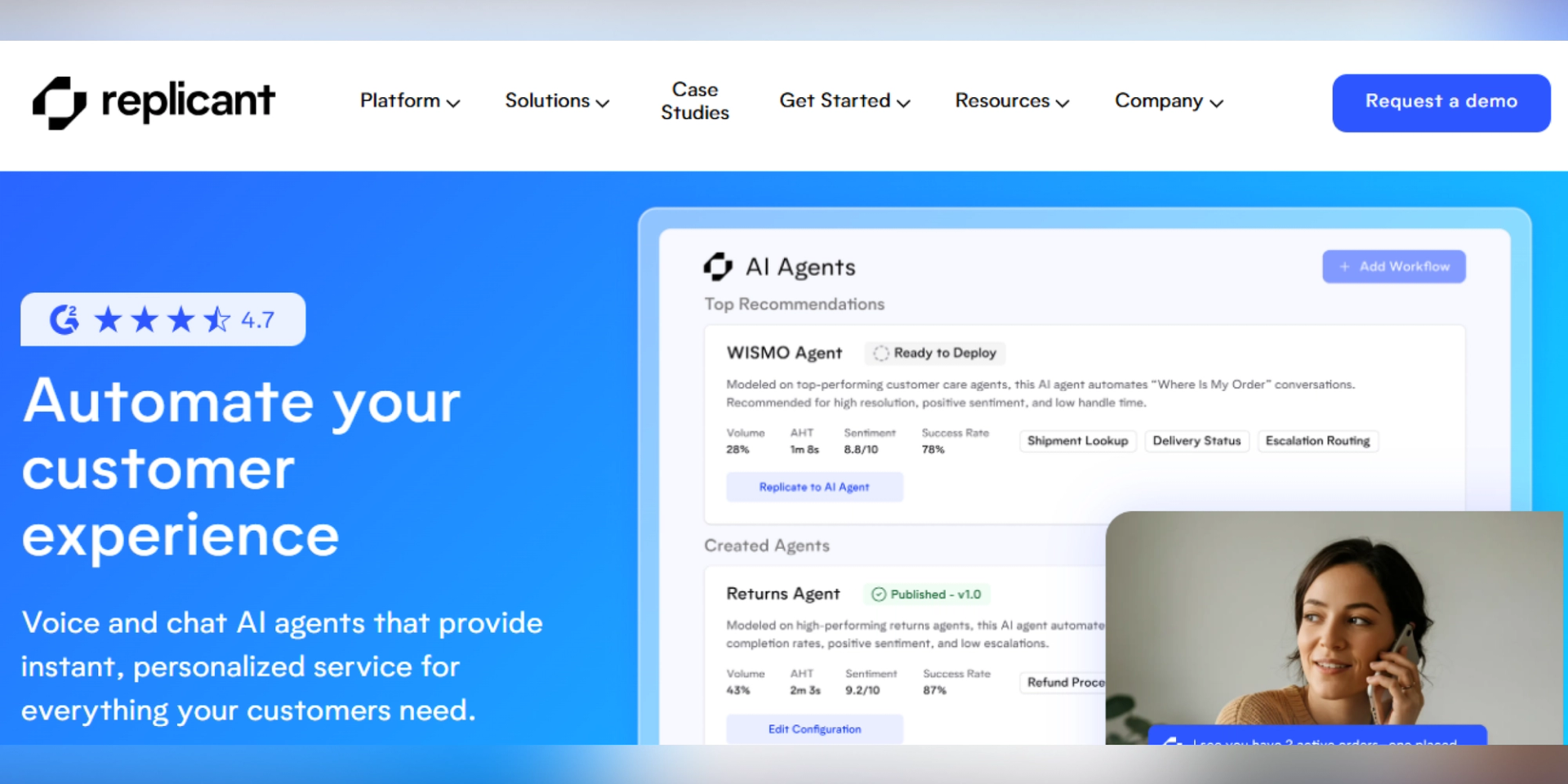
Replicant is an AI voice agent platform designed to handle large volumes of inbound calls in production contact center environments. As a phone agent solution, Replicant enables natural conversation flow and contextual task execution for managing high call volumes. The platform emphasizes reliability, escalation accuracy, and operational stability, making it a frequent choice for enterprises automating repetitive service interactions at scale.
Large contact centers with predictable inbound volumes that prioritize stability and escalation accuracy over rapid customization. Replicant is particularly suitable for automating high-volume customer calls, ensuring efficient and accurate handling of each interaction.
Enterprise contracts with annual commitments. Pricing scales with volume and complexity, often favoring large deployments.
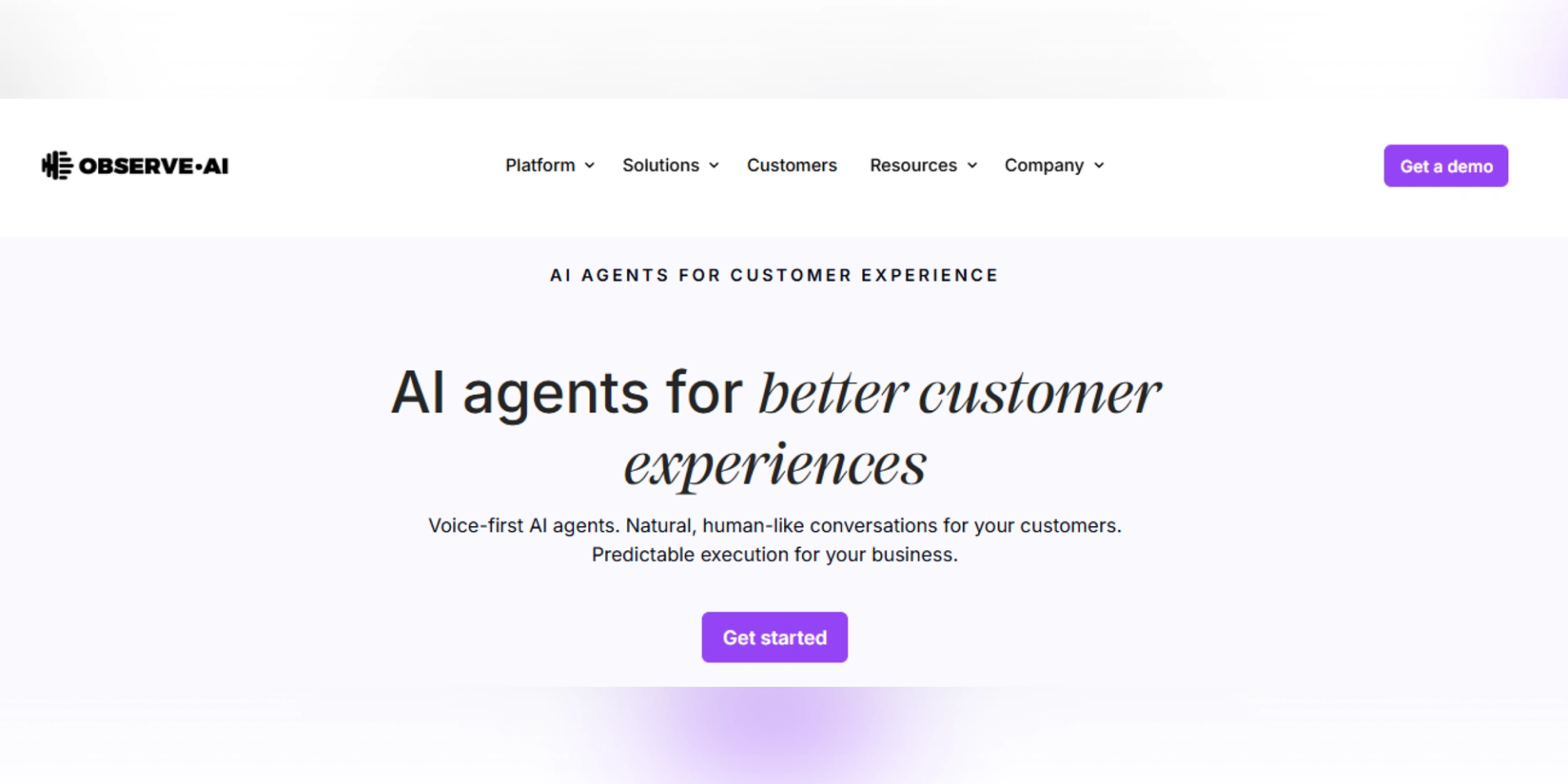
Observe.AI is a conversation intelligence and quality assurance platform, not a voice automation solution. It is typically used alongside existing contact center systems to analyze calls, improve agent performance, and provide operational insights, rather than to automate customer interactions directly.
Contact centers focused on performance analytics, QA automation, and agent coaching rather than call automation.
Per-seat pricing combined with usage-based analytics costs. Total cost increases with agent count and data volume.
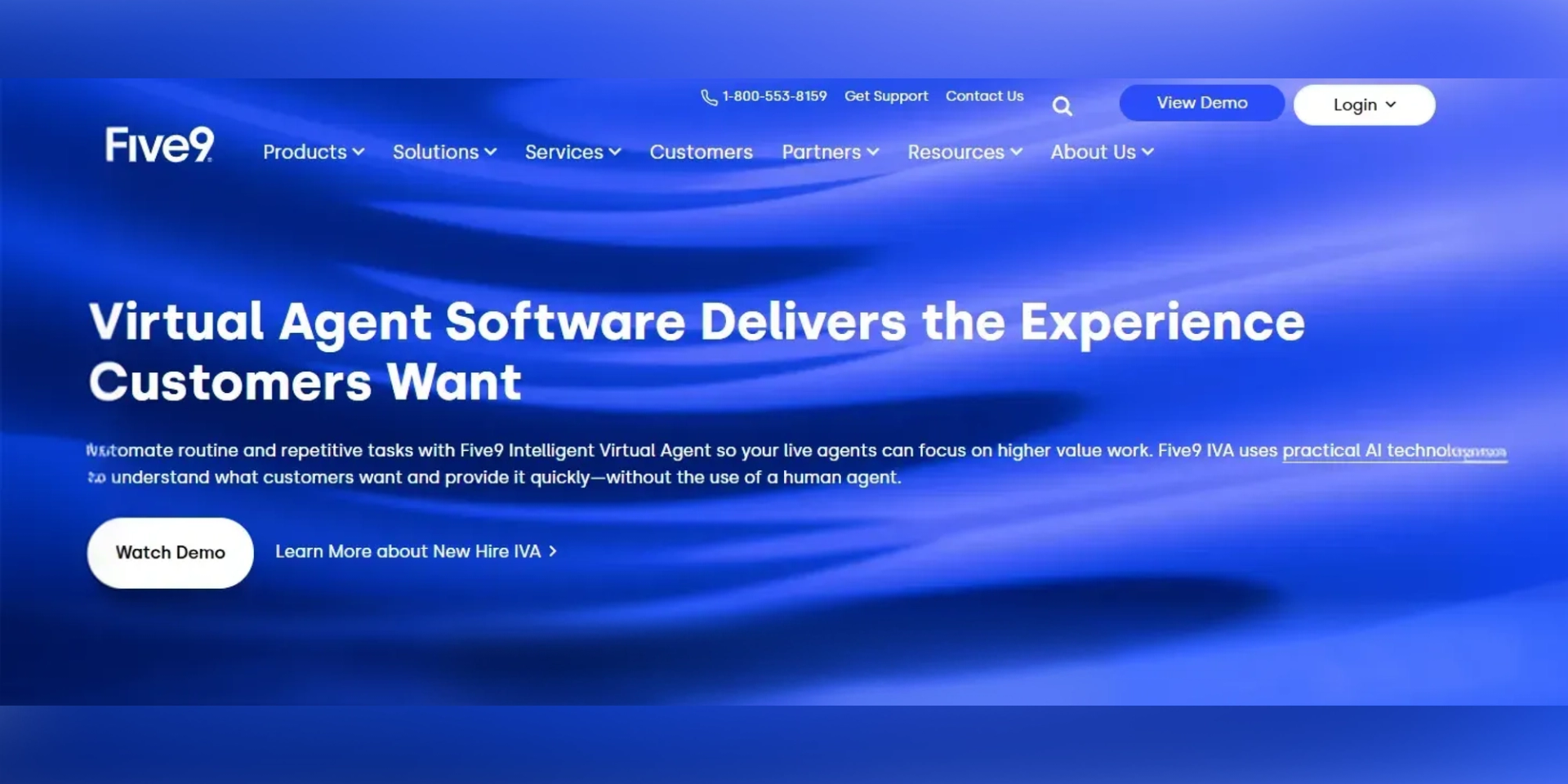
Five9 Intelligent Virtual Agent is built as an extension of the Five9 CCaaS platform, offering conversational IVR modernization for organizations already using Five9. Five9 supports SIP trunking, enabling scalable voice integration for real-time, production-level voice AI applications. Its value is strongest within the Five9 ecosystem, where it enables incremental automation without introducing additional vendors.
Organizations already standardized on Five9 that want incremental improvements to IVR without introducing a new vendor.
Bundled with Five9 plans. Pricing depends on existing licenses, feature tiers, and usage.
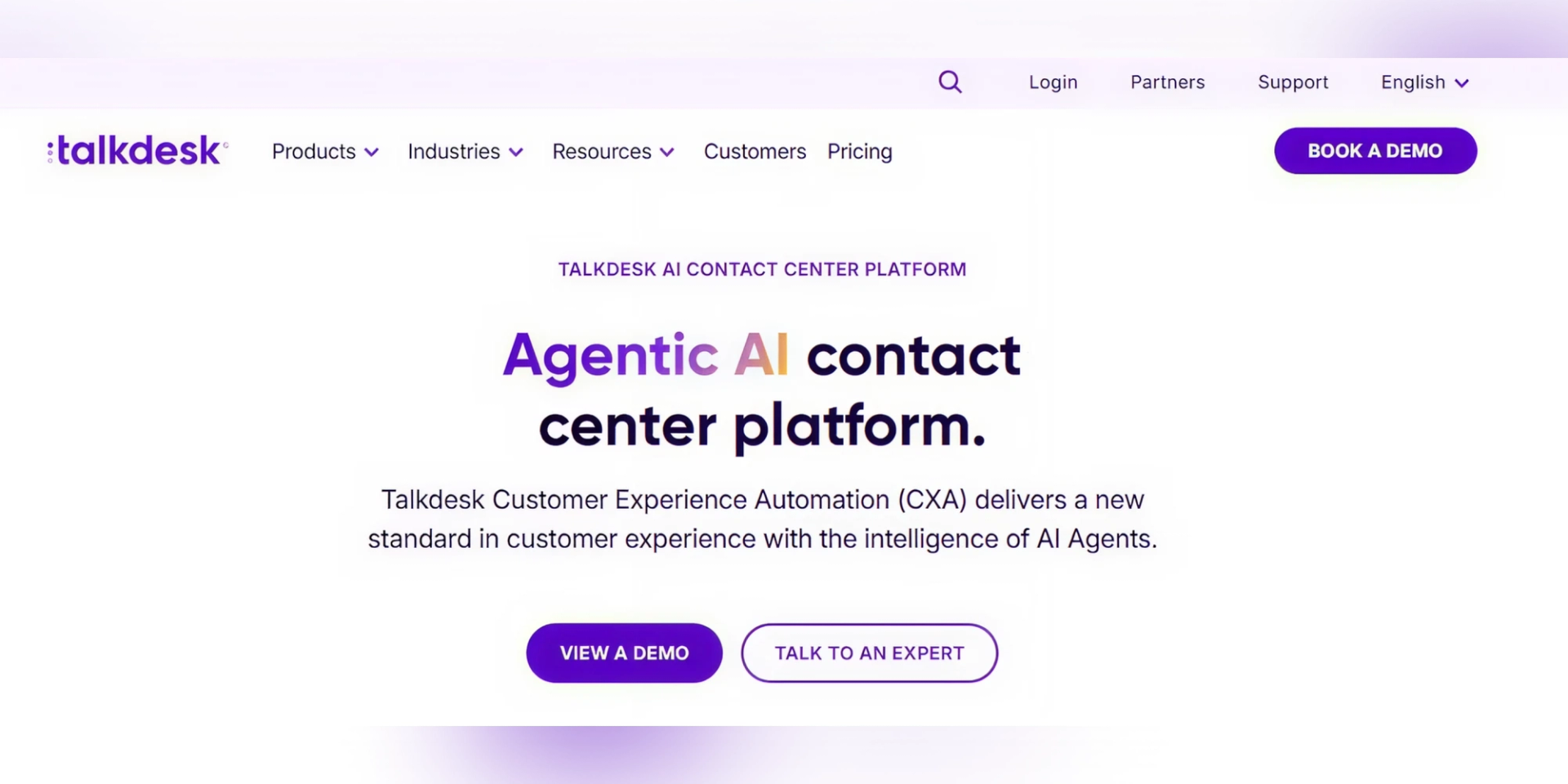
Talkdesk AI is part of Talkdesk’s broader omnichannel contact center platform, providing AI-driven automation across voice and digital channels. It leverages advanced AI models to power both voice and digital automation, enabling more accurate and efficient customer interactions. It is designed for enterprises seeking a unified CCaaS and AI stack, with automation tightly coupled to Talkdesk’s infrastructure.
Enterprises looking for an all-in-one CCaaS and AI solution with broad omnichannel coverage.
Subscription-based pricing tied to Talkdesk plans and AI add-ons. Costs scale with channels and usage.
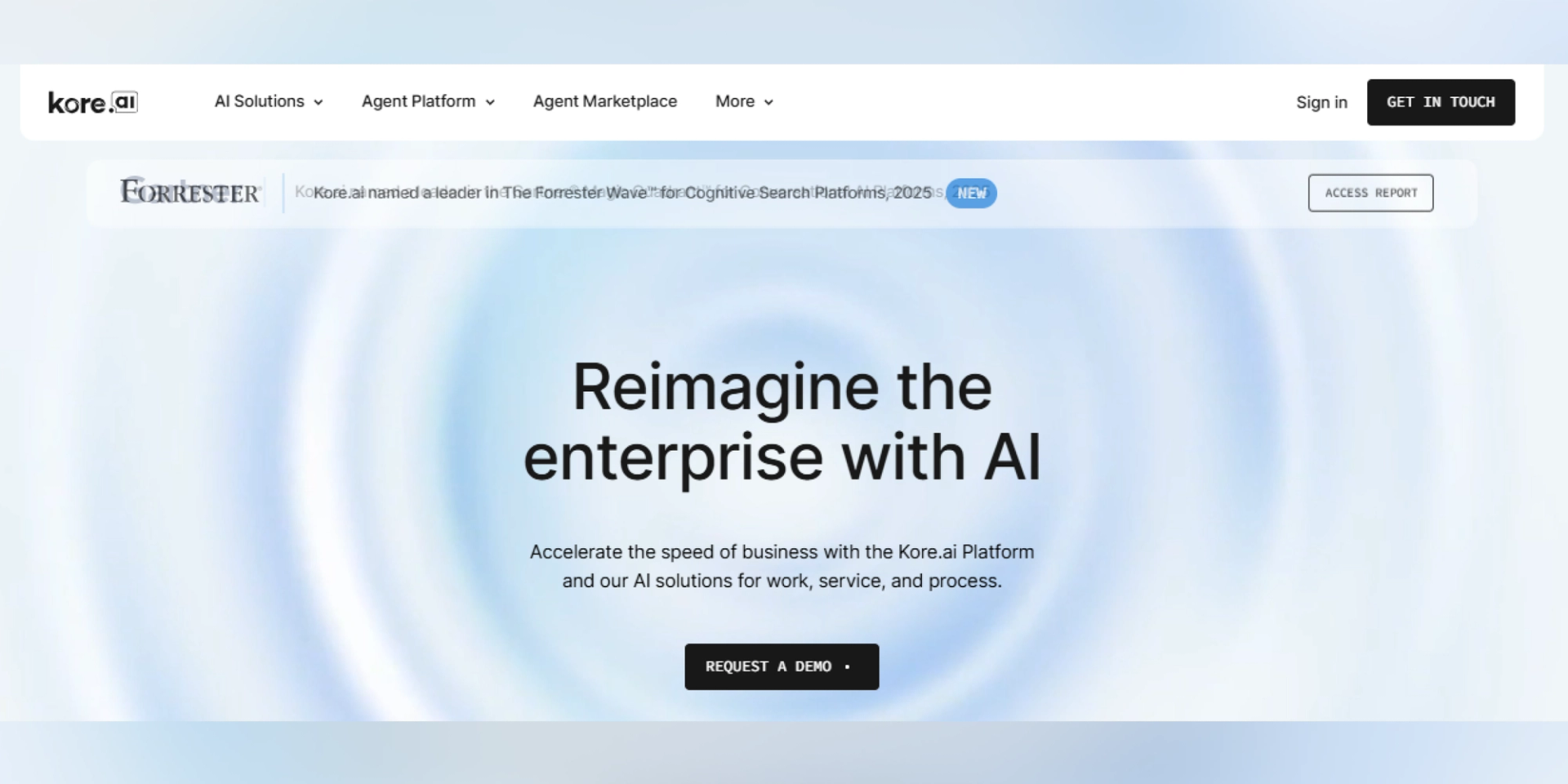
Kore.ai is a highly configurable enterprise conversational AI platform used for complex voice and chat orchestration. It is well-suited for organizations that require deep customization, extensive integrations, and governance, often supported by dedicated technical teams. Kore.ai takes a developer-first approach, enabling deep API control, technical ownership, and flexible integration for engineering-focused teams.
Enterprises with in-house technical resources are building deeply customized AI workflows.
License-based enterprise pricing. Total cost depends on customization, integrations, and ongoing development.
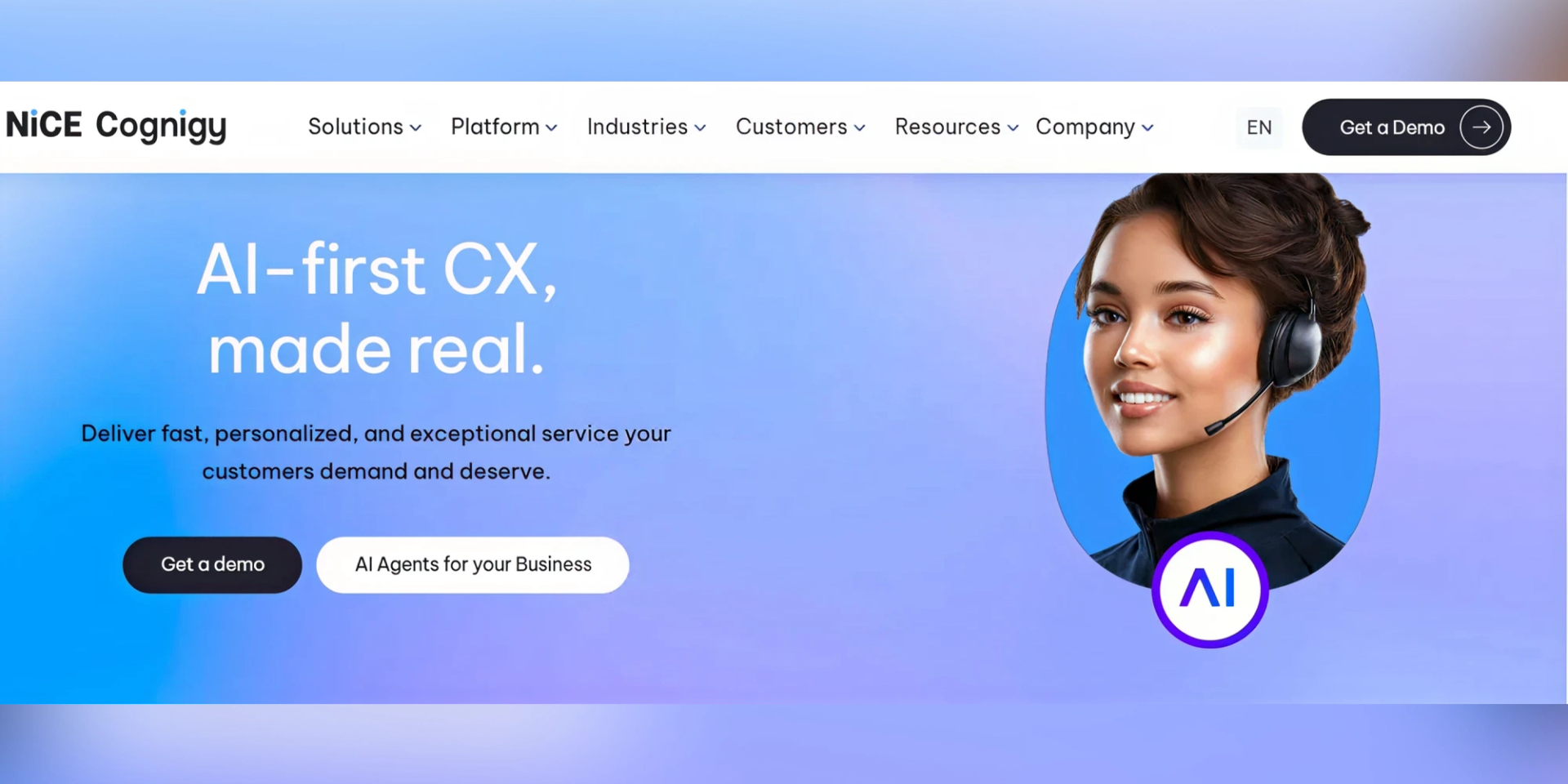
Cognigy is an enterprise-grade conversational AI orchestration platform with a strong focus on governance, compliance, and workflow control. It is commonly adopted by large, regulated organizations that need scalable automation with strict oversight and process enforcement.
Large enterprises in regulated industries with complex compliance and orchestration needs.
Enterprise contracts are based on scale, usage, and governance requirements.
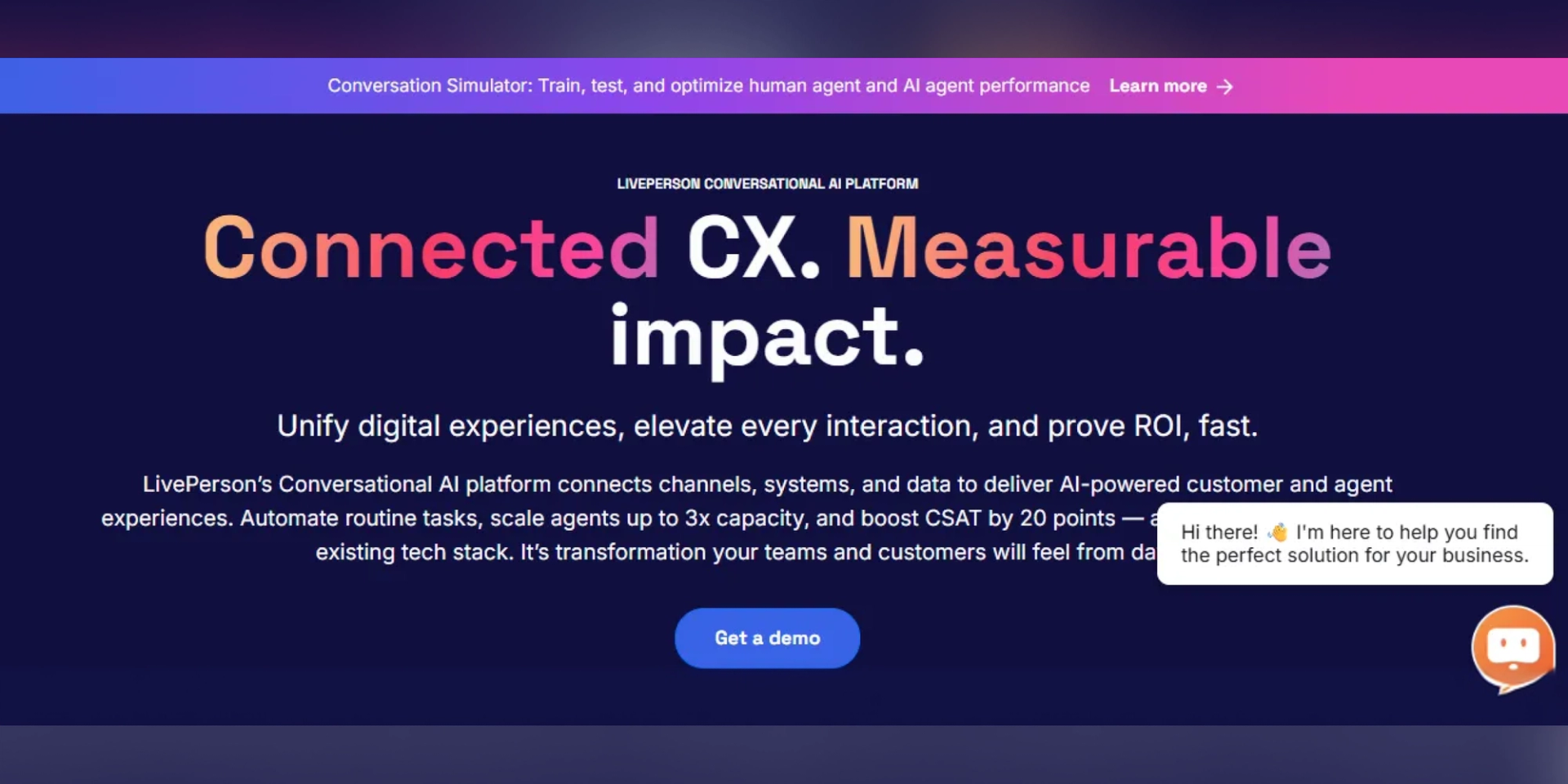
LivePerson is a digital-first customer engagement platform centered on messaging and chat automation. It excels at automating customer support interactions, efficiently handling inquiries and support tasks through AI-powered messaging. While it supports voice, its core strength lies in asynchronous digital channels, making it better suited to organizations that prioritize chat-led customer engagement over voice-first automation.
Organizations prioritizing digital and messaging channels over voice-first automation.
Enterprise pricing structured around interaction volume and platform modules.
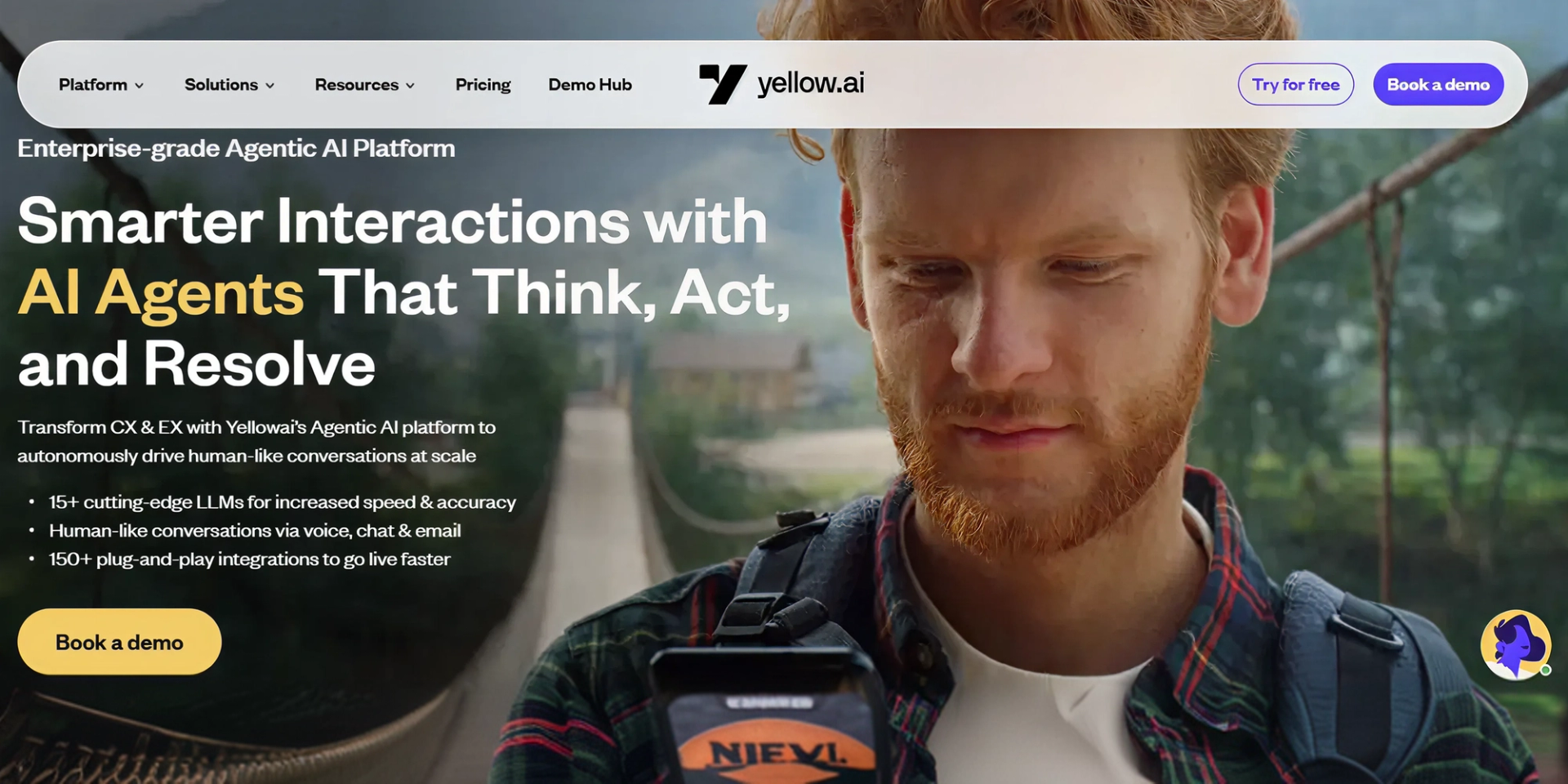
Yellow.ai provides multilingual conversational AI across voice and chat, with an emphasis on global language coverage. It supports multiple languages, enabling organizations to test and ensure consistency of AI agents across different regions and linguistic variations. It is often chosen by organizations operating across regions that need broad channel and language support, though the depth of voice resolution can vary by use case.
Global organizations prioritizing multilingual coverage across regions.
Tiered pricing based on channels, languages, and interaction volume.
Enterprises replacing Vapi are not simply looking for another voice AI tool. They are rethinking how voice automation fits into their operating model. As call volumes grow and AI moves into revenue-impacting workflows, the focus shifts from experimentation to reliability, control, and measurable outcomes. Teams need systems that behave predictably under load, integrate into existing contact center stacks, and support real customer resolutions without introducing operational risk.
This is where many Vapi deployments begin to show limits, and where CallBotics consistently stands out. The platform is designed for production environments where performance, compliance, and scale matter every day. Instead of optimizing for demos or developer flexibility alone, CallBotics focuses on how calls actually unfold in live contact centers, including edge cases, escalations, and the small operational nuances that drive resolution rates.
CallBotics.ai stands out because it:
This combination becomes critical when AI transitions from a pilot project into a core part of contact center operations.

Urza Dey (She/They) is a content/copywriter who has been working in the industry for over 5 years now. They have strategized content for multiple brands in marketing, B2B SaaS, HealthTech, EdTech, and more. They like reading, metal music, watching horror films, and talking about magical occult practices.
See how enterprises automate calls, reduce handle time, and improve CX with CallBotics.
CallBotics is an enterprise-ready conversational AI platform, built on 18+ years of contact center leadership experience and designed to deliver structured resolution, stronger customer experience, and measurable performance.