Both CallBotics and Sierra AI help businesses automate customer interactions with AI, but they are usually evaluated for different reasons. CallBotics is more naturally positioned for voice-first automation, faster rollout, and measurable call outcomes such as routing, containment, summaries, and resolution. Sierra AI is more commonly positioned as an enterprise customer experience platform for broader support automation across channels, with a strong emphasis on governance, agent design, and enterprise controls.
That means this is not just a feature comparison. It is a fair comparison. The better choice depends on the channel mix, rollout speed, workflow complexity, budget style, and the level of operational structure your team wants for the first use case. This guide focuses on those practical buying criteria rather than on marketing language alone.
CallBotics is best known for enterprise-ready AI voice agents, fast rollout, workflow execution, and contact center outcomes. Its public positioning highlights 48-hour deployment, transparent pricing, structured resolution, 400+ integrations, and experience built on 18+ years of contact center leadership.
Sierra AI is best known for enterprise customer experience automation, lifelike interactions across multiple channels, and a platform built for large-scale support operations. Its public positioning emphasizes a single agent across chat, SMS, WhatsApp, email, voice, and ChatGPT, along with trust, testing, and enterprise-grade controls.
So the quick summary is simple: CallBotics feels stronger for voice-first operations that need to move quickly and measure call outcomes clearly, while Sierra AI feels stronger for broader multi-channel CX programs that want deeper enterprise platform breadth.
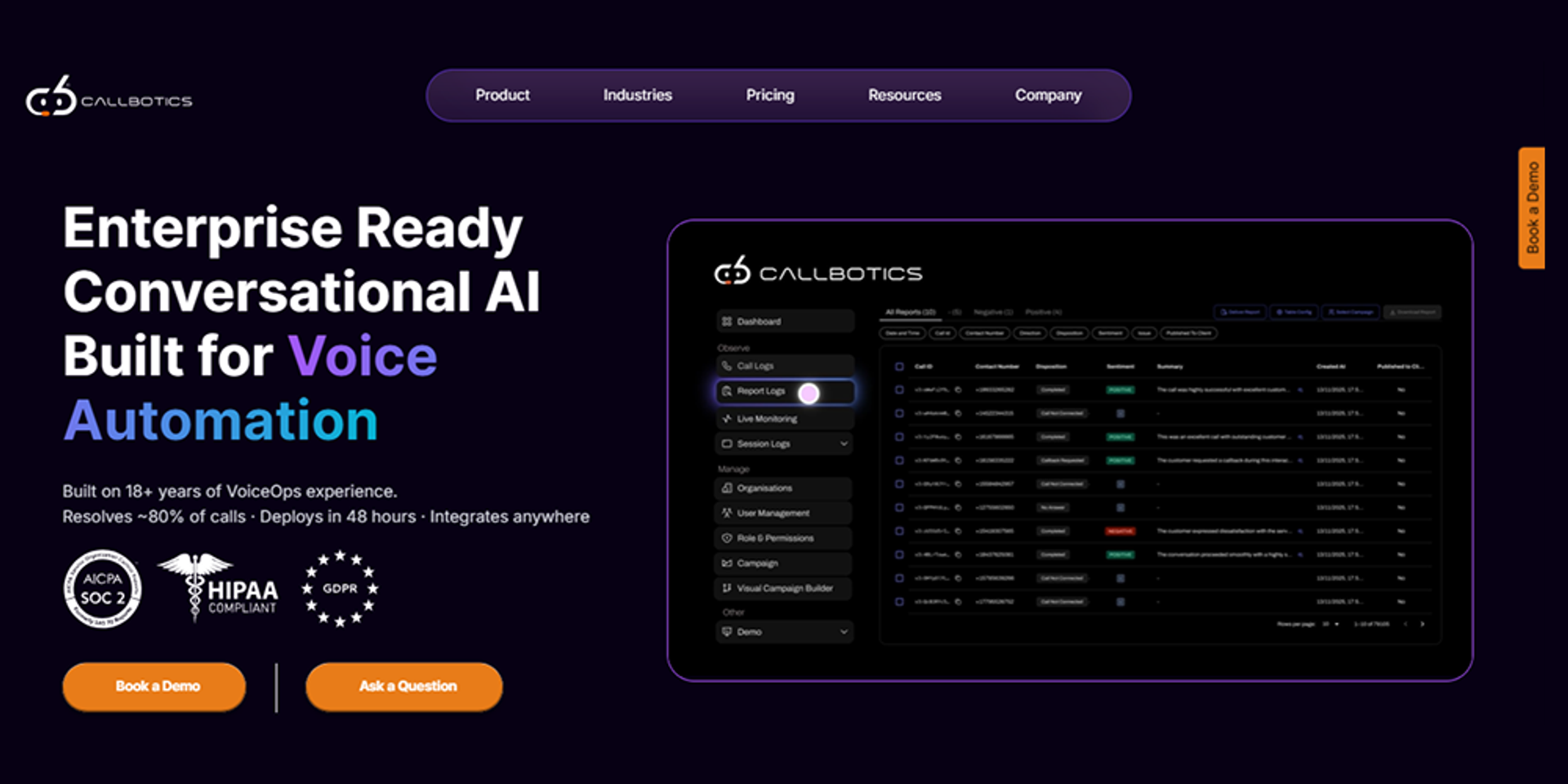
CallBotics is best understood as a voice-first AI automation platform for enterprise workflows. It focuses on inbound and outbound AI calling, intent-based handling, summaries, workflow execution, and analytics that help teams improve performance after launch. Its public messaging emphasizes queue reduction, structured resolution, enterprise deployment readiness, and faster implementation for real business use cases.
It is especially well-suited to teams that care about automating calls, measuring containment and resolution, and getting into production without a long enterprise rollout cycle. That makes it more naturally aligned to contact centers, BPOs, scheduling workflows, lead qualification, and other structured voice-first programs.
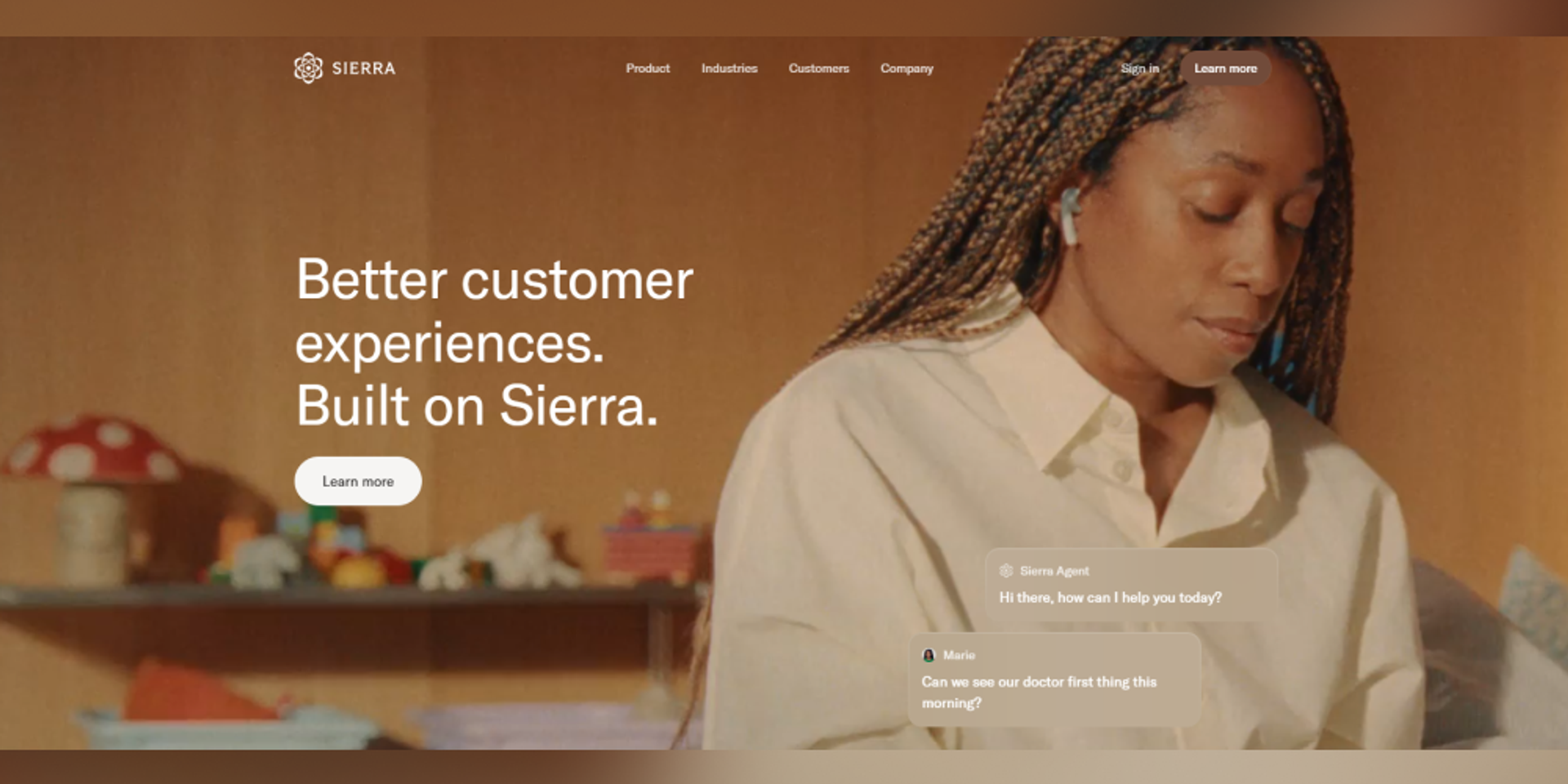
Sierra AI is best understood as an enterprise AI agent platform for customer experience and support automation across channels. Publicly, Sierra emphasizes rapid agent building, with or without engineering support; a single agent across channels; trust and reliability controls; and voice experiences that sound natural, helpful, and personalized.
That makes Sierra AI more naturally aligned to enterprises that want broader customer support automation beyond voice alone, especially in more complex environments where governance, testing, and multi-channel consistency matter heavily. It is often considered by teams looking at enterprise CX transformation rather than only voice workflow automation.
In practice, both platforms follow a similar setup path. Teams choose top intents, design workflows, connect systems, test the assistant, run a pilot, measure outcomes, and then expand. That is true whether the workflow is scheduling, support triage, order status, or outbound follow-up. The main difference is how each platform packages the process and how much effort typically sits inside the rollout.
CallBotics frames this path around faster deployment, white-glove rollout, and operational voice performance. Sierra frames it more around enterprise agent design, simulations, AI-powered evaluations, and broader CX deployment across channels. So the buying difference is not whether both can launch agents. It is how quickly they get to value and what kind of organizational setup they assume.
The most important differences are the ones that change operational outcomes and total cost over time. For most buyers, that means channel fit, rollout speed, automation depth, integrations, reporting, governance, and pricing behavior.
This is one of the clearest distinctions. CallBotics is openly voice-first in how it positions the product, its use cases, and its deployment motion. Sierra AI is broader in channel posture and presents itself as a single agent that can operate across chat, SMS, WhatsApp, email, voice, and ChatGPT.
That means CallBotics is usually the stronger fit when the phone is the main interaction layer, and the buyer wants to solve voice-specific problems first. Sierra AI is usually the stronger fit when the buyer is running a larger cross-channel CX strategy and wants one platform story across multiple customer touchpoints.
CallBotics has a stronger public story around speed, with 48-hour deployment messaging and white-glove onboarding themes appearing repeatedly in its positioning. Sierra AI, by contrast, presents a more enterprise-software approach with agent studios, simulations, evaluations, and broader platform rollout considerations.
For a buyer, the practical reading is straightforward:
Both platforms go beyond simple routing. CallBotics publicly leans more into workflow execution, structured resolution, and high automation of repeatable call types. Sierra AI also supports action-taking agents and multi-step journeys, but the public emphasis is broader and more CX-platform oriented than voice-workflow specific.
That means:
Tool actions matter because AI agents only become truly useful when they can book, update, verify, or create something reliably. CallBotics publicly highlights 400+ integrations and positions these around CRM workflows, contact center operations, and structured resolution. Sierra AI highlights integration with systems of record, CRM, CDP, and enterprise data layers, but its public integration messaging is more platform-level than workflow-count driven.
For most buyers:
Analytics matter because AI platforms should improve over time, not just launch once. CallBotics leans strongly into call summaries, analytics dashboards, QA-style visibility, audit-ready reporting, and measurable outcomes such as containment and cost per call. Sierra AI emphasizes evaluations, simulations, business impact, and enterprise customer-experience reporting.
That creates a useful distinction:
Sierra AI has a very visible public trust and reliability posture, with a dedicated trust center, security documentation access, and strong enterprise messaging around controls and policies. CallBotics also positions itself as enterprise-ready and compliance-oriented, but its public emphasis is more deployment and workflow-outcome-led than trust-center-first.
The practical takeaway is that both platforms should be validated carefully in a live evaluation. Buyers should confirm:
Sierra AI may appear stronger in public governance branding, but CallBotics remains highly competitive here for enterprise buyers who care about controls inside a voice-first operating model.
Pricing style is another meaningful difference. Sierra AI is commonly positioned as enterprise quote-based rather than publicly packaged. CallBotics, by contrast, speaks more openly about transparent pricing, zero implementation fees, and predictable commercial framing around real voice automation use cases.
That means:
| Category | CallBotics | Sierra AI |
|---|---|---|
| Best for | Voice-first enterprise automation and contact center workflows | Broader enterprise CX automation across channels |
| Channel fit | Multi-channel with a specialization in voice | Multi-channel |
| Deployment speed | Strong 48-hour rollout positioning | More enterprise-led rollout motion |
| Automation depth | Strong routing, resolution, summaries, structured workflow execution | Strong enterprise agent behavior across broader journeys |
| Integrations | 400+ integrations with workflow execution focus | Strong enterprise system-of-record and CX integration posture |
| Analytics | Stronger public emphasis on call summaries, QA visibility, and intent-level insights | Stronger public emphasis on simulations, evaluations, and enterprise CX reporting |
| Governance | Enterprise-ready and workflow-oriented | Strong public trust and reliability branding |
| Pricing style | More transparent and packaging-friendly | Enterprise quote-based |
Sources: (CallBotics)
CallBotics is typically strongest where voice is the main operating channel and where success depends on structured outcomes rather than only conversation quality.
CallBotics is a strong fit for inbound call automation, where the goal is to answer instantly, reduce wait times, handle repetitive intents, and maintain service levels during peak periods. This aligns closely with its public positioning around automating 80 percent of calls and materially reducing the cost per call.
Structured workflows such as booking, rescheduling, reminders, and confirmations are a natural fit because the success criteria are clear and the workflow can be measured precisely. CallBotics’ voice-first execution model aligns well with this category.
CallBotics is also well-suited to outbound follow-ups and lead qualification programs where the system needs to collect details, identify intent, and pass a clean summary to a human team for next steps.
For teams trying to reduce transfers and replace rigid menus with natural-language routing, CallBotics is a strong fit. Its positioning around intent handling, workflow outcomes, and contact center operations supports this use case especially well.
Sierra AI is typically strongest in broader enterprise CX environments where voice is important, but not necessarily the only channel the business is trying to transform.
Sierra AI is well-positioned for large enterprises that want to automate customer support across multiple teams and touchpoints while maintaining a premium customer experience standard.
Sierra AI is also a strong consideration when customer journeys depend on deeper enterprise-system connections and multi-step support flows across channels. Its broader AI-agent operating-system positioning supports that story.
CX programs needing strict controls and oversight
Where governance, simulations, testing, and enterprise controls are central to platform selection, Sierra AI has a compelling public story. Teams that prioritize oversight and broader CX governance may find it especially attractive.
Both platforms are credible. The differences are mostly about fit, timeline, and operating model.
Pros
What to validate in a pilot
Pros
What to validate in a pilot
The fastest way to decide is to start from your real constraints, not the broadest brand narrative.
Choose CallBotics if voice is your main channel, if rollout speed matters, if you want clearer operational reporting, or if your team cares about measurable outcomes such as routing quality, containment, summaries, and cost control. It is usually the better fit for contact center and BPO teams that want fast time-to-value and a platform shaped by real operator experience.
Choose Sierra AI if you are evaluating a broader enterprise CX transformation across channels, if governance and trust-center posture are central buying criteria, or if you want a premium enterprise support platform with strong natural conversation branding.
A good way to decide is to pilot two intents: one simple and one medium-complexity. For example, test FAQs plus scheduling, or routing plus status updates. Then compare setup time, containment, transfer quality, summary usefulness, and cost per resolved contact. That will usually give you a clearer answer than a vendor demo alone. This is a practical recommendation based on the differences above.
CallBotics helps teams launch voice AI faster by combining deployment speed with operational depth. Developed by teams with over 18 years of experience in the BPO and contact center industry, it is built by people who understand queue pressure, routing complexity, handoff quality, and how real voice workflows behave in production.
What makes CallBotics different:
CallBotics and Sierra AI are both serious AI platforms, but they solve slightly different buying problems. Sierra AI is a strong fit for broader enterprise customer experience programs that want premium cross-channel agent positioning and strong governance signals. CallBotics is the stronger fit for teams that want voice-first automation, faster time-to-value, practical workflow execution, and clearer operational outcomes in contact center environments.
The best choice depends on your channel mix, rollout timeline, workflow complexity, and budget style. If your first priority is to get high-value voice workflows live quickly and improve them with robust reporting and operational control, CallBotics is usually the better option.

Urza Dey (She/They) is a content/copywriter who has been working in the industry for over 5 years now. They have strategized content for multiple brands in marketing, B2B SaaS, HealthTech, EdTech, and more. They like reading, metal music, watching horror films, and talking about magical occult practices.
See how enterprises automate calls, reduce handle time, and improve CX with CallBotics.
CallBotics is an enterprise-ready conversational AI platform, built on 18+ years of contact center leadership experience and designed to deliver structured resolution, stronger customer experience, and measurable performance.