Customer service automation has entered a new phase.
For many years, automation in support operations meant basic chatbots, decision trees, or ticket routing systems that handled only a narrow slice of interactions. These tools helped deflect simple requests, but most complex conversations still required human agents.
That model is changing rapidly.
The latest generation of AI platforms is designed to automate entire customer conversations. Instead of responding to predefined questions, AI agents can interpret intent, execute workflows, retrieve operational data, and complete real tasks across support systems.
Platforms like Decagon AI have emerged as early examples of this shift. By combining large language models with structured operational workflows, these systems enable AI agents to resolve support requests with far less human intervention.
However, as organizations expand their automation strategy, many begin evaluating other platforms alongside Decagon. The goal is not simply to compare features. It is to determine which technology best aligns with operational realities such as channel mix, implementation speed, integration depth, and the complexity of customer workflows.
Some organizations require strong digital support automation across chat and email. Others prioritize voice automation for call-heavy operations. In many environments, the primary challenge is reducing resolution time while maintaining service quality at scale.
This guide compares the leading Decagon AI alternatives in 2026 based on operational fit. Rather than focusing only on product features, it examines where each platform performs best, what type of support environment it is designed for, and how organizations can select the right automation approach for their service model.
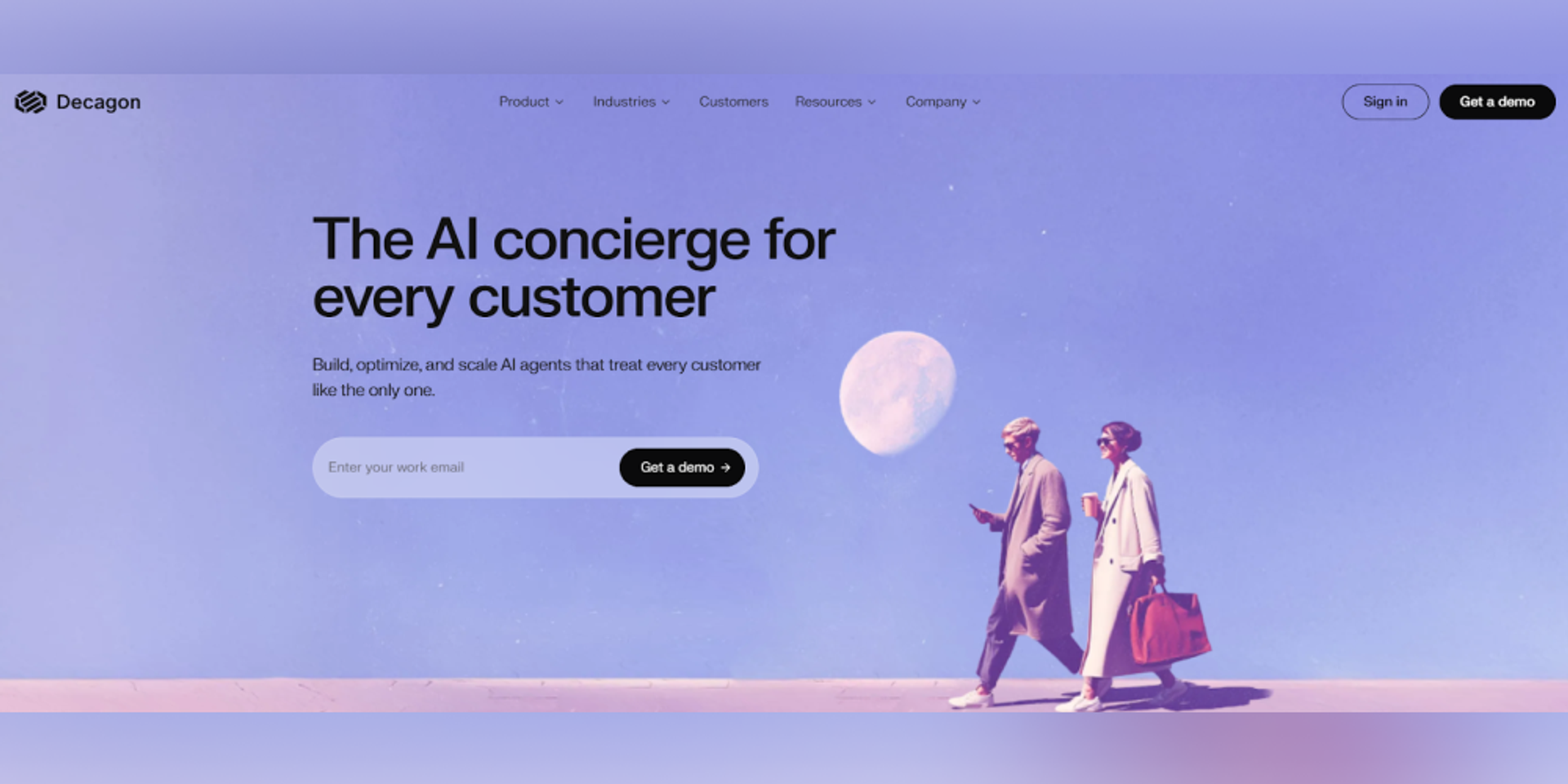
Caption: Decagon Homepage
Decagon AI is an enterprise AI customer support platform designed to automate service interactions across digital channels such as chat, messaging, and email.
Unlike earlier chatbot systems that relied on scripted responses, Decagon focuses on deploying autonomous AI agents capable of understanding customer intent and executing operational workflows.
These agents can:
This architecture allows organizations to move beyond simple ticket deflection toward more advanced automation, where AI agents handle complete support interactions.
A typical deployment involves integrating Decagon with existing service infrastructure such as CRM platforms, helpdesk systems, and operational databases. Once connected, AI agents can access customer context and interact with backend systems to resolve requests more effectively.
The platform is often used to automate:
By automating these repetitive workflows, support teams can reduce ticket volume and allow human agents to focus on more complex interactions.
However, as automation initiatives mature, organizations frequently evaluate multiple platforms before committing to a long-term solution. The decision often depends on factors such as implementation complexity, channel coverage, operational flexibility, and integration requirements.
To understand how AI technologies analyze conversations and extract operational insights from customer interactions, read more about how AI voice analytics works.
Selecting a conversational AI platform is not simply a technology purchase. It is an operational decision that affects how customer service is delivered across channels.
As organizations assess automation platforms, several recurring considerations influence whether they evaluate alternatives alongside Decagon.
Enterprise software platforms commonly rely on custom pricing models tailored to each organization’s scale and requirements.
While this approach allows vendors to design flexible commercial agreements, some organizations prefer greater pricing transparency during early evaluation.
Understanding the expected cost structure helps decision-makers assess how automation will affect long-term support economics.
Key considerations typically include:
Long-term scalability as automation expands
Clear pricing models allow organizations to estimate cost-per-resolution improvements and determine whether automation investments align with operational targets.
As a result, many buyers compare several platforms before entering detailed procurement discussions.
Customer service operations vary widely in their communication channels.
Some organizations manage the majority of interactions through digital channels, such as:
In these environments, digital automation platforms are often the primary focus.
However, many industries continue to rely heavily on voice interactions. Phone calls remain the dominant service channel in sectors such as healthcare, insurance, telecommunications, and appointment-based services.
In call-heavy environments, support leaders often evaluate platforms designed specifically for voice automation.
These systems deploy AI voice agents capable of handling complex conversations, managing verification steps, and executing multi-step workflows across operational systems.
For organizations exploring how AI agents can automate complex call workflows, read how to automate appointment scheduling calls.
Historically, deploying conversational AI systems has required substantial engineering effort.
Traditional implementations may involve:
These processes can extend deployment timelines significantly.
Organizations with limited engineering resources often prioritize platforms that reduce implementation complexity while still delivering meaningful automation.
Technologies capable of transforming operational documentation, workflows, or existing knowledge bases into production-ready AI agents can significantly accelerate adoption.
Faster deployment also shortens the time required to realize operational benefits such as reduced ticket volume or improved response times.
Support automation requirements differ significantly across industries.
For example:
An e-commerce company may primarily handle order tracking, returns, and shipping inquiries.
A healthcare organization may manage appointment scheduling, patient intake, and insurance verification.
A telecommunications provider may focus on service troubleshooting and billing inquiries.
Because these workflows vary widely, some AI platforms specialize in particular operational environments.
Organizations evaluating automation tools often compare several platforms to determine which system aligns most closely with the types of conversations they manage daily.
Customer service automation rarely operates in isolation.
Effective AI agents must interact with multiple operational systems to complete customer requests.
These systems may include:
Identity verification services
Without these integrations, AI agents can only provide information rather than resolving issues.
When evaluating automation platforms, organizations typically assess how easily the system connects to existing infrastructure.
The flexibility of APIs, workflow orchestration tools, and integration frameworks often determines whether AI agents can automate real business processes rather than simply responding to questions.
Comparing conversational AI platforms requires looking beyond marketing claims.
The most effective evaluations focus on how a system performs within real service operations, including how it handles conversations, integrates with infrastructure, and scales across support workflows.
Several criteria are particularly important when assessing alternatives.
AI automation systems operate at different levels of capability.
Some platforms primarily route incoming requests to the correct department or queue.
Others provide agent-assist capabilities, generating suggested responses that human agents can review and send.
More advanced systems aim for full resolution, where AI agents handle entire customer interactions independently.
Understanding this distinction is critical when evaluating platforms.
Automation that only routes requests may reduce triage workload but still relies heavily on human agents. Systems that autonomously resolve interactions can significantly reduce operational costs and improve response times.
Organizations evaluating automation platforms should therefore consider how many real workflows the AI can complete end-to-end.
Customer support operations increasingly span multiple communication channels.
Typical service environments include:
Social media interactions
Some AI platforms specialize in digital channels, while others extend automation into voice interactions.
Selecting the right platform requires aligning automation capabilities with the channels customers actually use.
In environments where voice remains the primary support channel, voice automation capabilities often become the most important evaluation factor.
Automation platforms must integrate with the systems that support daily operations.
For example, resolving a customer request may require an AI agent to:
Platforms with strong integration capabilities allow AI agents to perform these actions directly rather than simply providing informational responses.
Flexible APIs and integration frameworks also make it easier to extend automation to new workflows over time.
Deploying AI agents across customer service operations requires robust governance and oversight.
Organizations typically require features such as:
These capabilities ensure that automation operates reliably and that service interactions remain measurable.
Built-in analytics also provide insight into operational performance, allowing organizations to monitor resolution rates, identify workflow gaps, and continuously improve automation strategies.
Finally, organizations evaluating conversational AI platforms must consider the full cost of deployment.
Automation investments involve more than licensing fees.
Decision-makers often assess:
A clear understanding of these factors helps organizations determine which platform provides the best operational return on investment as automation expands across support channels.
The conversational AI ecosystem has expanded rapidly over the past two years. What began as simple chatbot tools has evolved into a diverse landscape of automation platforms designed to support different operational models.
Some platforms focus on digital customer support channels such as chat and email. Others specialize in enterprise conversational AI orchestration, while a growing category is focused on voice-first automation and call-heavy operations.
Because of these differences, organizations evaluating automation technology often compare several platforms before selecting the one that best fits their workflows.
The platforms below represent some of the most widely discussed alternatives to Decagon AI in 2026. Each tool addresses a different segment of the automation landscape.
Rather than ranking them generically, this section highlights where each platform is most effective and the type of service environment it typically supports.
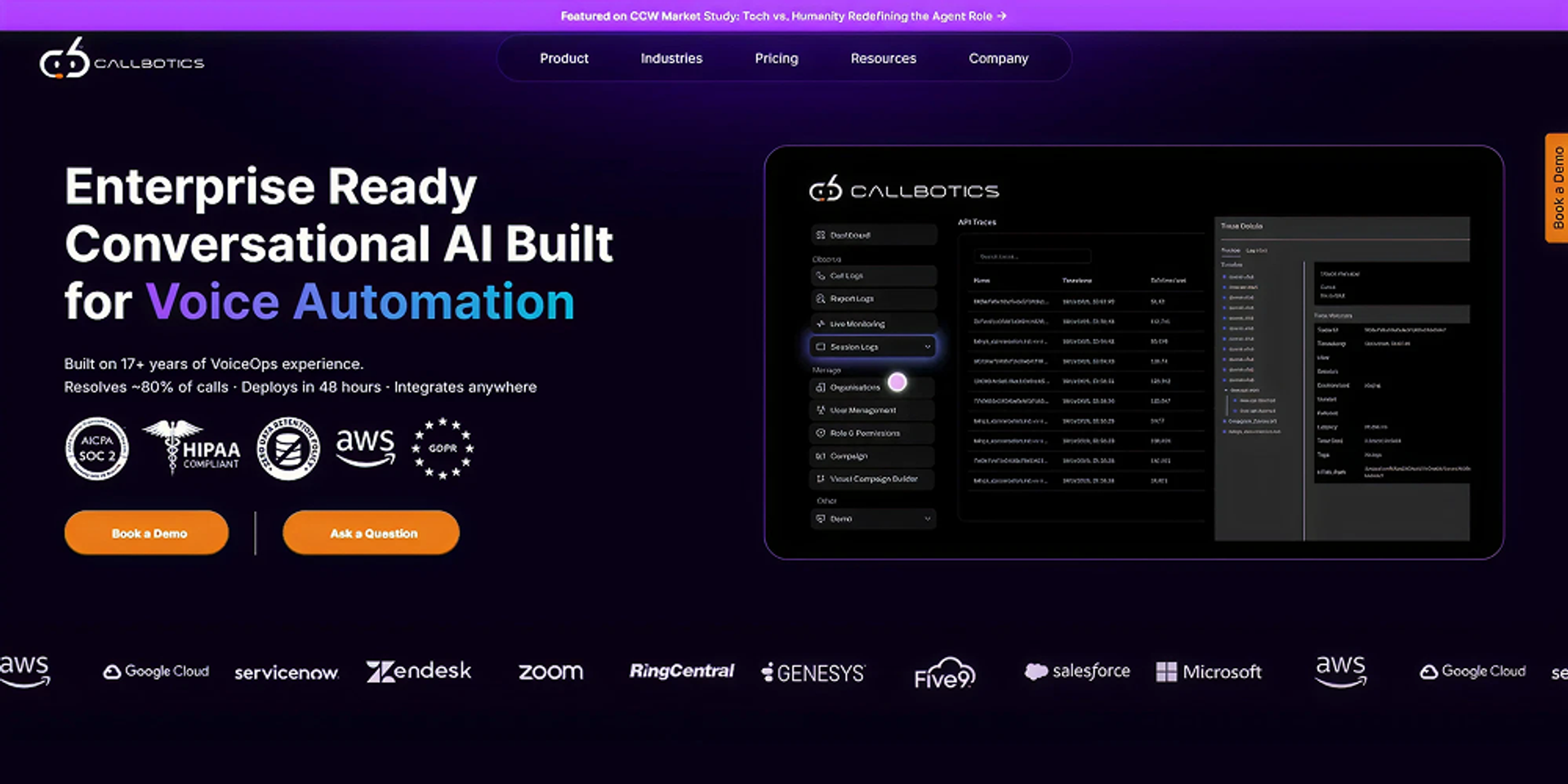
Caption: CallBotics Homepage
CallBotics is designed as an enterprise conversational AI platform that orchestrates automated customer interactions across operational workflows. Built by teams with 17+ years of experience in the contact center industry, CallBotics understands the nuances of enterprise voice automation.
Rather than focusing solely on digital chat automation, the platform enables organizations to deploy AI agents capable of managing complex service interactions across multiple communication channels. These agents are designed to operate within the broader contact center ecosystem, integrating directly with operational systems and executing real workflows.
At its core, the platform functions as a conversational orchestration layer. AI agents interpret customer intent, retrieve operational data, and perform actions across backend systems while maintaining a natural conversation with the customer.
This allows organizations to move beyond simple ticket deflection toward automation that can resolve service requests end-to-end.
Typical workflows orchestrated through the platform include:
Because these workflows often involve multiple systems, the platform is designed to integrate with CRM platforms, support tools, scheduling systems, and internal operational databases.
This orchestration capability allows AI agents to access the information required to complete tasks rather than simply providing informational responses.
In practice, organizations use CallBotics to automate large volumes of service interactions while maintaining operational oversight through built-in analytics and monitoring capabilities.
The platform is commonly deployed in environments such as:
In these environments, conversational AI orchestration enables organizations to improve resolution rates, reduce service wait times, and scale support operations without increasing headcount.
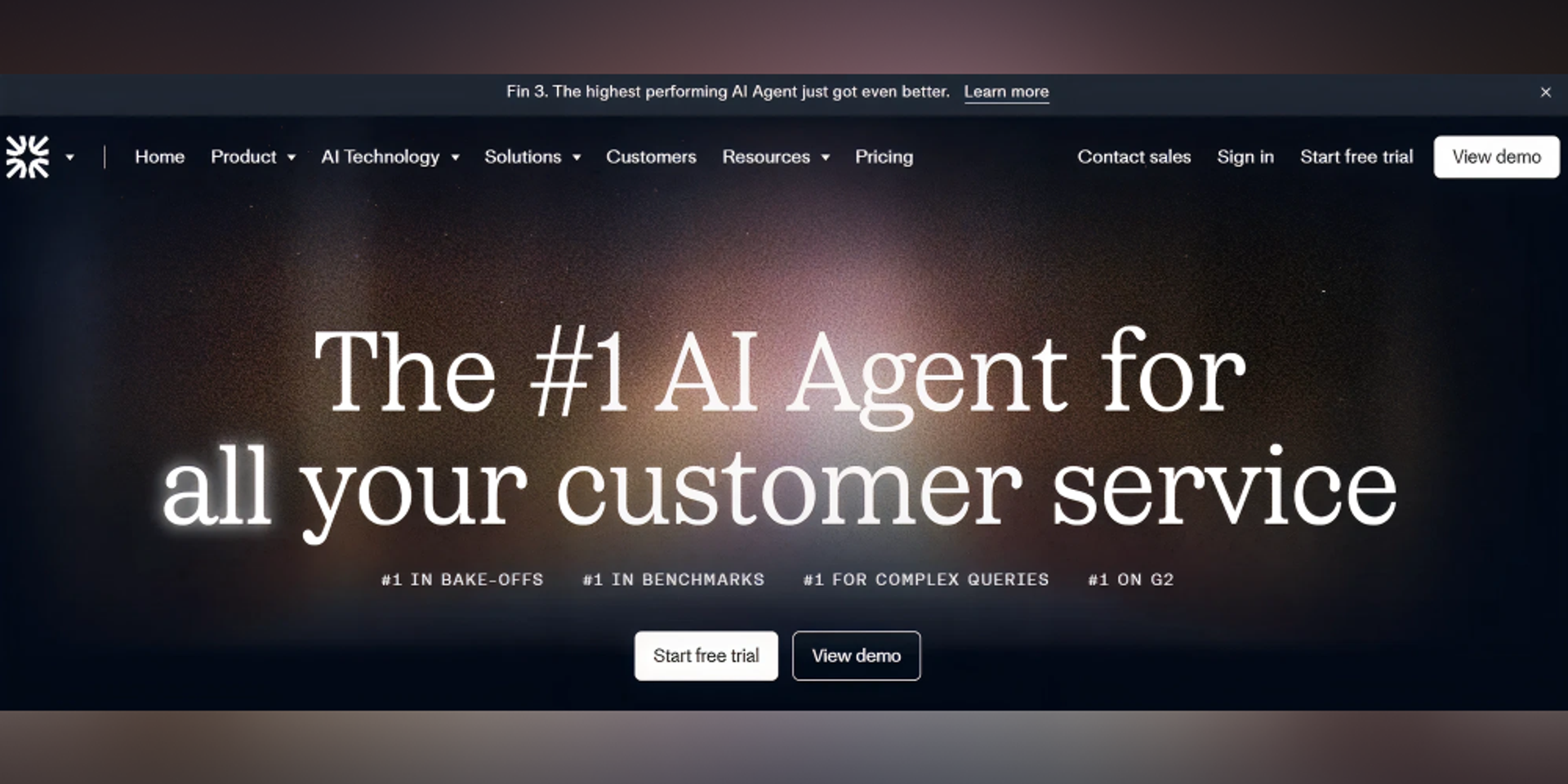
Caption: Fin’s Homepage
Fin is Intercom’s AI support agent built directly into the Intercom customer messaging platform.
For companies already using Intercom as their helpdesk or customer communication layer, Fin offers a relatively seamless way to introduce AI automation into existing workflows.
The system is designed primarily for digital support environments, particularly companies that rely heavily on chat-based customer service.
Fin works by analyzing customer messages, retrieving relevant information from help center content, and automatically generating responses. When the AI agent cannot resolve a request, it can escalate the conversation to a human agent inside the Intercom interface.
Organizations that benefit most from Fin typically share several characteristics:
Because the system operates natively inside the Intercom ecosystem, implementation tends to be straightforward for teams already running their support operations on that platform.
However, organizations with more complex support channels or voice-heavy operations may require broader automation capabilities.
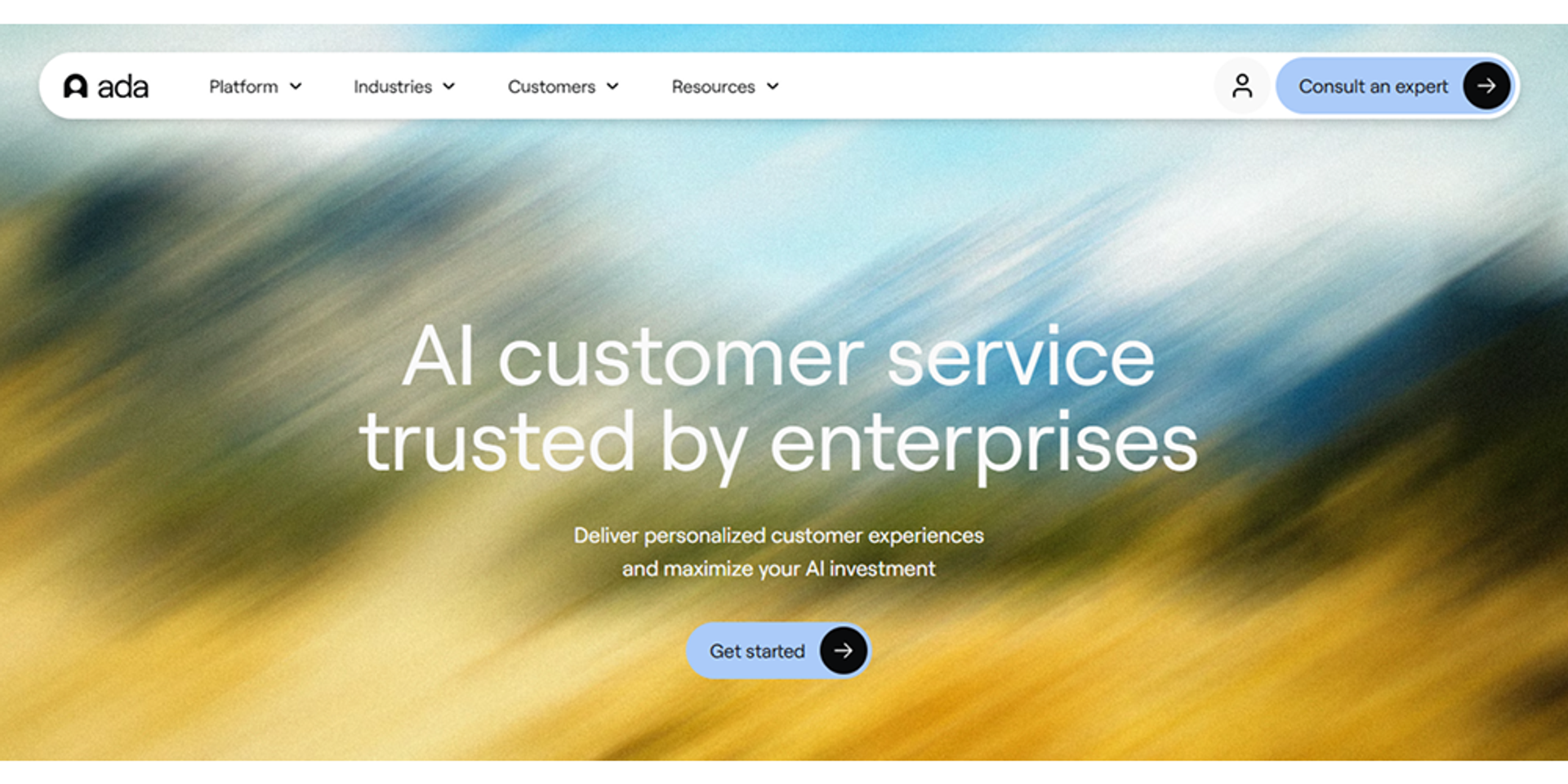
Caption: Ada’s Homepage
Ada is one of the most established conversational AI platforms focused on digital support automation.
The platform allows organizations to create AI-powered support experiences across web chat, messaging channels, and customer portals. Its automation framework focuses heavily on self-service interactions, enabling customers to resolve common issues without agent involvement.
Ada is frequently used by large consumer brands and SaaS companies that manage high volumes of digital support requests.
Key strengths include:
Because Ada focuses primarily on digital support environments, it works particularly well for organizations where customer interactions occur mainly through messaging channels rather than voice calls.
In these environments, the platform can significantly reduce support workload by automating common customer requests.
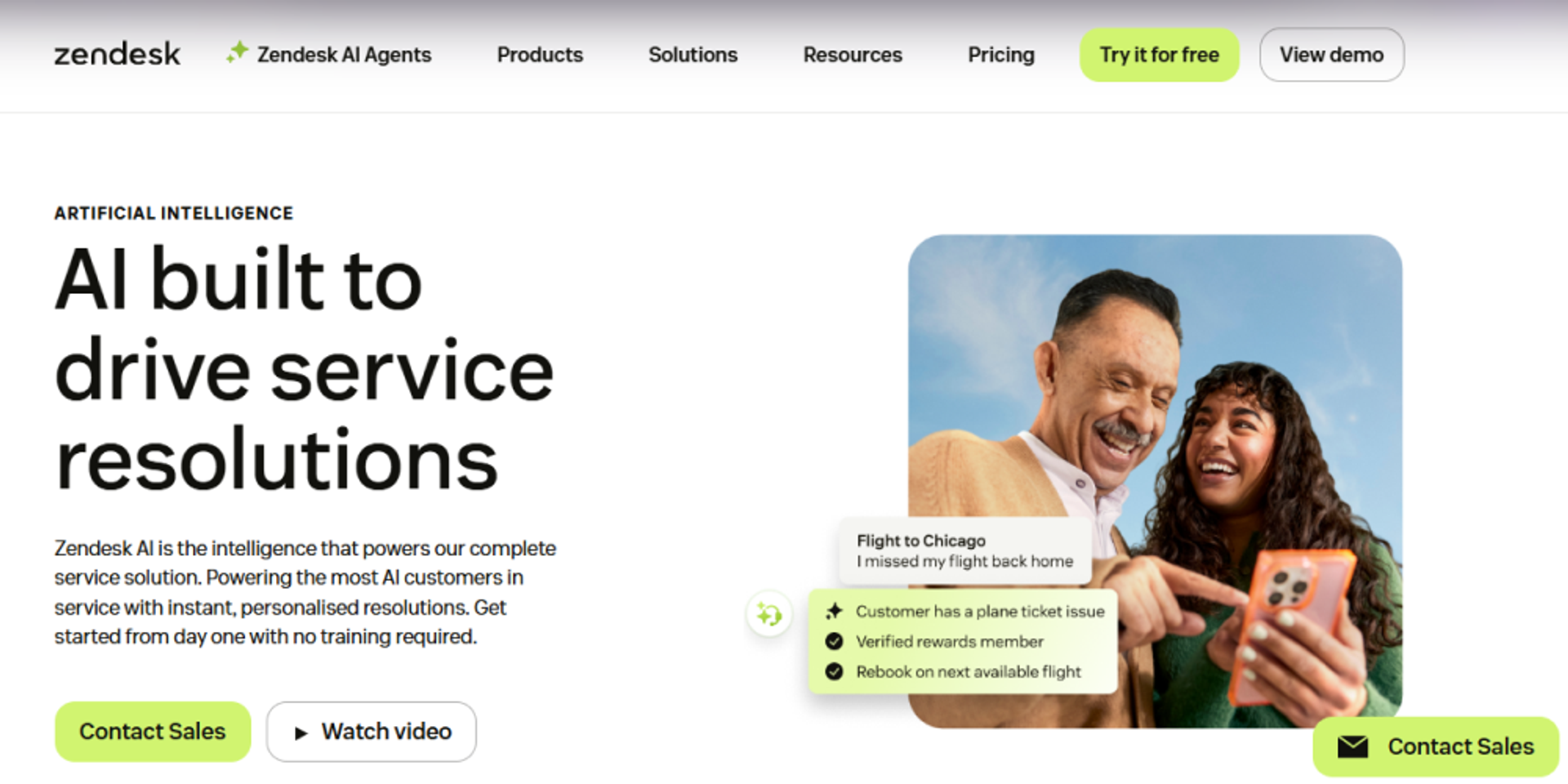
Caption: Zendesk’s Homepage
Zendesk AI is integrated directly into the Zendesk customer service ecosystem.
For organizations that already rely on Zendesk as their helpdesk platform, the AI capabilities provide a natural extension of existing workflows.
Zendesk AI focuses on improving support efficiency through features such as:
Because the system is deeply integrated into Zendesk’s service infrastructure, it allows organizations to introduce automation without replacing their existing helpdesk environment.
This approach makes Zendesk AI particularly attractive to companies with mature Zendesk deployments and established service processes.
However, organizations seeking broader AI orchestration or advanced voice automation may explore additional platforms designed specifically for those capabilities.
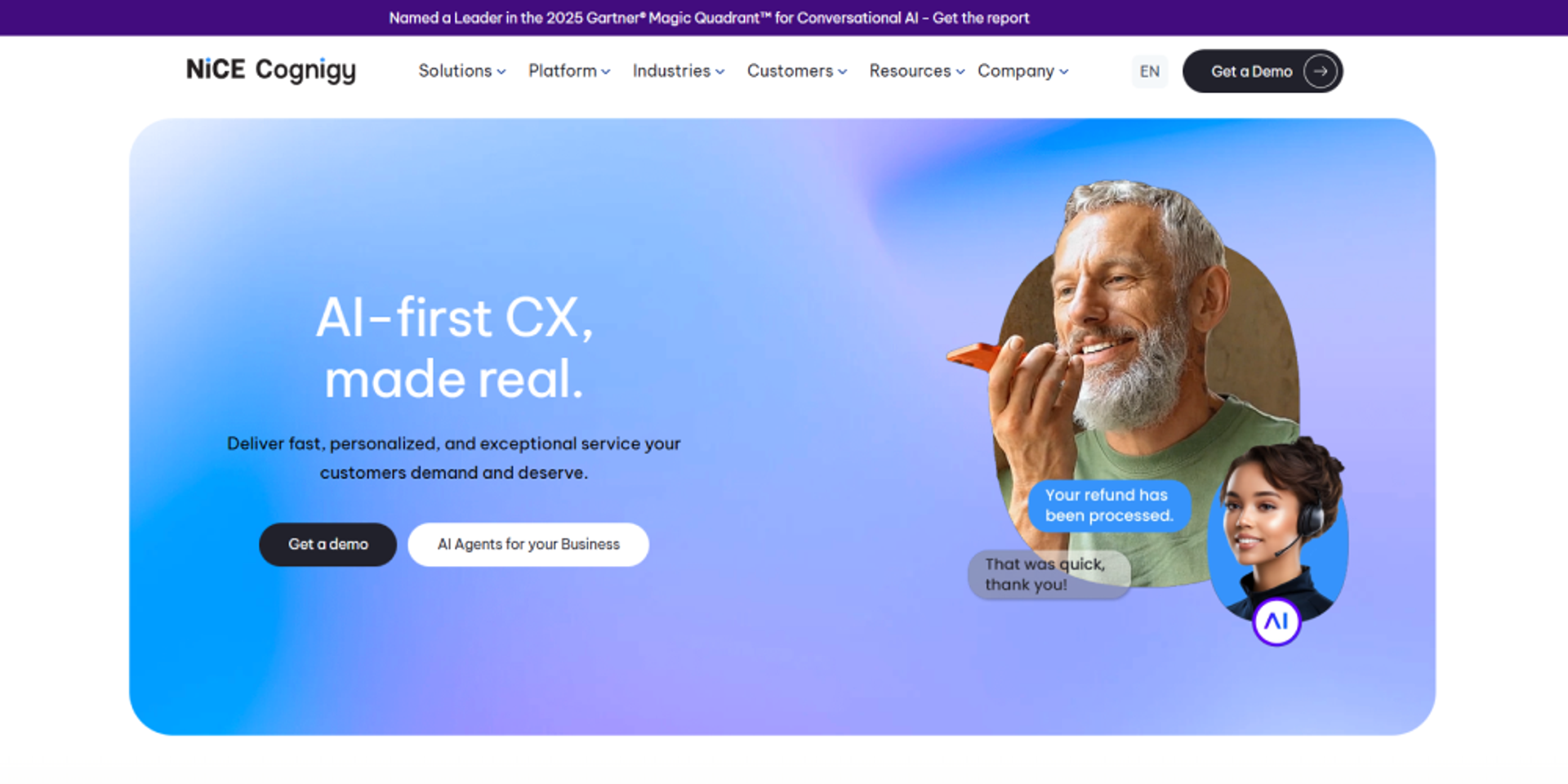
Caption: Cognigy’s Homepage
Cognigy is an enterprise conversational AI platform focused on building highly customized conversational workflows across customer service environments.
The platform provides a development environment where organizations can design complex automation logic for interactions across multiple channels, including chat, voice, and messaging platforms.
Unlike platforms designed primarily for rapid deployment, Cognigy emphasizes flexibility and workflow customization. Teams can build detailed conversational flows, integrate backend systems, and orchestrate interactions across multiple service touchpoints.
Because of this architecture, the platform is often used by large organizations that require extensive control over how automation is implemented within their customer service infrastructure.
Typical use cases include:
Organizations evaluating Cognigy typically have mature customer service operations and internal technical resources capable of designing and maintaining customized conversational workflows.
In these environments, the platform can provide significant flexibility for building automation tailored to complex service processes. However, the customization capabilities may also require more technical involvement during implementation compared with platforms designed for faster operational deployment.
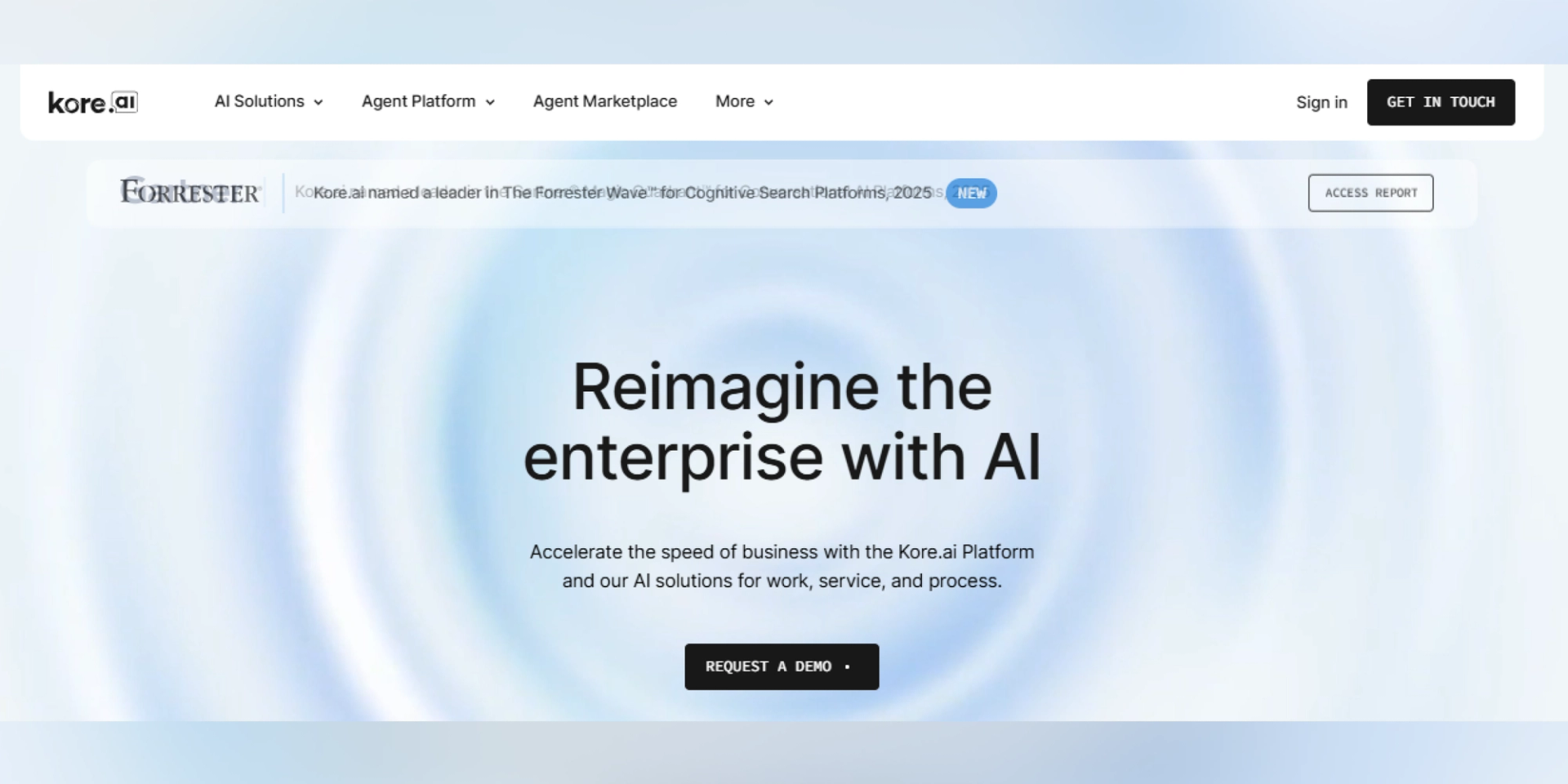
Caption: Kore’s Homepage
Kore.ai focuses on conversational AI applications that extend beyond customer service into broader enterprise automation.
While the platform can support customer support workflows, it is often used to build AI assistants across multiple business functions, such as HR, IT support, and internal knowledge management.
The system provides extensive tools for building conversational applications that integrate with enterprise systems.
Organizations adopting Kore.ai often use it to support initiatives such as:
Because of this broader scope, Kore.ai is often considered by organizations pursuing large-scale conversational AI initiatives across multiple departments.
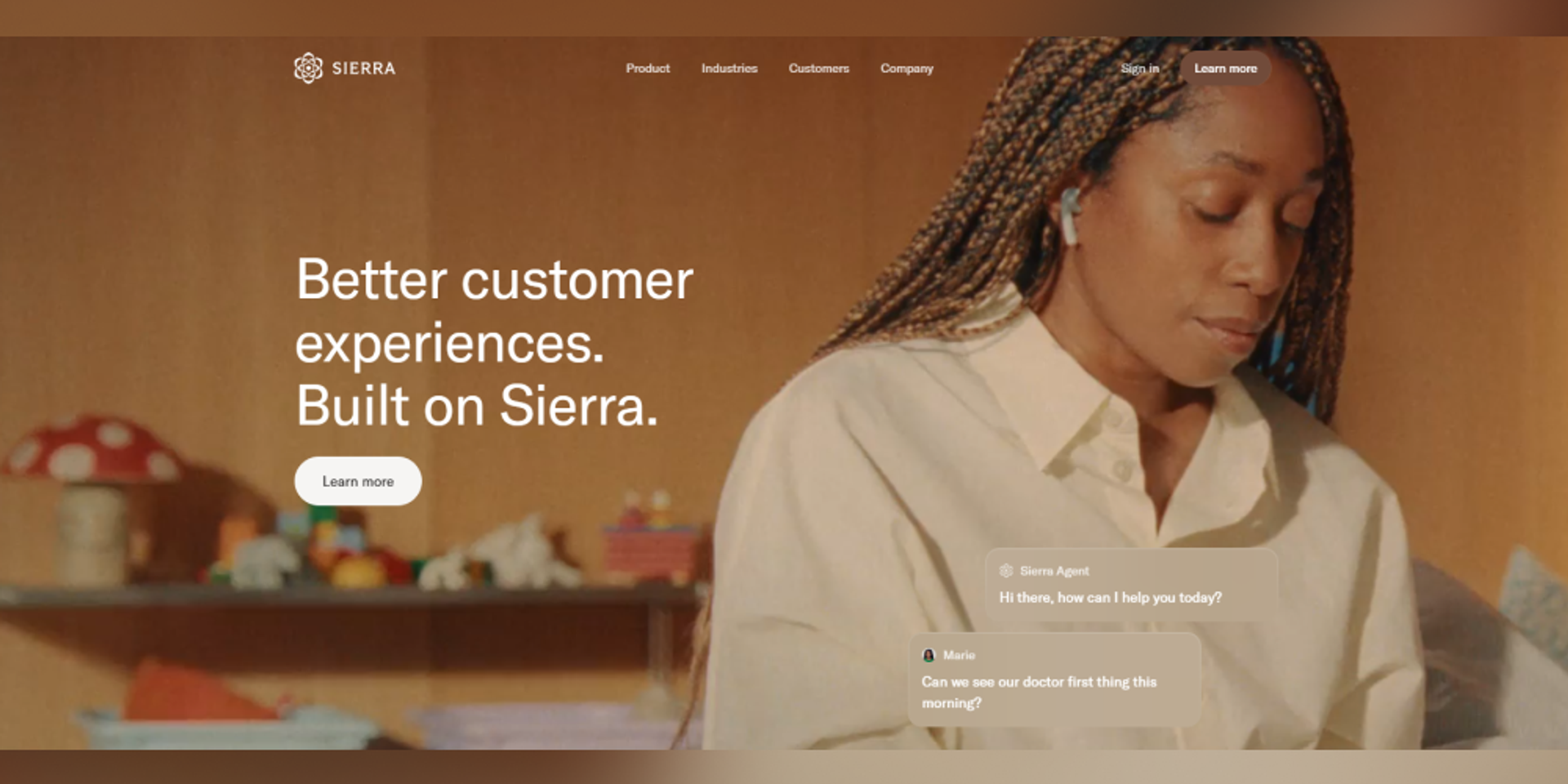
Caption: Sierra’s Homepage
Sierra AI represents a newer generation of platforms designed to support advanced AI customer experience initiatives.
The platform focuses on deploying AI agents capable of handling complex service interactions across customer support environments.
Sierra is often evaluated by organizations exploring AI-driven customer service transformation at scale.
These deployments typically involve integrating AI agents with operational systems so they can execute tasks such as:
Because Sierra focuses on large enterprise deployments, it is often considered alongside other advanced conversational AI platforms in large automation initiatives.
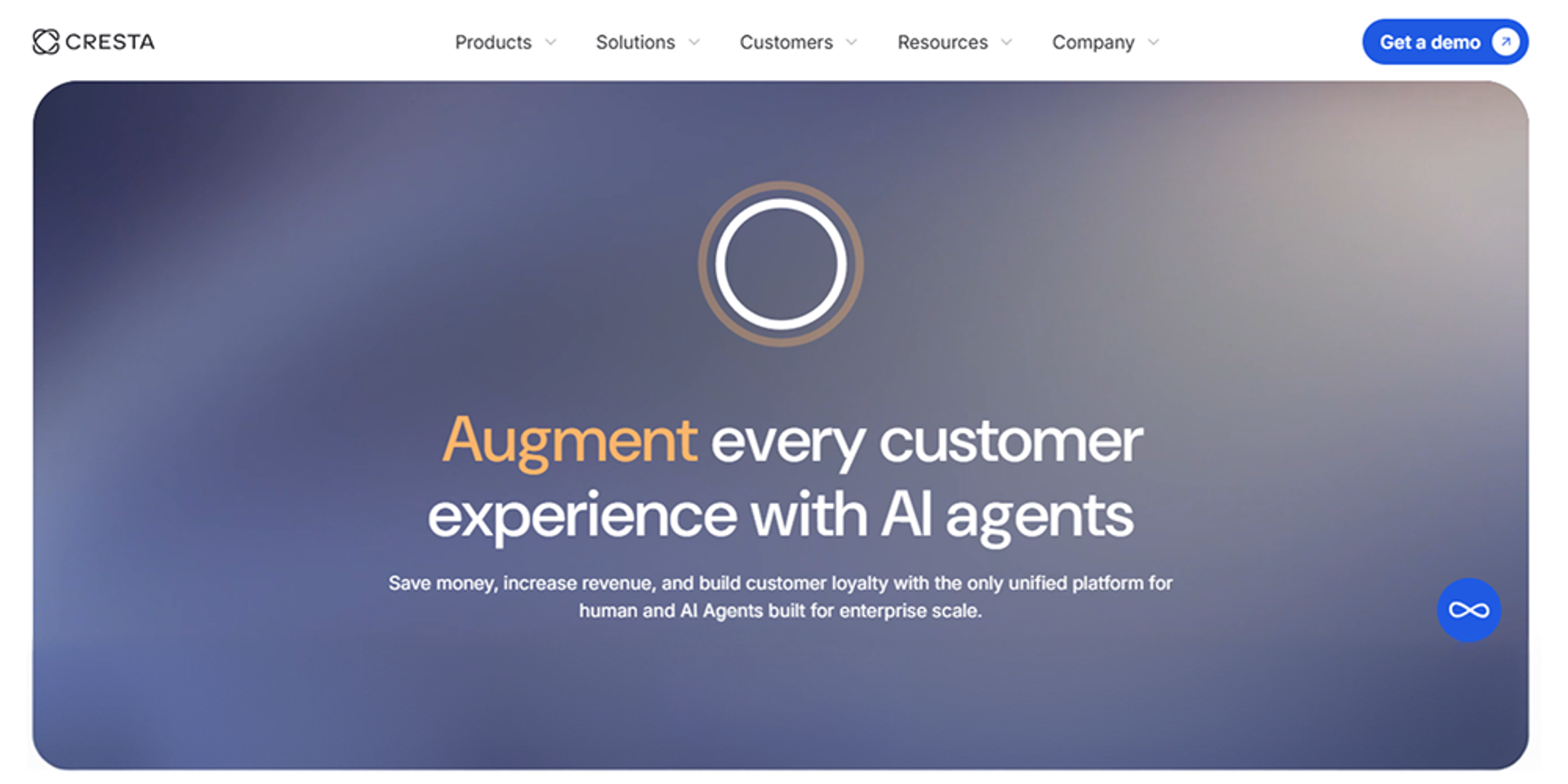
Caption: Cresta’s Homepage
Cresta focuses on improving contact center performance through a combination of AI automation and agent assistance.
Rather than focusing exclusively on autonomous agents, Cresta’s platform emphasizes tools that help human agents perform more effectively during customer interactions.
Capabilities include:
The platform analyzes conversations and surfaces insights that help agents respond more effectively to customer inquiries.
Organizations often adopt Cresta when they want to improve agent productivity while gradually introducing automation into their service operations.
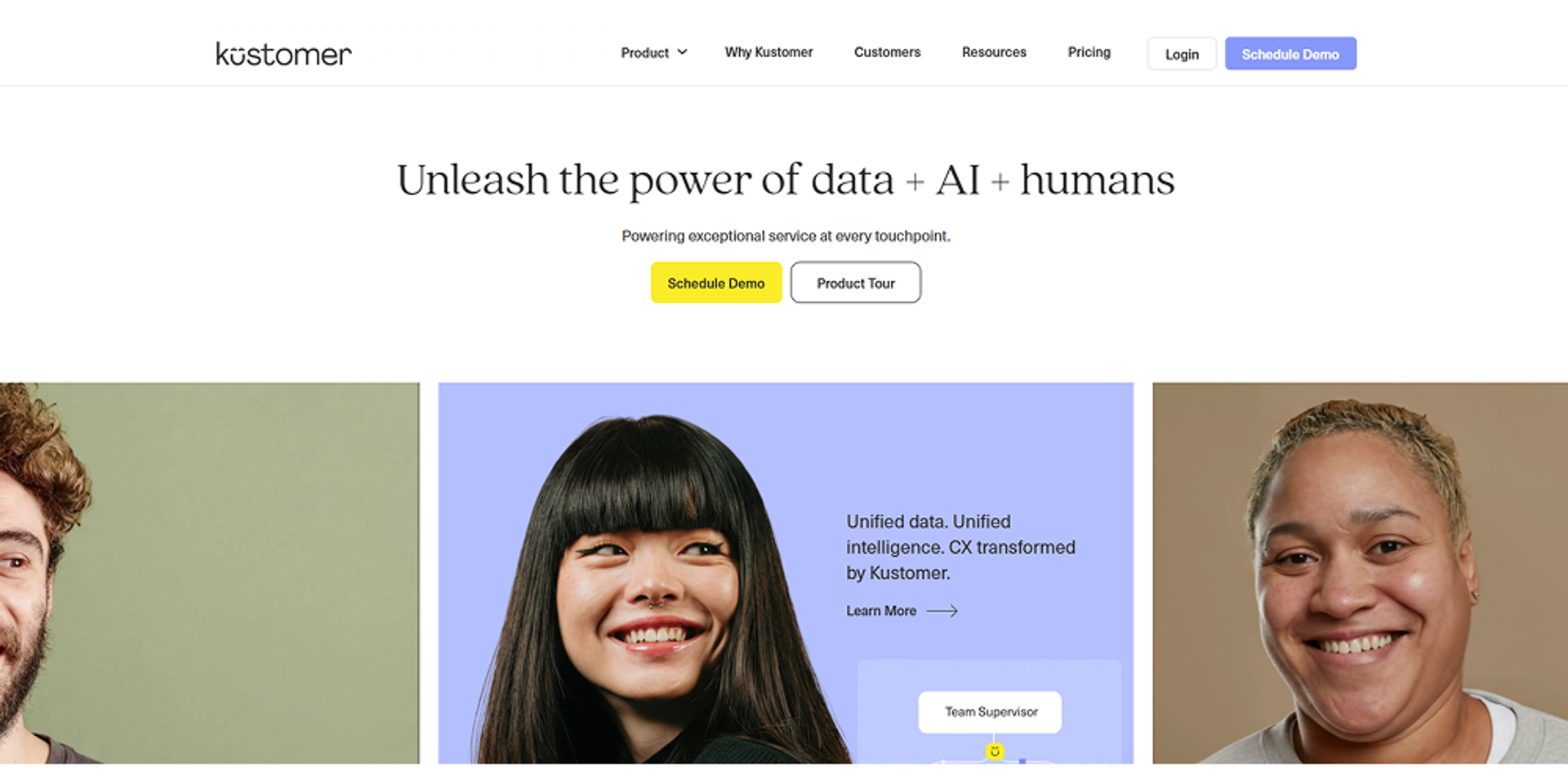
Caption: Kustomer AI’s Homepage
Kustomer combines customer relationship management with customer service operations in a single platform.
The system integrates customer data with support interactions, allowing organizations to manage service workflows with deeper context about each customer relationship.
Kustomer AI extends this model by introducing automation capabilities that assist agents and automate certain support workflows.
Because the platform is built around a CRM architecture, it works particularly well for organizations that want customer context tightly integrated with support operations.
This approach can be valuable in industries where service interactions depend heavily on customer history and account context.
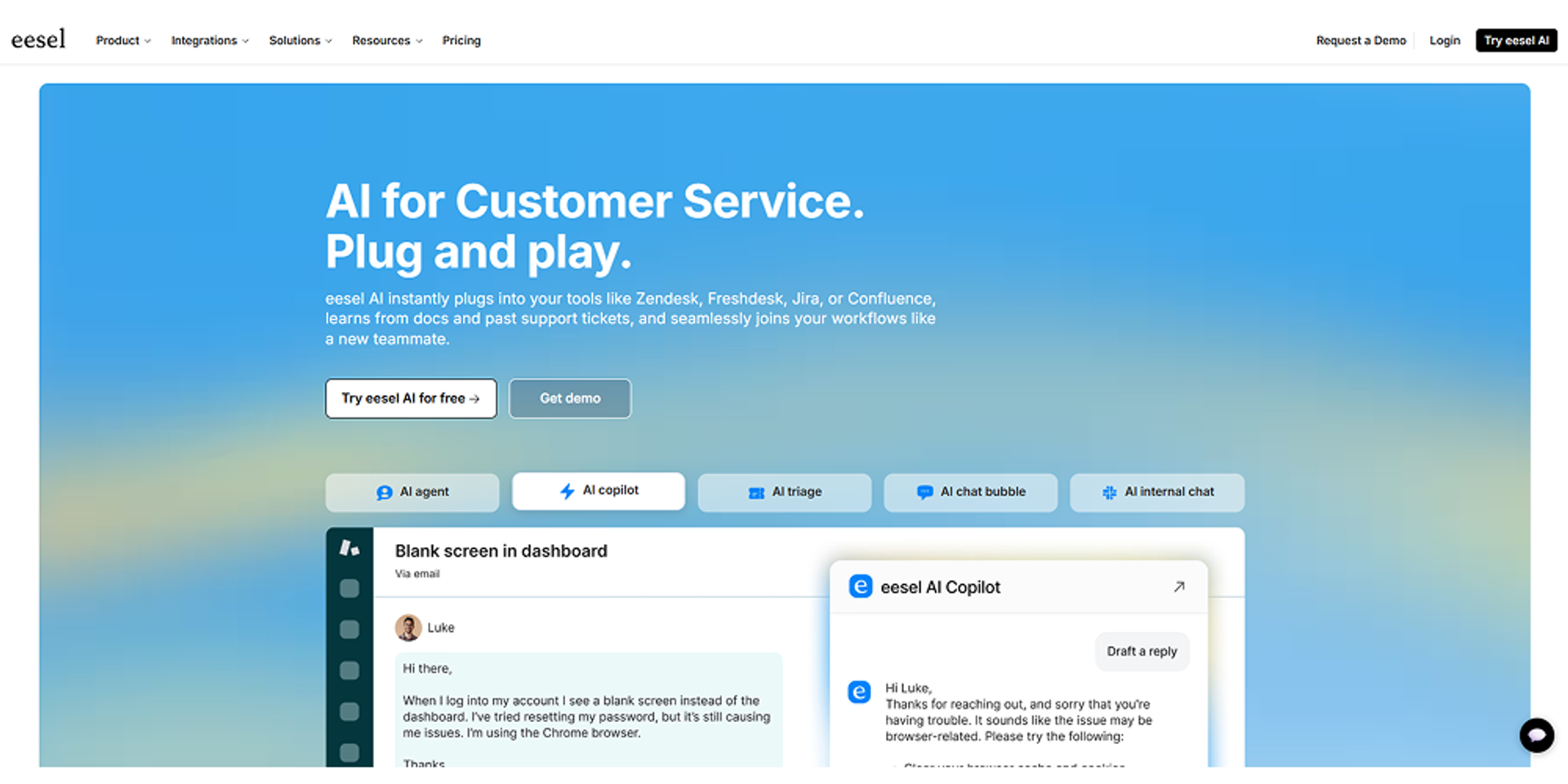
Caption: Eesel’s Homepage
Eesel AI focuses on enabling organizations to deploy support automation quickly using existing knowledge bases and documentation.
The system analyzes support articles, help center content, and internal documentation to generate AI responses to customer questions.
Because of this approach, Eesel is often considered by companies that want to introduce automation without building complex conversational workflows.
Typical environments where the platform works well include:
While the system excels at answering knowledge-based questions, organizations with more complex service workflows may require deeper operational automation capabilities.
Caption: Bland AI’s Homepage
A growing category of conversational AI platforms focuses specifically on voice automation.
These systems deploy AI voice agents capable of handling inbound and outbound phone conversations.
Voice-first platforms are particularly relevant for organizations where phone calls remain a central component of the customer experience.
Typical applications include:
Because voice interactions involve longer and more complex conversations than digital messaging, platforms in this category often emphasize natural speech, real-time processing, and integration with telephony infrastructure.
Organizations evaluating voice-first automation frequently compare these systems alongside broader conversational AI platforms when designing their support automation strategy.
| Platform | Primary Channels | Automation Depth | Best Fit | Pricing Style |
|---|---|---|---|---|
| CallBotics | Voice + Omnichannel | End-to-end workflow automation | Enterprise conversational orchestration | Enterprise |
| Intercom Fin | Chat | Knowledge-driven resolution | Intercom support teams | Usage based |
| Ada | Chat + Messaging | Digital support automation | Enterprise self-service | Enterprise |
| Zendesk AI | Chat + Tickets | Agent assist + automation | Zendesk environments | Subscription |
| Cognigy | Omnichannel | Custom conversational workflows | Complex enterprise CX | Enterprise |
| Kore.ai | Omnichannel | Enterprise automation | Cross-department AI initiatives | Enterprise |
| Sierra | Omnichannel | AI support agents | Large CX transformation programs | Enterprise |
| Cresta | Voice + Contact Center | Agent assist + coaching | Contact center productivity | Enterprise |
| Kustomer AI | Chat + CRM | CRM-driven support automation | Customer-context workflows | Subscription |
| Eesel | Chat | Knowledge automation | Fast setup teams | Public pricing |
| Voice AI Platforms | Voice | Call automation | Phone-heavy operations | Usage based |
Different platforms solve different operational problems. Shortlisting typically depends on where automation will have the biggest impact.
Organizations running large service operations typically evaluate platforms such as:
• CallBotics
• Cognigy
• Kore.ai
• Sierra
These platforms support complex workflows, integrations, and governance needed for large-scale CX automation.
In industries where calls remain the dominant support channel, voice automation becomes a primary requirement.
Commonly evaluated platforms include:
• CallBotics
• Cresta
• Voice-first AI platforms
Learn more about how AI agents analyze customer conversations.
Organizations introducing automation for the first time often prioritize simpler deployment models.
Typical platforms considered include:
• Intercom Fin
• Zendesk AI
• Eesel
These tools can automate common support requests quickly using existing documentation.
E-commerce environments typically deal with repetitive service requests such as order tracking, returns, and account updates.
Platforms commonly used in these environments include:
• Ada
• Intercom Fin
• Zendesk AI
These systems reduce ticket volume by automating predictable interactions.
Selecting a conversational AI platform starts with understanding the structure of the support operation.
Identify the requests that generate the most volume. Automating these workflows typically delivers the fastest operational gains.
Some platforms help human agents respond faster. Others automate entire conversations.
Organizations seeking cost reduction usually prioritize platforms capable of end-to-end automation.
Implementation complexity varies widely across platforms. Faster deployment often means faster operational impact.
CallBotics focuses on enterprise conversational AI orchestration, particularly in environments where voice interactions remain central to customer service.
The platform deploys AI agents capable of handling real conversations while executing workflows across backend systems.
Common automated workflows include:
• inbound support calls
• appointment scheduling
• lead qualification
• service follow-ups
• account management interactions
Because these interactions require operational data, the platform integrates with CRM platforms, scheduling tools, and internal systems.
This enables AI agents to resolve requests rather than simply respond to them.
CallBotics includes built-in monitoring and analytics capabilities that provide visibility into automated interactions.
Key capabilities include:
Conversational AI platforms now support a wide range of customer service automation strategies.
While Decagon focuses primarily on digital support automation, alternative platforms specialize in different areas such as enterprise orchestration, voice automation, or knowledge-driven support.
Selecting the right platform ultimately depends on:
• the primary support channels
• the complexity of service workflows
• the level of automation required
• deployment speed
When these factors are aligned, conversational AI can significantly improve service efficiency and customer experience.

Urza Dey (She/They) is a content/copywriter who has been working in the industry for over 5 years now. They have strategized content for multiple brands in marketing, B2B SaaS, HealthTech, EdTech, and more. They like reading, metal music, watching horror films, and talking about magical occult practices.
See how enterprises automate calls, reduce handle time, and improve CX with CallBotics.
CallBotics is an enterprise-ready conversational AI platform, built on 18+ years of contact center leadership experience and designed to deliver structured resolution, stronger customer experience, and measurable performance.