Customer conversations are among the most valuable operational data sources in modern organizations. Every support call, billing inquiry, or product question reveals signals about customer intent, service friction, and operational gaps.
For years, most of this intelligence remained locked inside call recordings and support tickets. Conversational AI is now changing that dynamic.
Modern AI agent platforms can manage large portions of customer interactions across voice, chat, messaging, and email. Beyond answering questions, these systems automate workflows, surface operational insights, and help organizations scale support operations without the need for proportional increases in staffing.
Sierra is one of the platforms emerging in this space. Positioned as an enterprise conversational AI system, it enables organizations to deploy AI agents that manage customer engagement workflows while representing the company’s brand voice.
However, companies rarely adopt conversational AI platforms without evaluating alternatives. Vendors in this category vary widely in architecture, deployment complexity, and channel specialization.
In practice, organizations exploring Sierra often compare several Sierra AI alternatives across three primary categories:
The evaluation typically centers on operational questions rather than feature lists:
These considerations ultimately determine which conversational AI platform becomes part of the long-term customer experience infrastructure.
Many organizations start by understanding how AI systems actually analyze conversations and extract operational insights.
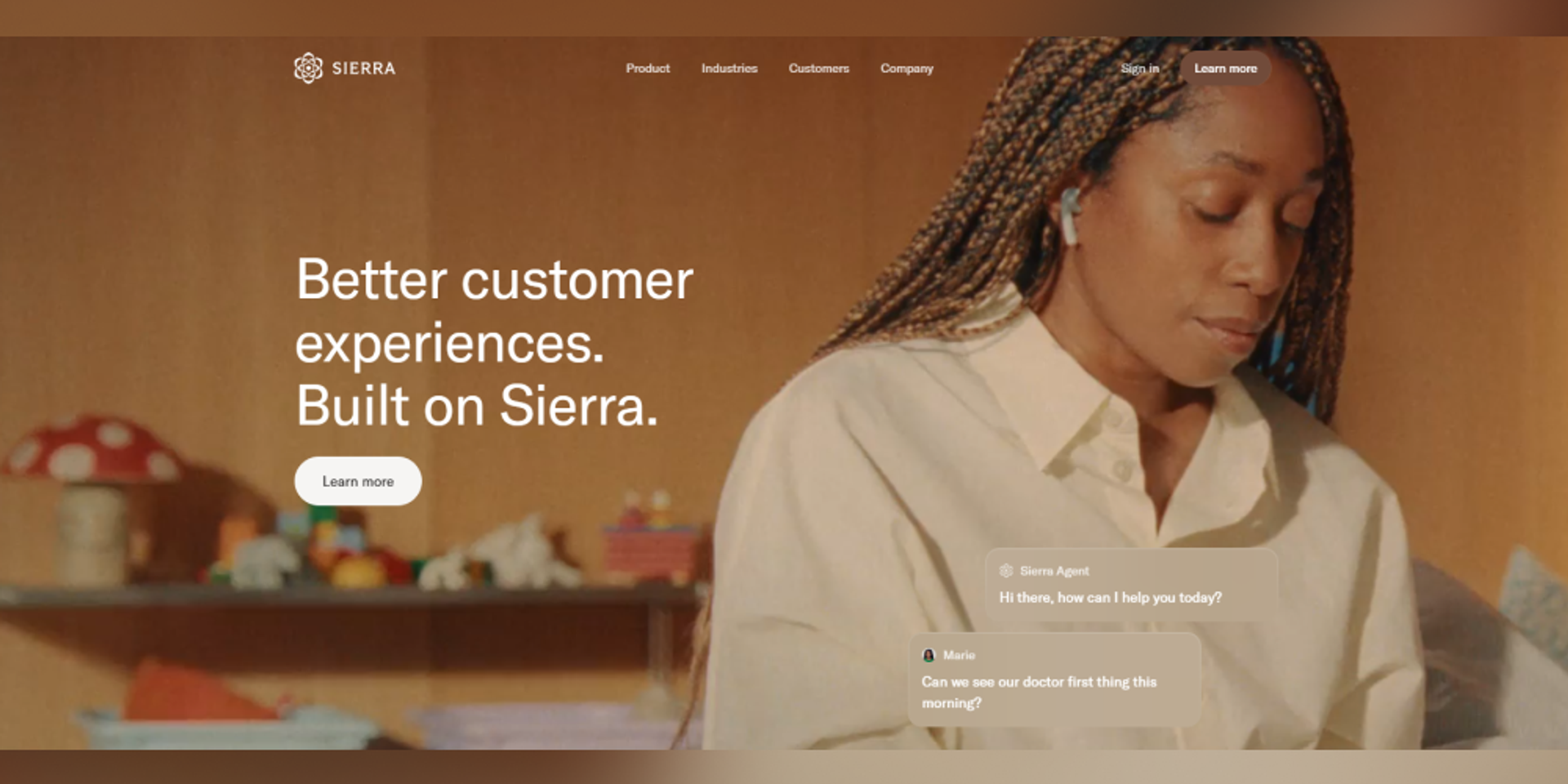
Caption: Sierra AI Homepage
Sierra is an enterprise conversational AI platform that automates customer interactions with AI agents.
The system combines large language models, workflow orchestration, and integrations with operational tools, including CRM and customer support platforms. Organizations deploy these agents to handle customer inquiries, guide users through workflows, and resolve common support issues.
Platforms like Sierra fall into the broader category of conversational AI orchestration systems. These platforms sit between customer communication channels and backend systems, managing conversations while retrieving or updating operational data.
Typical capabilities include:
As the conversational AI category has matured, multiple vendors have entered the market with different approaches to automation. Some platforms specialize in digital support automation, others in enterprise workflow orchestration, and a growing segment focuses on voice-based customer interactions.
For this reason, organizations evaluating Sierra typically compare several adjacent platform categories:
Each category addresses different operational priorities, which is why most organizations evaluate multiple vendors before selecting a platform.
Even when Sierra aligns with an organization’s automation strategy, teams typically evaluate several platforms before committing to long-term infrastructure.
Caption: Sierra AI Outcomes
Conversational AI systems quickly become embedded in customer experience operations, making platform selection a strategic decision.
Several factors commonly drive organizations to explore alternatives.
Many conversational AI platforms operate on a customized enterprise pricing model. While flexible for large deployments, this often limits visibility into early-stage costs.
Organizations evaluating platforms typically want clarity around:
Comparing vendors helps teams understand how pricing structures differ across platforms.
Many conversational AI systems evolved from chatbot technologies built for digital channels such as web chat or messaging.
However, voice interactions remain the most complex and operationally significant support channel in many industries.
Phone conversations typically involve longer interactions, multi-step workflows, and a higher risk of escalation. As a result, organizations with large call volumes often prioritize platforms designed specifically for voice automation.
Voice-first platforms, such as CallBotics, focus on AI agents that handle inbound calls, outbound campaigns, appointment scheduling, and lead qualification.
Voice automation is becoming central to contact center transformation. This guide explains how modern AI voice agents automate complex call workflows.
Conversational AI platforms vary significantly in deployment complexity.
Some require structured training datasets, extensive configuration, and custom engineering integrations. Others emphasize faster implementation and lower operational overhead.
Organizations operating large support environments often prioritize platforms that enable rapid deployment of production workflows while minimizing internal engineering effort.
Customer support workflows vary widely across industries.
E-commerce environments focus on order tracking and returns. Financial services require identity verification and compliance workflows. Healthcare interactions often involve scheduling and patient verification. Enterprise product support frequently involves complex troubleshooting.
Because of these differences, conversational AI platforms often specialize in particular operational environments.
Integration capability frequently determines whether conversational AI can automate complete workflows.
Most organizations operate complex technology stacks that include CRM systems, helpdesk platforms, and contact center infrastructure.
Platforms with strong integration ecosystems enable organizations to automate interactions and update operational systems in real time. This enables conversational AI to function as a true operational layer rather than a standalone chatbot.
The conversational AI landscape has expanded rapidly over the last several years. Platforms that once focused primarily on chatbots have evolved into broader automation systems that manage customer interactions across voice, messaging, and digital support channels.
As a result, organizations evaluating Sierra often review multiple platform categories before deciding which approach best aligns with their operational goals.
Some platforms specialize in enterprise conversational orchestration, allowing organizations to manage complex workflows across multiple channels and systems. Others focus on support automation to help customer service teams reduce ticket volume. A newer set of platforms focuses on voice-first AI agents designed to automate phone conversations and contact center workflows.
To provide a structured comparison, each platform below is evaluated using the same framework:
This approach makes it easier to compare platforms based on operational fit rather than marketing positioning.
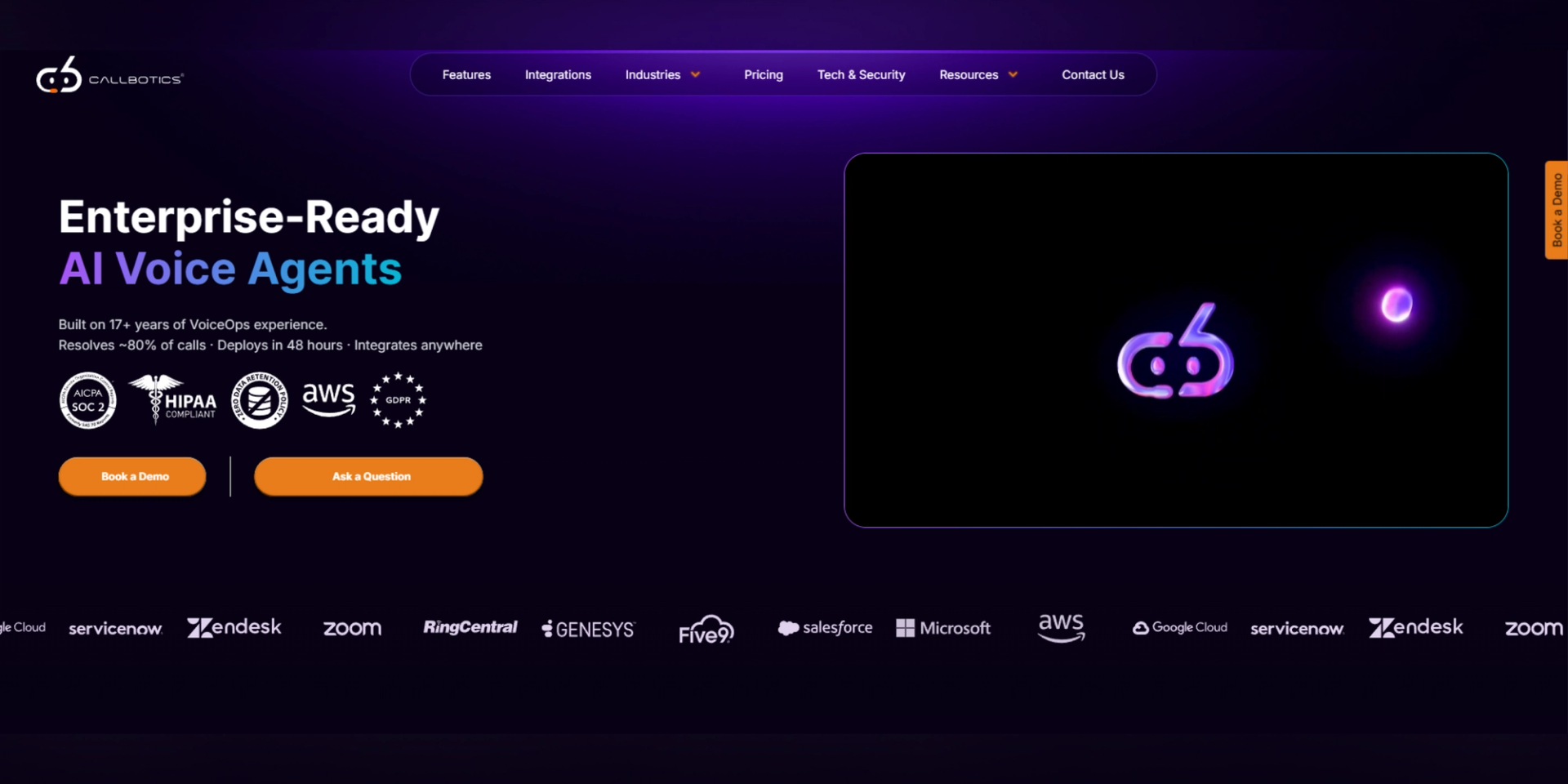
Caption: CallBotics Homepage
CallBotics is an enterprise conversational AI platform focused specifically on voice automation for contact centers and call-heavy workflows.
While many conversational AI systems began as chatbot platforms, CallBotics was designed from the outset to automate phone interactions. This makes it particularly well-suited for organizations where most customer interactions still occur through voice channels.
The platform enables organizations to deploy AI voice agents that handle both inbound and outbound phone interactions while maintaining natural conversational flow.
Typical automation workflows include:
One notable operational advantage is deployment speed. CallBotics systems can move from documentation and operational workflows to production-ready AI agents in roughly two days, which allows organizations to begin testing automation quickly without extended engineering cycles.
Organizations also gain built-in analytics capabilities that allow teams to understand how conversations are evolving and where automation can improve resolution rates.
Best for
Voice automation across contact center workflows and call-heavy support environments.
Key strengths
Ideal teams
Contact centers, operations teams, and organizations where voice remains a primary customer interaction channel.
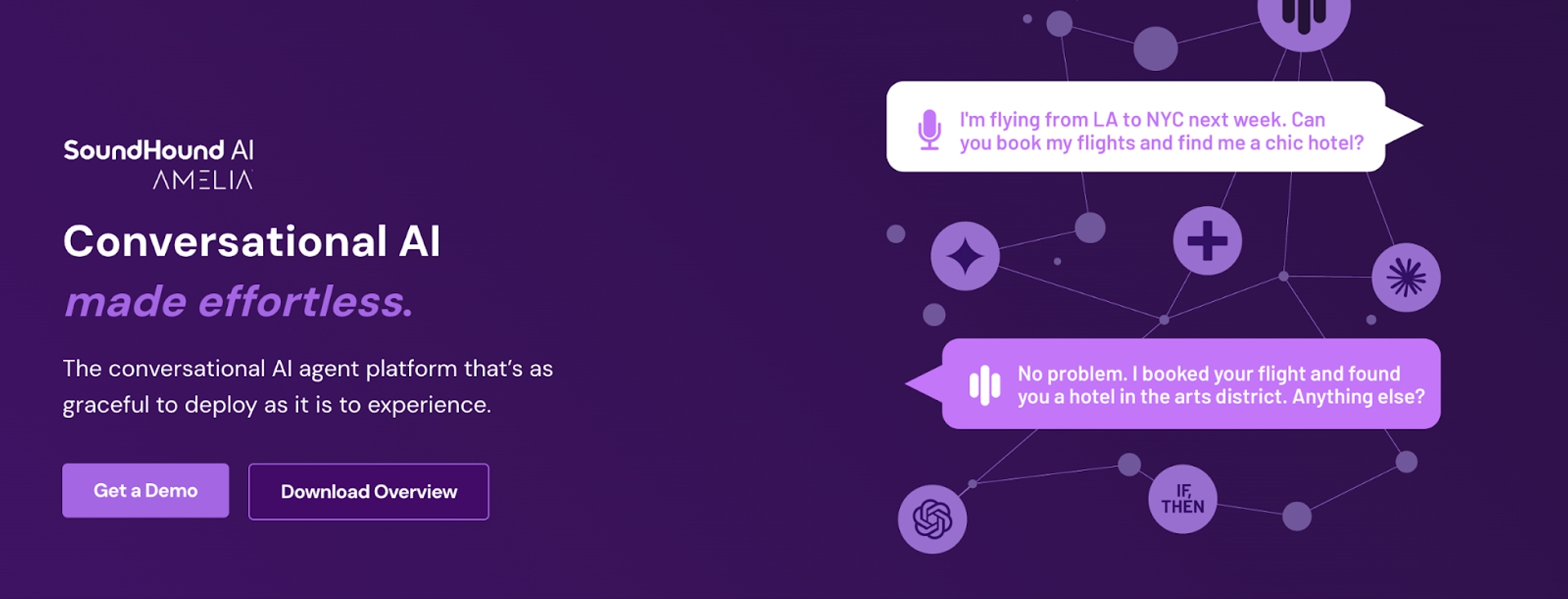
Caption: Amelia’s Homepage
Amelia is one of the longest-standing conversational AI platforms used in enterprise environments. The platform focuses on AI agents that automate workflows across customer support, IT service management, and operational processes.
Unlike many chatbot platforms, Amelia positions itself as a digital employee system capable of managing complex workflows that involve multiple backend systems.
Organizations frequently deploy Amelia across several departments simultaneously, using the platform to automate support requests, internal service tickets, and operational processes.
Best for
Large enterprises are looking to automate both customer and internal service workflows.
Key strengths
Limitations to consider
Deployment cycles can be longer due to the platform’s enterprise architecture and customization capabilities.
Ideal teams
Large organizations with complex operational workflows spanning multiple departments.
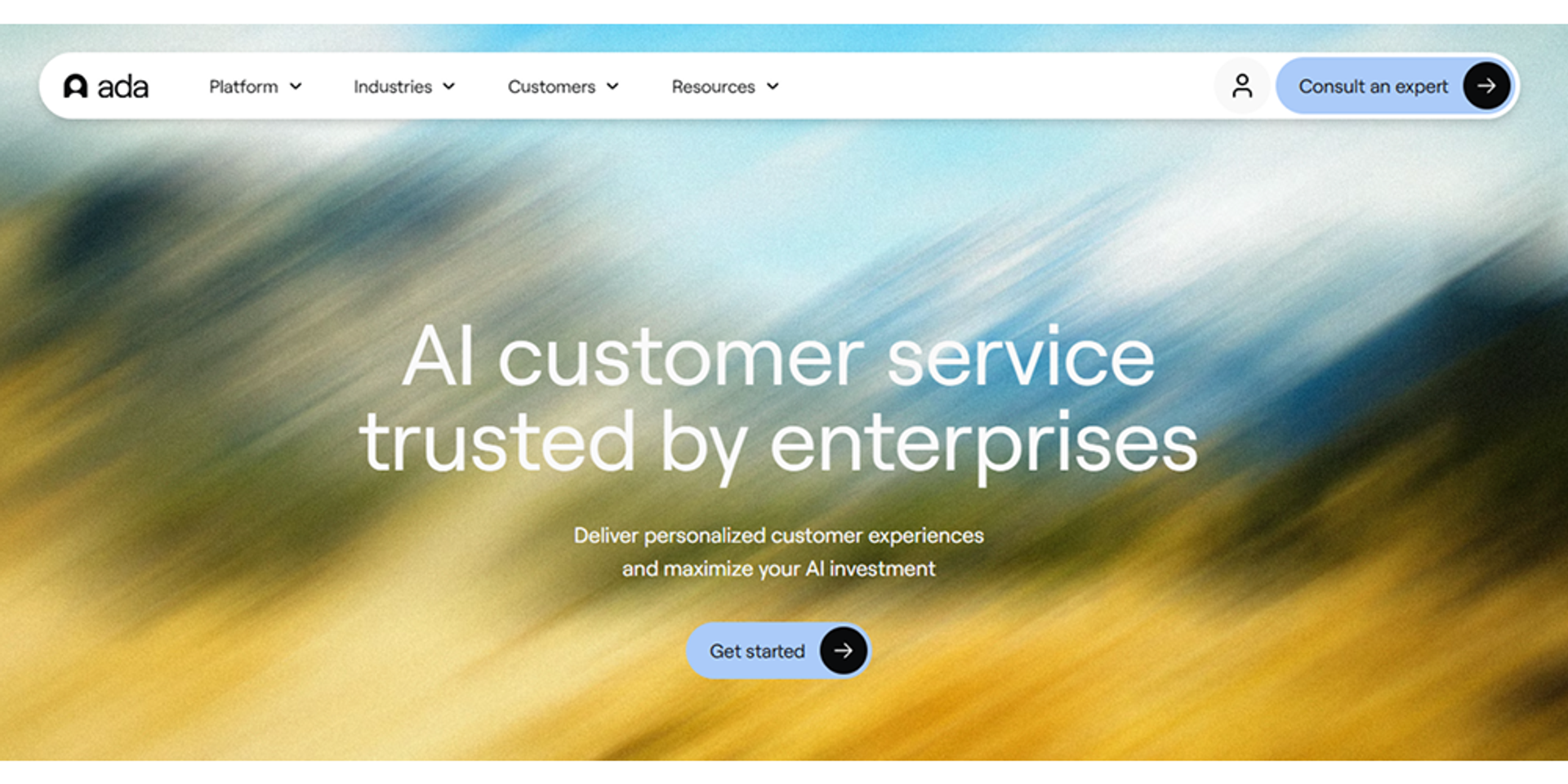
Caption: Ada’s Homepage
Ada focuses primarily on digital support automation, helping companies reduce support ticket volume through AI-powered self-service.
The platform enables organizations to create automated support experiences across digital channels, including website chat and messaging apps. Ada’s design philosophy centers on enabling customer support teams to manage automation without extensive engineering involvement.
Many SaaS companies use Ada to automate high-volume support questions and guide users through product workflows.
Best for
Organizations are looking to reduce digital support ticket volume through self-service automation.
Key strengths
Limitations to consider
Organizations with high phone call volumes may require complementary voice automation platforms.
Ideal teams
SaaS companies and digital-first businesses are managing high volumes of customer support requests.
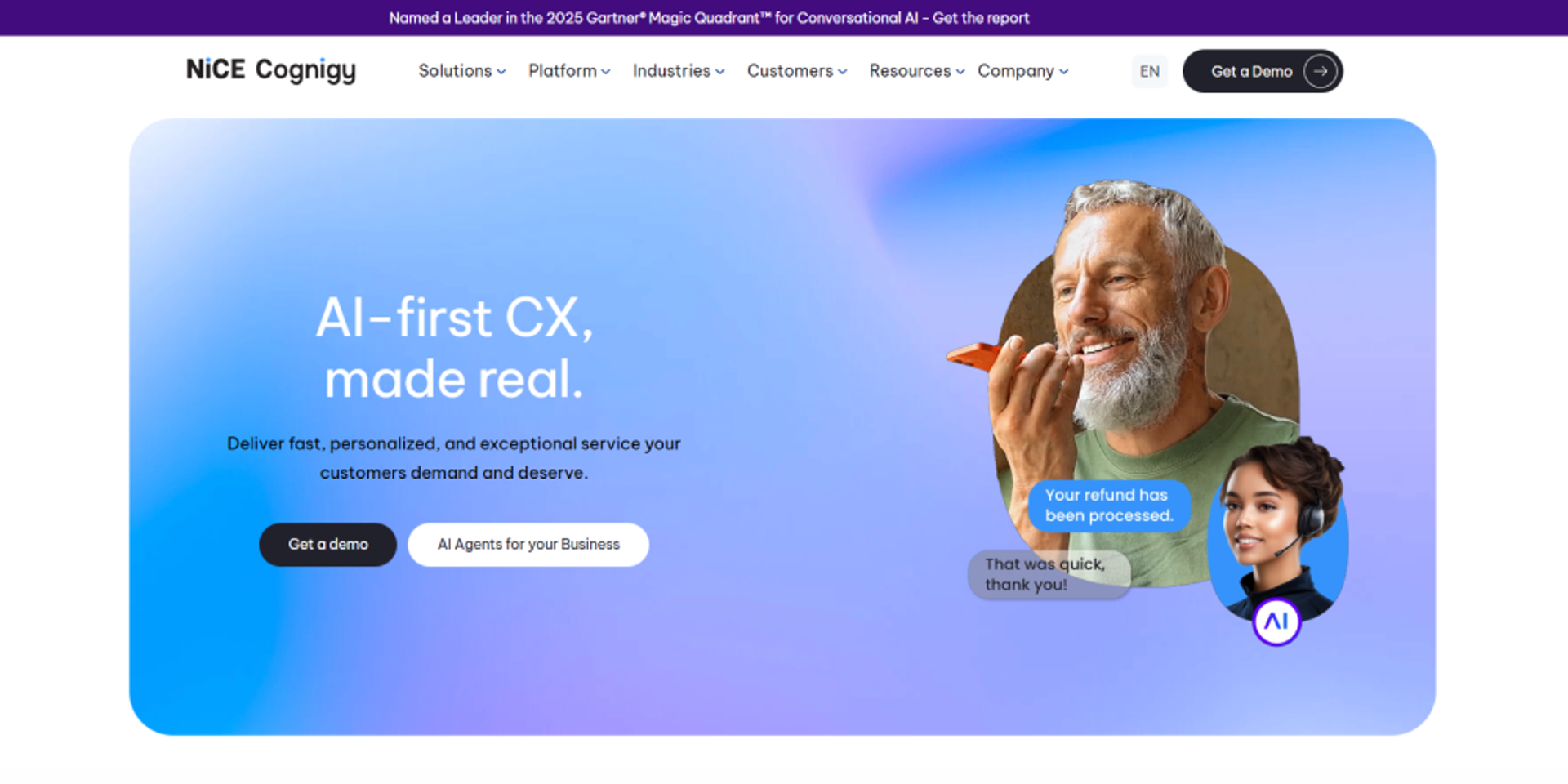
Caption: Cognigy’s Homepage
Cognigy is widely used in enterprise environments where conversational AI must integrate deeply with operational systems.
The platform provides a workflow engine that enables organizations to design complex conversational experiences across channels and integrate with backend systems, including CRM platforms and contact center infrastructure.
Cognigy’s strength lies in its flexibility. Organizations can design highly customized conversational workflows that incorporate multiple systems and decision logic.
Best for
Organizations managing complex conversational workflows across multiple systems and channels.
Key strengths
Limitations to consider
The platform's flexibility can introduce complexity during implementation.
Ideal teams
Large enterprises with dedicated CX or automation teams managing multi-system workflows.
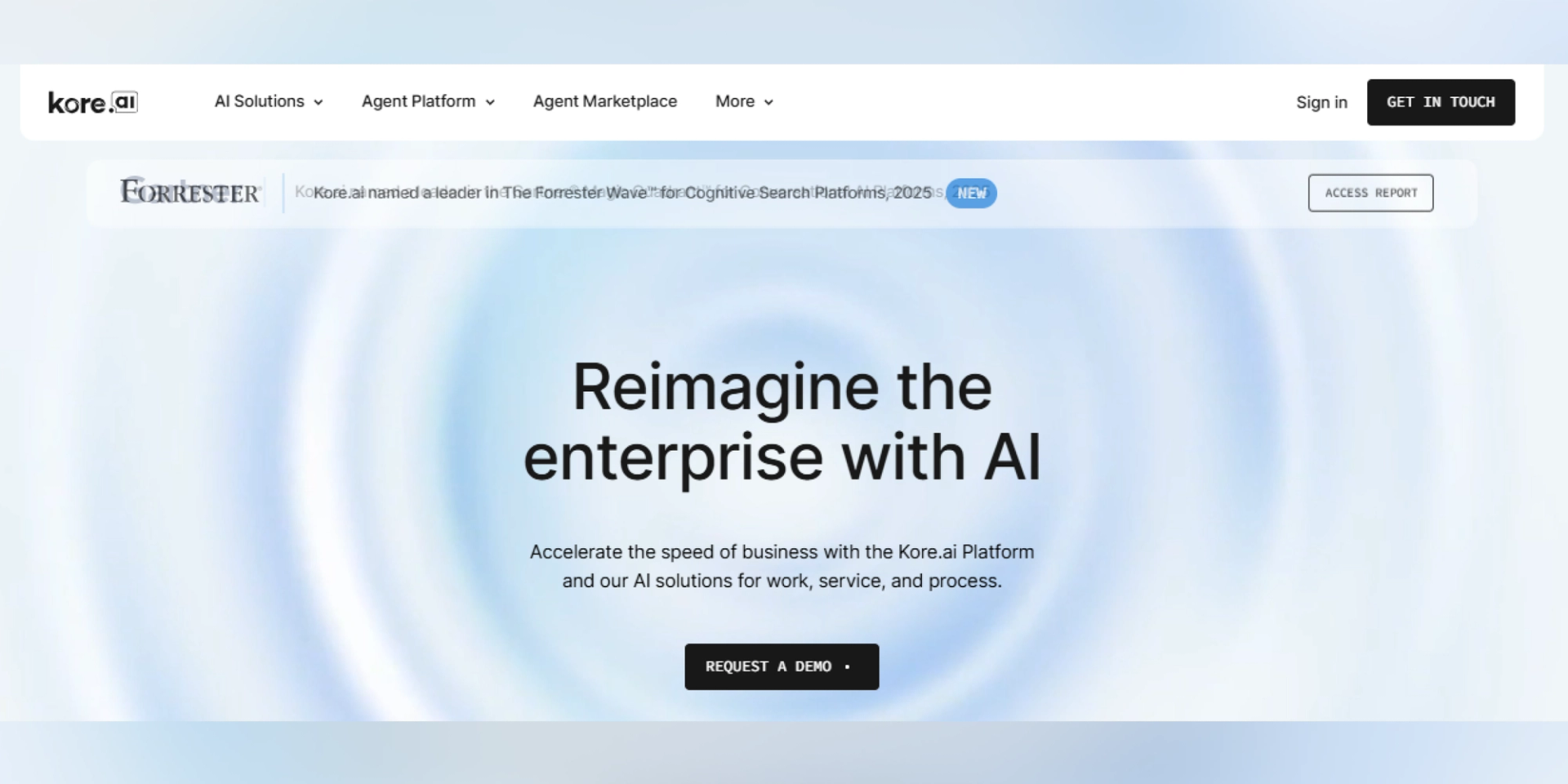
Caption: Kore’s Homepage
Kore.ai positions itself as a broad enterprise AI platform rather than a purely customer service automation system.
Organizations use Kore.ai to deploy conversational AI across customer support, HR operations, IT service management, and internal workflows.
The platform includes tools for designing conversational workflows, integrating with enterprise systems, and analyzing customer interactions.
Best for
Organizations are deploying conversational AI across multiple departments and operational use cases.
Key strengths
Limitations to consider
The platform’s broad scope may introduce complexity for teams focused specifically on customer support automation.
Ideal teams
Large enterprises are pursuing organization-wide automation initiatives.
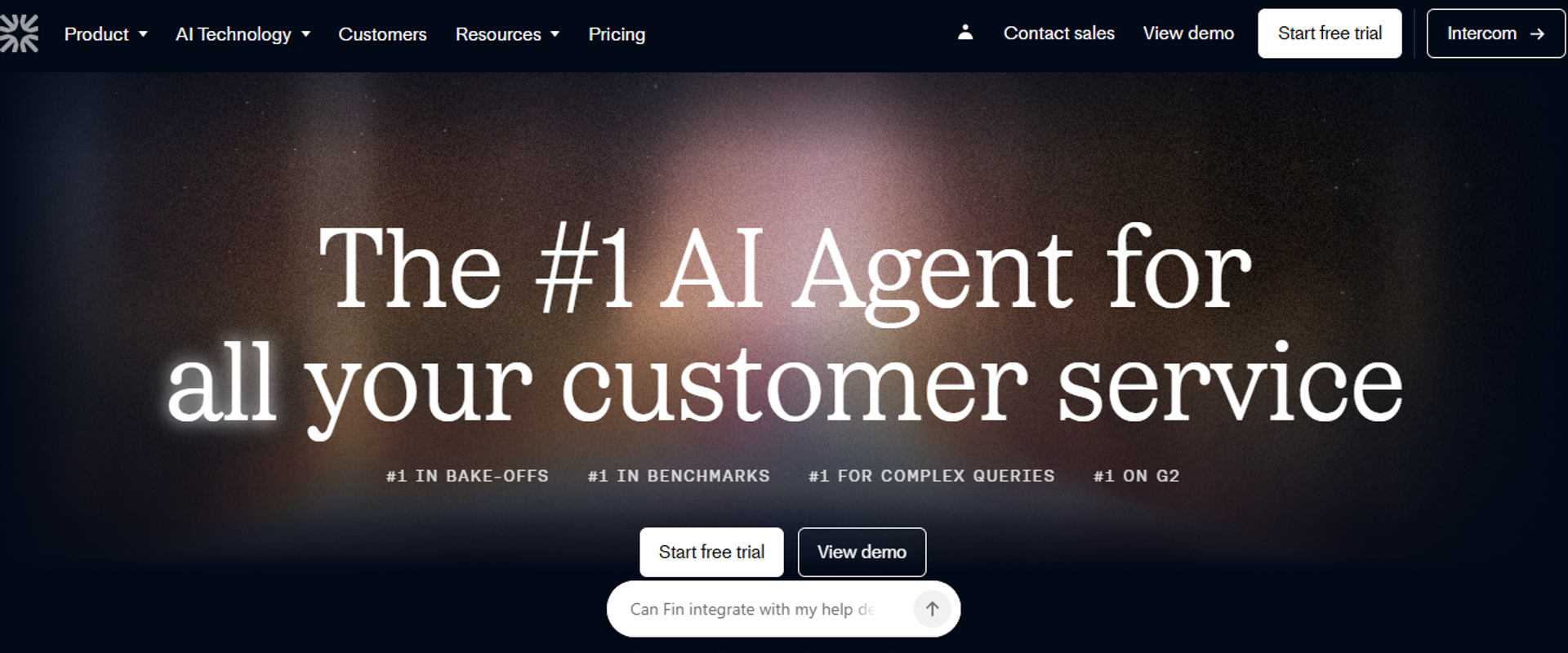
Caption: Intercom’s Homepage
Intercom Fin is an AI-powered support automation system designed for organizations already using Intercom as their customer support platform.
The system integrates directly with support knowledge bases and product documentation, allowing it to answer customer questions and guide users through workflows.
Fin’s design focuses on improving response times and reducing support ticket volume within SaaS environments.
Best for
SaaS companies operating support teams on the Intercom platform.
Key strengths
Limitations to consider
Organizations that do not use Intercom may find other platforms more flexible.
Ideal teams
SaaS support teams are handling a high volume of product-related inquiries.
Caption: Ultimate’s Homepage
Ultimate.ai focuses specifically on automating repetitive customer support interactions at scale.
The platform integrates with major support platforms and uses AI to identify common support issues that can be resolved automatically.
Organizations often deploy Ultimate.ai to reduce ticket backlogs and improve response times.
Best for
Organizations looking to automate high volumes of repetitive support requests.
Key strengths
Limitations to consider
Organizations seeking broader conversational AI orchestration may require additional platforms.
Ideal teams
Customer support organizations are managing large ticket volumes.
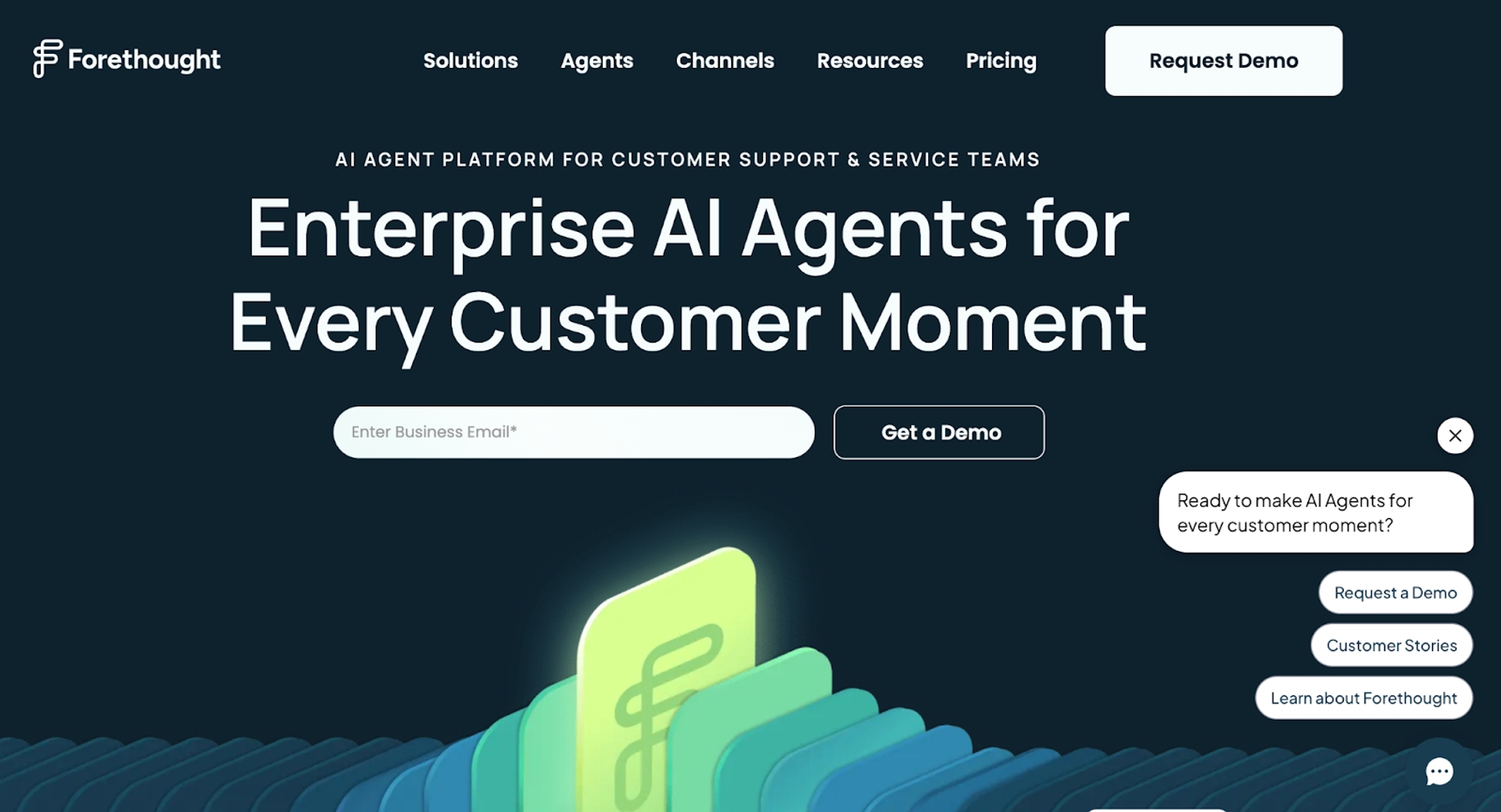
Caption: Forethought’s Homepage
Forethought focuses on AI-powered ticket resolution and agent assistance.
The platform analyzes support tickets and automatically resolves certain request categories while providing suggested responses to human agents for more complex issues.
This hybrid approach allows organizations to combine automation with human expertise.
Best for
Support teams seek a balance between automation and agent assistance.
Key strengths
Limitations to consider
Organizations prioritizing voice automation may require specialized voice platforms.
Ideal teams
Customer support teams are looking to improve productivity without fully replacing human agents.
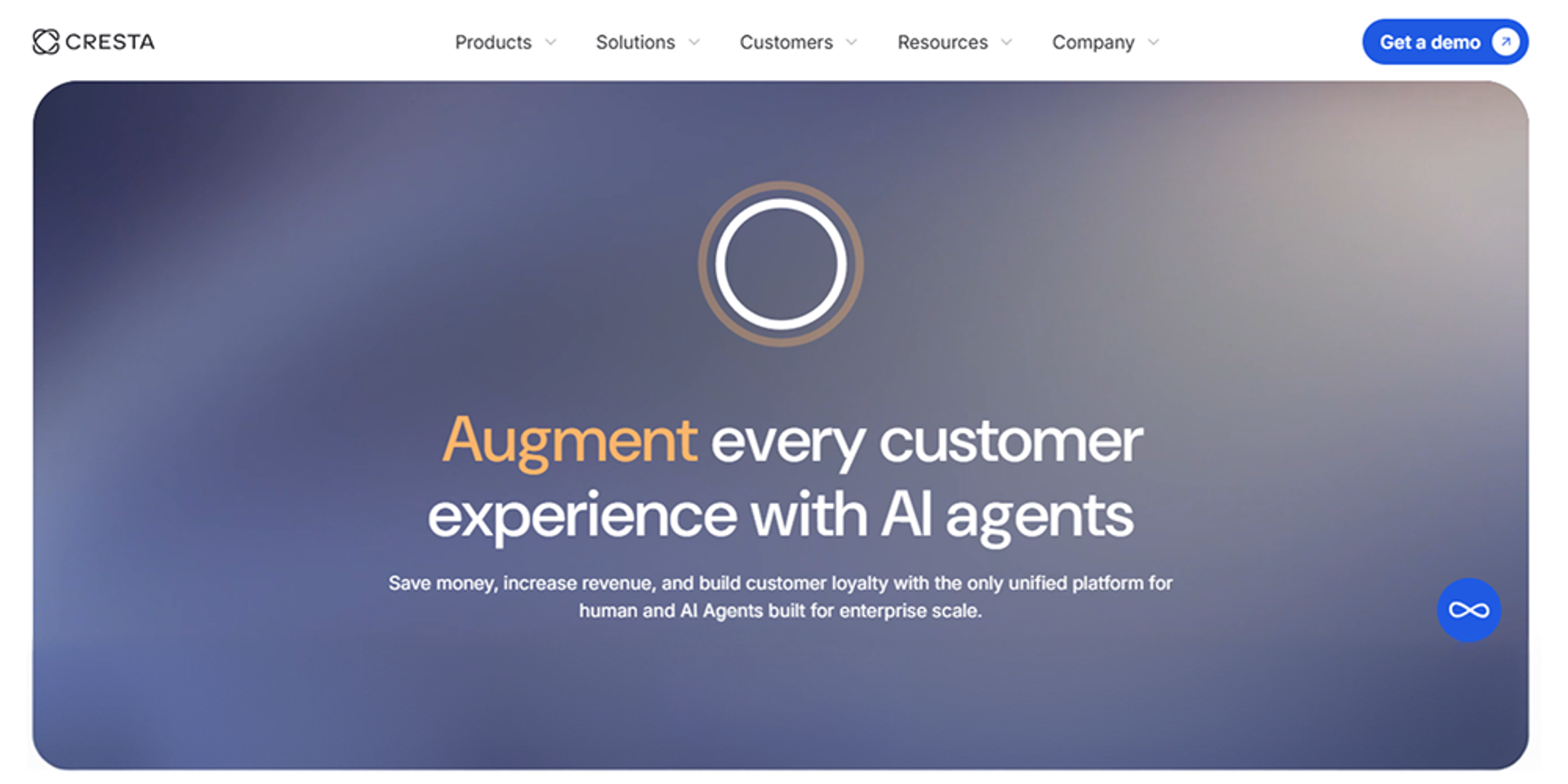
Caption: Cresta’s Homepage
Cresta focuses on improving the performance of human agents rather than replacing them entirely.
The platform analyzes conversations and provides real-time guidance to agents during customer interactions.
Organizations deploy Cresta to improve conversion rates, coaching processes, and customer experience outcomes.
Best for
Organizations focused on improving agent performance through AI assistance.
Key strengths
Limitations to consider
Organizations seeking fully automated customer interactions may require complementary automation platforms.
Ideal teams
Contact centers focused on optimizing human agent performance.
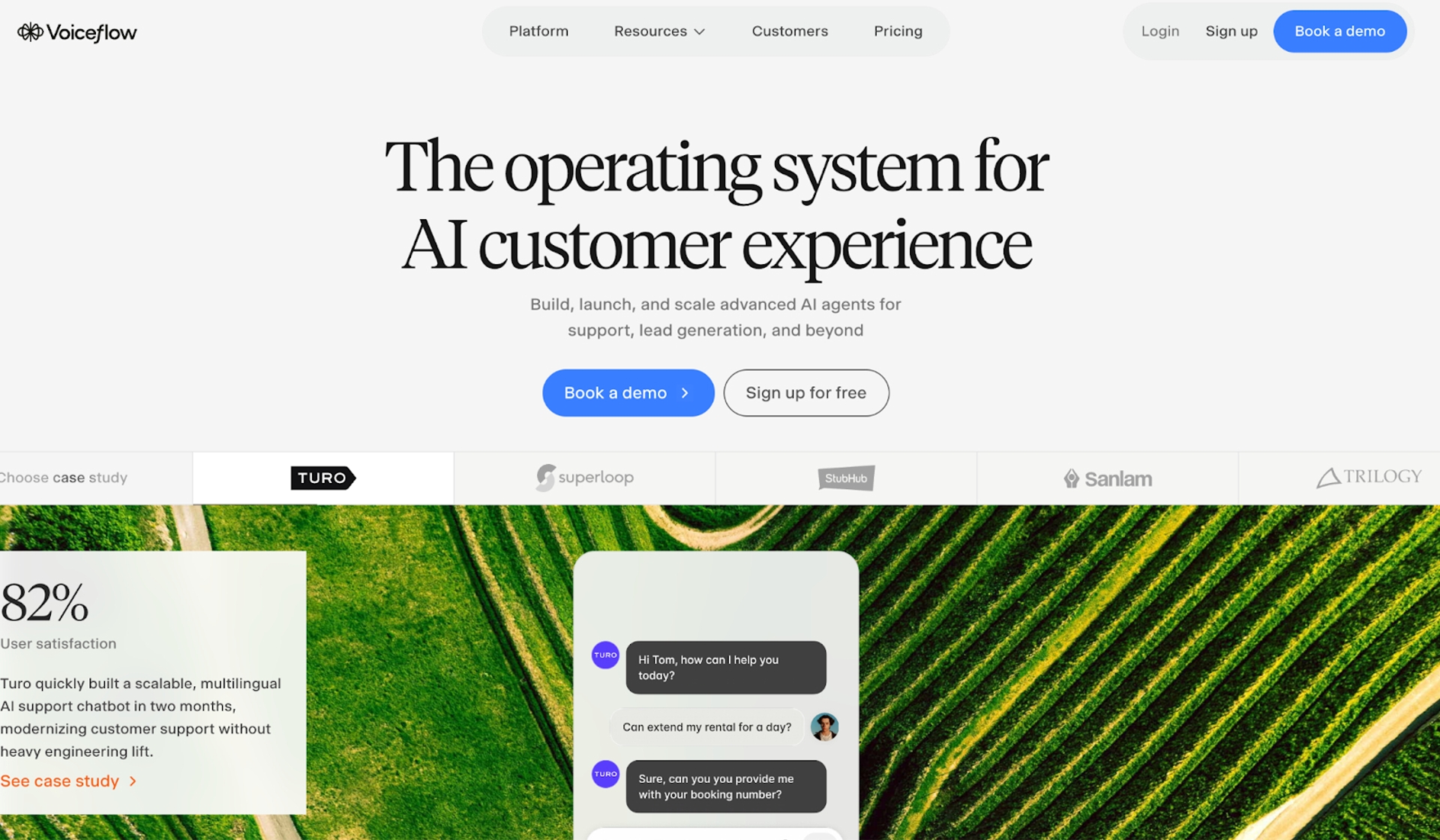
Caption: Voiceflow’s Homepage
Voiceflow provides tools for designing conversational AI workflows using visual development interfaces.
The platform enables product teams, designers, and developers to collaborate on conversational experiences without extensive coding.
Voiceflow is often used by teams building custom AI assistants for digital products.
Best for
Organizations are designing custom conversational experiences across products or digital services.
Key strengths
Limitations to consider
Operational automation for large contact centers may require additional infrastructure.
Ideal teams
Product teams and developers building conversational interfaces.
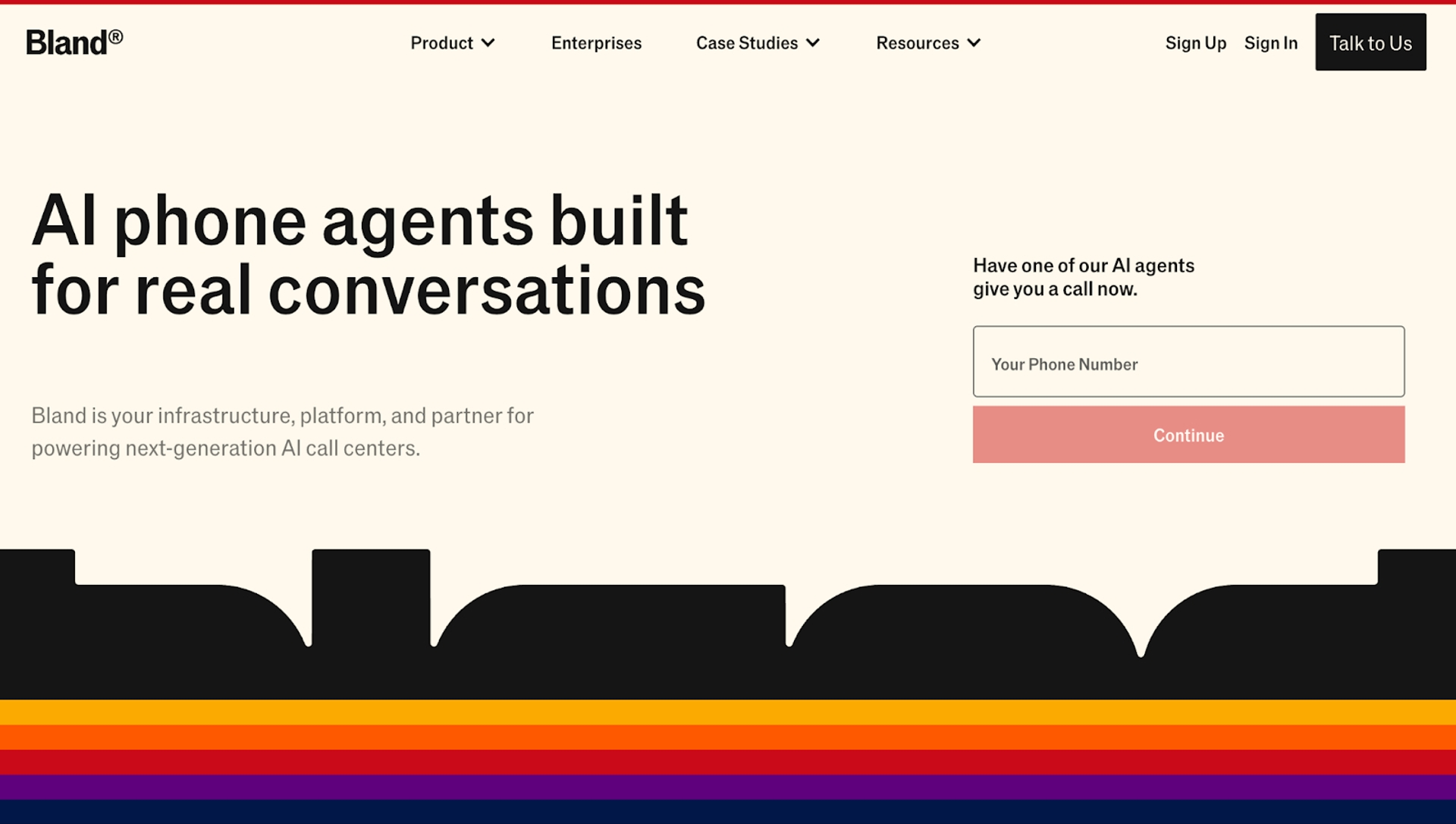
Caption: Bland’s Homepage
A newer category of conversational AI platforms focuses specifically on voice automation.
These systems are designed to automate high-volume phone interactions, including customer support calls, appointment scheduling, and outbound notifications.
Voice-first platforms prioritize conversation quality, low-latency responses, and the ability to manage multi-step call workflows.
Organizations with large contact center operations frequently evaluate these platforms alongside broader conversational AI systems.
Best for
Organizations are seeking to automate large volumes of phone interactions.
Key strengths
Limitations to consider
Some platforms may focus exclusively on voice channels rather than omnichannel automation.
Ideal teams
Organizations with high call volumes across customer support and operational workflows.
| Platform | Channel Support | Automation Depth | Integration Ecosystem | Enterprise Controls | Pricing Style |
|---|---|---|---|---|---|
| CallBotics | Voice, SMS, digital | Full workflow automation | CRM, CCaaS, internal systems | QA analytics, monitoring | Enterprise |
| Amelia | Voice, chat, digital | Advanced orchestration | Enterprise IT integrations | Strong governance | Enterprise |
| Ada | Chat, messaging | Self-service automation | Support platforms | Standard analytics | Enterprise |
| Cognigy | Voice + digital | Complex orchestration | Extensive integrations | Enterprise controls | Enterprise |
| Kore.ai | Voice + digital | Cross-department AI | Broad enterprise ecosystem | Enterprise governance | Enterprise governance |
| Intercom Fin | Chat | Support automation | Intercom ecosystem | Standard analytics | SaaS pricing |
| Forethought | Chat | Ticket resolution + assist | Support platforms | Support analytics | Enterprise |
| Cresta | Voice + digital | Agent assistance | CCaaS integrations | Performance analytics | Enterprise |
| Voiceflow | Digital | Workflow design | APIs and integrations | Basic governance | SaaS |
| Bland AI | Voice | Voice automation | Developer integrations | Limited enterprise controls | Usage based |
While features overlap across platforms, the primary differentiators typically come from channel focus, automation depth, and operational integration.
Organizations rarely evaluate conversational AI platforms in isolation. Most selection processes start with a specific operational goal.
Different platforms align better with different environments.
Large organizations managing complex workflows across multiple departments often prioritize platforms designed for enterprise orchestration.
Platforms commonly evaluated in this category include:
These systems emphasize governance controls, workflow orchestration, and integration with enterprise systems, including CRM platforms and IT service management tools.
They are often deployed as long-term automation infrastructure supporting multiple business units.
Voice interactions remain the most operationally intensive support channel in many industries. Organizations with high call volumes often prioritize platforms designed for voice automation.
Platforms commonly considered in this category include:
These systems focus on AI agents that manage phone conversations, route workflows, and support contact center operations.
Some organizations prioritize speed of implementation and minimal engineering overhead.
Platforms designed for faster rollout typically include:
These tools are widely adopted by digital-first companies seeking to automate routine support interactions without extensive customization.
High-volume support environments often require automation to handle repetitive interactions, such as order status, returns, billing questions, and account issues.
Platforms commonly used for these environments include:
These systems focus on reducing ticket volume while improving response times across digital support channels.
Selecting a conversational AI platform is rarely about finding the tool with the most features. The most successful deployments align technology with operational workflows and customer interaction patterns.
Several practical considerations help guide platform selection.
Automation initiatives are most effective when they focus on the highest-volume interaction types first.
Typical examples include:
Understanding the most common customer intents helps determine whether a platform designed for digital support, voice automation, or enterprise orchestration will deliver the most operational value.
Conversational AI platforms differ significantly in how they approach automation.
Some systems prioritize agent assistance, enabling human representatives to respond faster through AI recommendations and analytics.
Others prioritize autonomous resolution, in which AI agents handle end-to-end customer interactions without human intervention.
Organizations pursuing large-scale automation typically focus on platforms that can manage end-to-end workflows rather than simply assist agents.
Implementation timelines vary significantly between platforms.
Some conversational AI deployments require extensive training datasets, workflow configuration, and engineering integrations. Others prioritize rapid deployment and operational simplicity.
Time-to-value often becomes a deciding factor, particularly for organizations seeking to reduce call volumes or improve support efficiency quickly.
While many conversational AI platforms evolved from chatbot technologies, CallBotics focuses specifically on voice-first automation for contact center environments.
The platform enables organizations to deploy AI voice agents capable of managing a wide range of phone-based workflows, including:
Because voice interactions are often the most complex and operationally expensive support channel, automating these workflows can deliver significant operational efficiency gains.
CallBotics is designed to support these environments with production-ready infrastructure and built-in analytics capabilities.
Key platform capabilities include:
These capabilities allow organizations to treat customer conversations not only as service interactions but also as a source of operational insight.
The conversational AI ecosystem continues to evolve rapidly as organizations seek to automate customer interactions and improve operational efficiency.
While Sierra provides one approach to conversational AI deployment, organizations often evaluate multiple platforms before making a decision.
The best alternative ultimately depends on several factors:
Platforms designed for enterprise orchestration, digital support automation, or voice-first interactions each address different operational priorities.
Organizations that evaluate conversational AI through the lens of operational fit rather than feature lists are more likely to achieve meaningful automation outcomes.

Urza Dey (She/They) is a content/copywriter who has been working in the industry for over 5 years now. They have strategized content for multiple brands in marketing, B2B SaaS, HealthTech, EdTech, and more. They like reading, metal music, watching horror films, and talking about magical occult practices.
See how enterprises automate calls, reduce handle time, and improve CX with CallBotics.
CallBotics is an enterprise-ready conversational AI platform, built on 18+ years of contact center leadership experience and designed to deliver structured resolution, stronger customer experience, and measurable performance.