Voiceflow is widely used for designing conversational experiences through a visual, collaborative interface. For teams exploring conversational design or validating early concepts, this approach can be effective. As conversational systems mature and move into production, the evaluation criteria tend to shift.
Organizations begin to prioritize how a system performs in live environments, how it integrates with existing operations, and how consistently it supports real conversations over time. This change in focus explains why many teams reassess their tooling once conversational systems become part of daily operations.
This guide reviews ten platforms that organizations commonly evaluate when they reach that stage. Each platform serves a different type of team and operational context. The goal is not to recommend one solution universally, but to provide clarity on where each option fits and what to evaluate before committing.
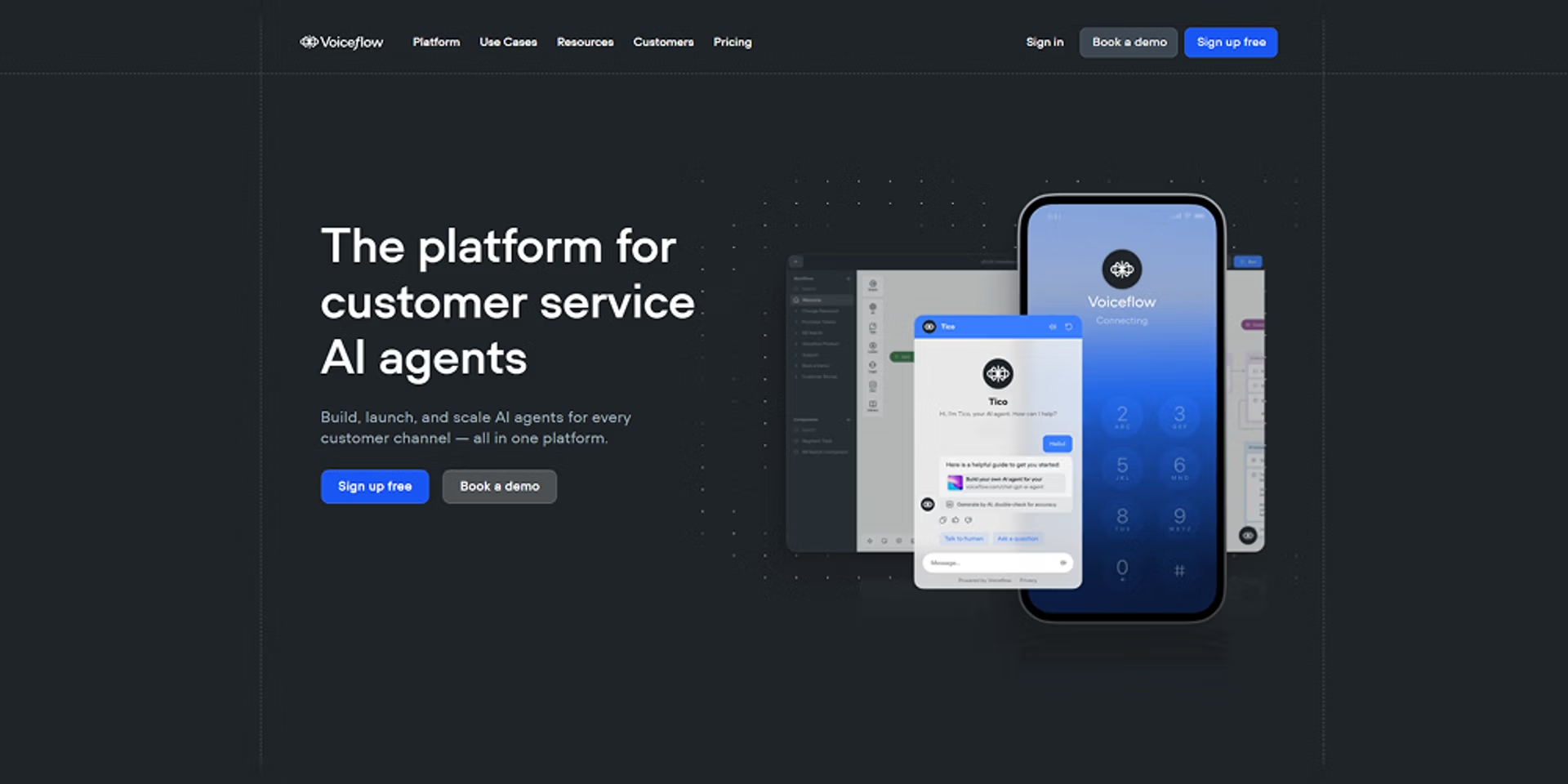
Voiceflow continues to serve an important role for certain use cases, particularly where conversational design and collaboration are the primary objectives. Organizations typically explore alternatives when their needs extend beyond design and into sustained execution.
As usage grows across workflows, teams, and environments, organizations look for pricing models that align with long-term operational planning rather than short-term experimentation.
Live conversations often depend on real-time access to customer records, policies, and workflow systems. Platforms are evaluated on how smoothly they connect with CRMs, telephony infrastructure, and internal tools without adding friction.
Production conversations tend to involve interruptions, branching logic, verification steps, and escalation paths. Platforms designed primarily for flow visualization may require additional layers to handle these scenarios consistently.
These factors shape how organizations evaluate alternatives once conversational systems become part of core operations.
The following platforms represent a broad cross-section of approaches to conversational systems. Each description focuses on operational fit, strengths, and considerations rather than feature checklists alone.
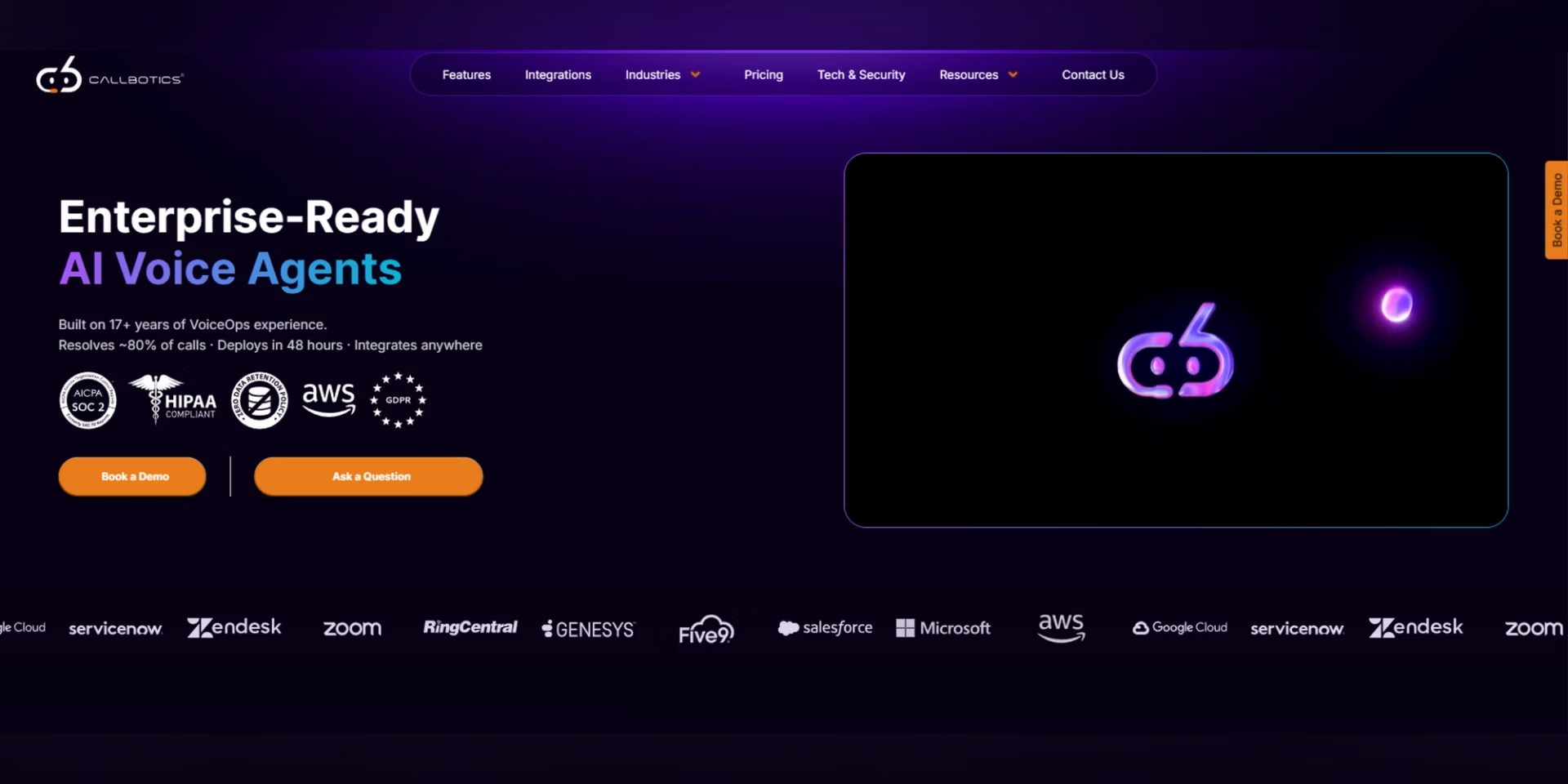
CallBotics is designed for organizations where voice interactions are a core part of customer operations. The platform is built around real contact center conditions, including sustained call volumes, shifting customer intent, peak traffic, and the operational requirement for consistent resolution.
Rather than positioning voice automation as a routing or deflection layer, CallBotics supports structured conversations end-to-end. This enables a large share of repeatable inquiries to be fully resolved by automation while maintaining clear escalation paths for cases that require human judgment. In production environments, customers commonly automate up to 80% of routine call types, reducing load on live teams while preserving service quality.
Read the full CallBotics case study to see the results in detail.
Inbound and outbound workflows share the same conversation logic. This ensures consistency across follow-ups, notifications, and live interactions, helping teams avoid fragmented behavior across voice use cases.
From a deployment perspective, CallBotics is designed to reach production quickly. Most implementations go live within 48 hours, supported by a free white-glove implementation model that minimizes internal effort and avoids extended pilot cycles. This approach helps teams focus on outcomes rather than prolonged setup.
Across production environments, organizations using CallBotics often report:
In one U.S.-based production deployment, a national record retrieval enterprise reduced operating costs by 64% while maintaining a 97% quality score and a 76% call success rate after deploying CallBotics for high-volume voice workflows.
Botpress is commonly used by teams that want flexibility and control over conversational logic. Botpress is positioned as a highly configurable platform that gives teams the building blocks to design, test, and manage tailored AI agents. It is often evaluated by companies seeking greater ownership over how conversations behave across workflows, channels, and integrations. Rather than offering a fully managed, operator-led model, Botpress typically appeals to teams that want to shape the system themselves. It provides tooling that supports custom workflows, integrations, and multi-channel deployment.
The platform is well-suited to organizations with engineering resources that plan to evolve conversational systems over time.
Dialogflow is widely adopted for intent-based conversational systems and integrates closely with Google Cloud services. Dialogflow is a Google-developed platform that many teams use as the conversational layer for chatbots, virtual agents, and intent-routing experiences. It is particularly relevant for organizations that want to build on Google Cloud and connect conversational logic with the broader Google ecosystem. In practice, Dialogflow is often selected when the company values strong intent recognition, language support, and cloud extensibility more than a packaged end-to-end operational layer. It is often chosen by organizations that already operate within Google’s infrastructure.
The platform works well when conversations can be structured clearly around intents and entities.
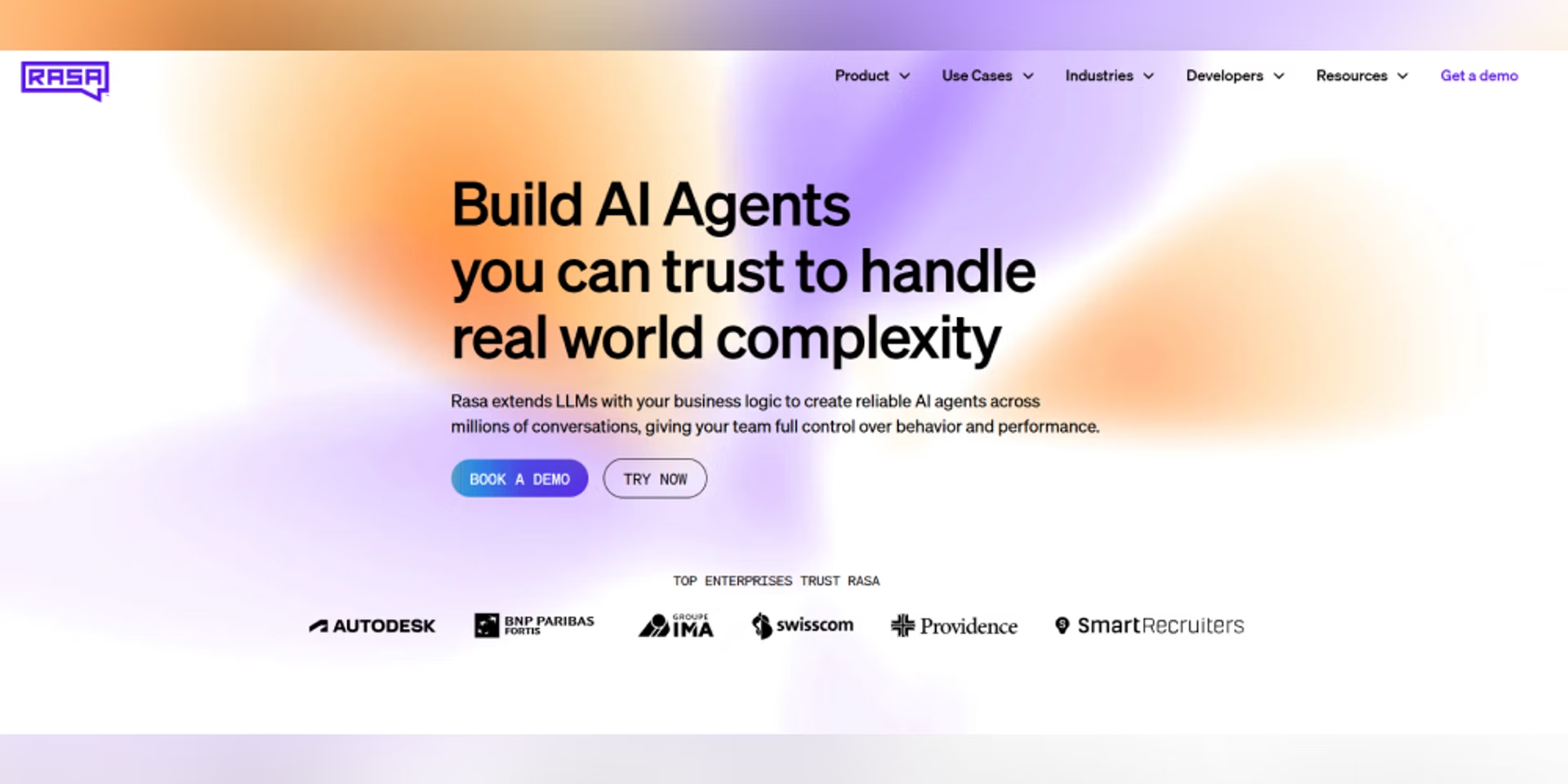
Rasa is an open-source framework that gives organizations full control over how conversational systems are built, trained, and deployed. Rasa is built for companies that want to own the conversational stack rather than rely on a managed platform. It is commonly used by technically mature teams that need control over infrastructure, model behavior, deployment environments, and data handling. In practice, Rasa is usually a fit for organizations treating conversational AI as a long-term product investment, not a lightweight plug-and-play tool. It is often chosen when flexibility and ownership are top priorities.
This approach requires greater technical investment but allows teams to tailor solutions more closely to their needs.
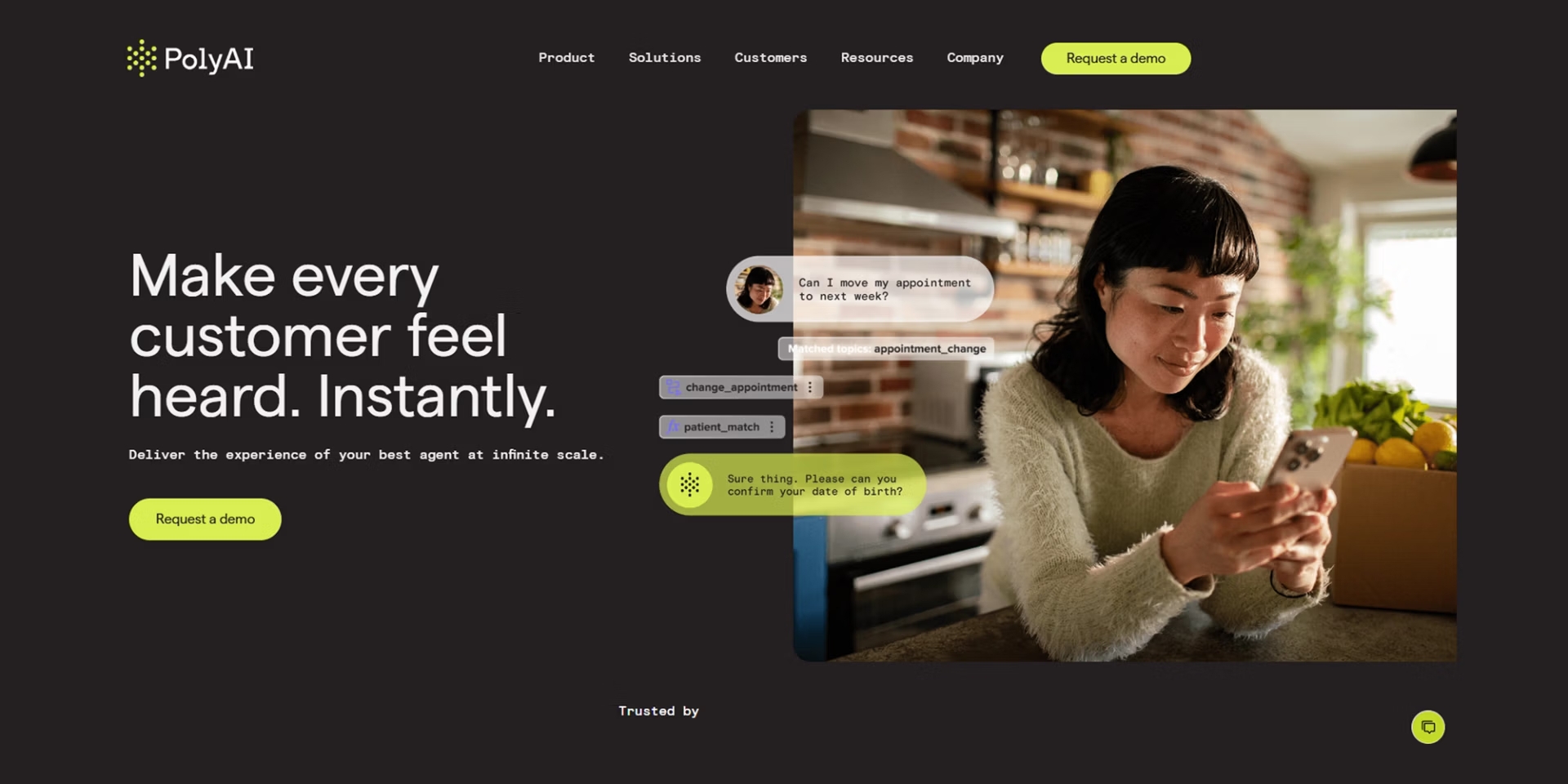
PolyAI focuses on enterprise-grade voice automation and is often evaluated by organizations where call quality and conversational depth are critical. PolyAI is specifically known for AI voice agents built for customer service environments where spoken interaction quality has a direct impact on brand perception. The company is typically considered by enterprises looking to automate high-volume voice conversations without making the experience feel overly rigid or robotic. In practice, PolyAI is most relevant when voice is the core channel and the business places a high value on natural conversation flow, consistency, and controlled enterprise rollout.
The platform is typically used for customer-facing voice interactions in environments where consistency and experience matter.
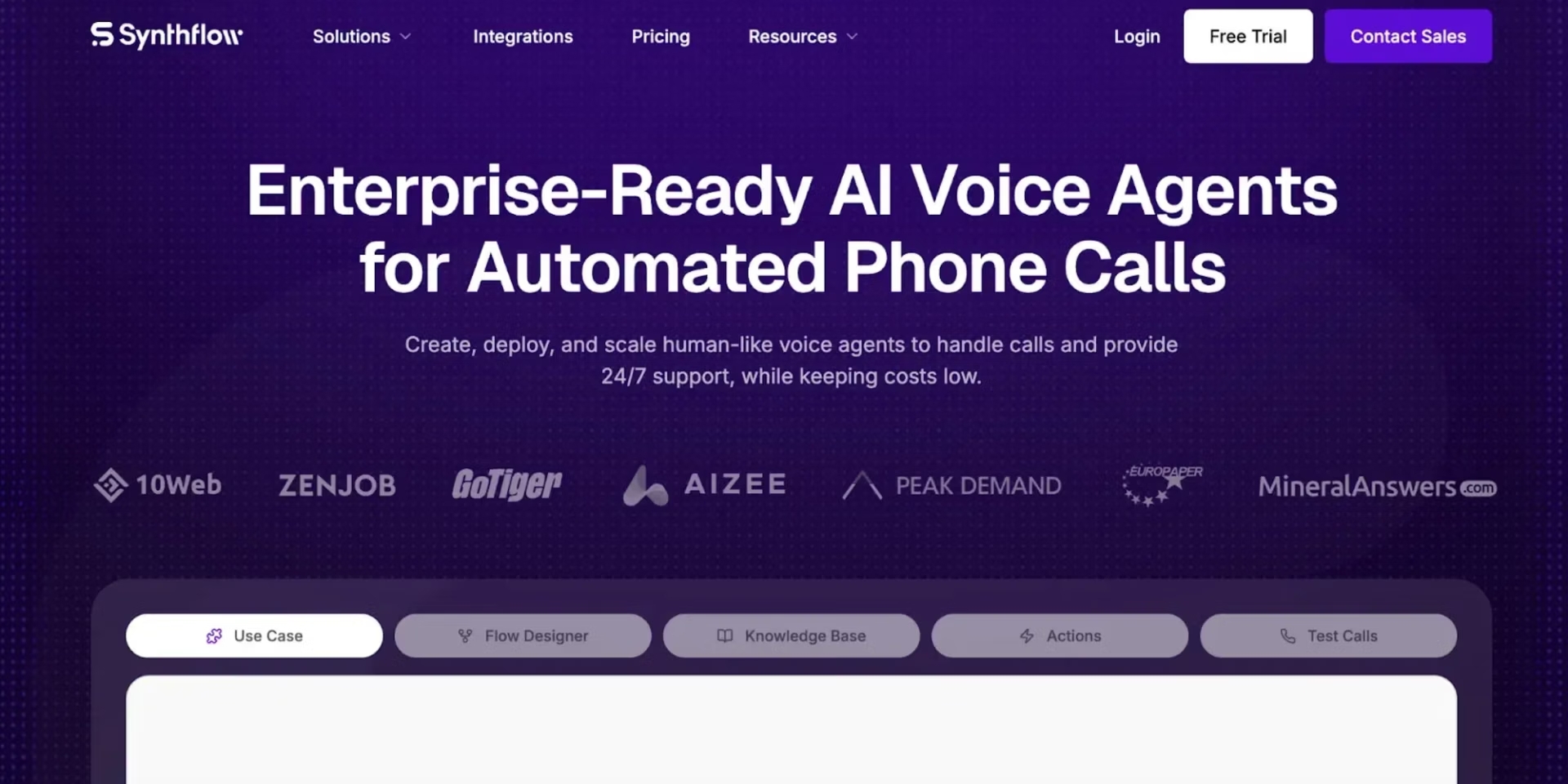
Synthflow is often evaluated by teams looking for a balance between builder-style workflows and voice-focused execution. Synthflow is positioned as a more accessible voice AI platform for teams that want to launch call automation without building everything from scratch. The company is commonly considered by businesses that want workflow-based setup, faster implementation, and less technical overhead than fully custom frameworks. In practice, Synthflow tends to appeal to teams looking for practical voice automation for defined use cases rather than a heavily engineered enterprise stack. It appeals to organizations seeking a more accessible entry into voice automation.
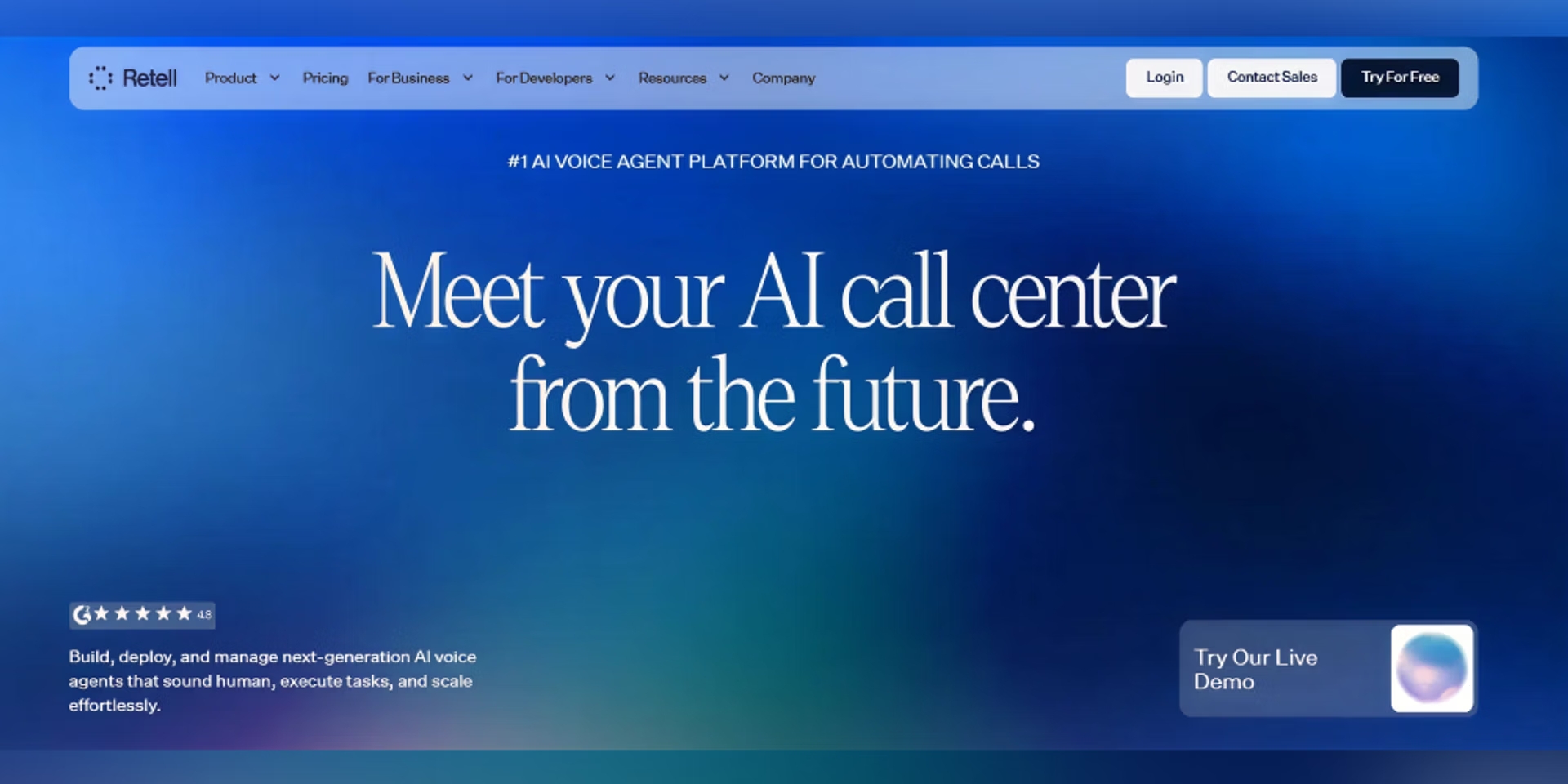
Retell is frequently evaluated for real-time voice interactions and conversational flexibility. Retell is known as a voice AI platform built around low-latency, real-time conversation handling for phone-based interactions. The company is often considered by teams that want to prototype or deploy modern voice workflows with greater control over how live conversations are managed. In practice, Retell tends to attract developer-led organizations that care deeply about responsiveness, voice performance, and the flexibility to shape interaction logic as use cases mature. It is often used by teams experimenting with modern voice workflows.
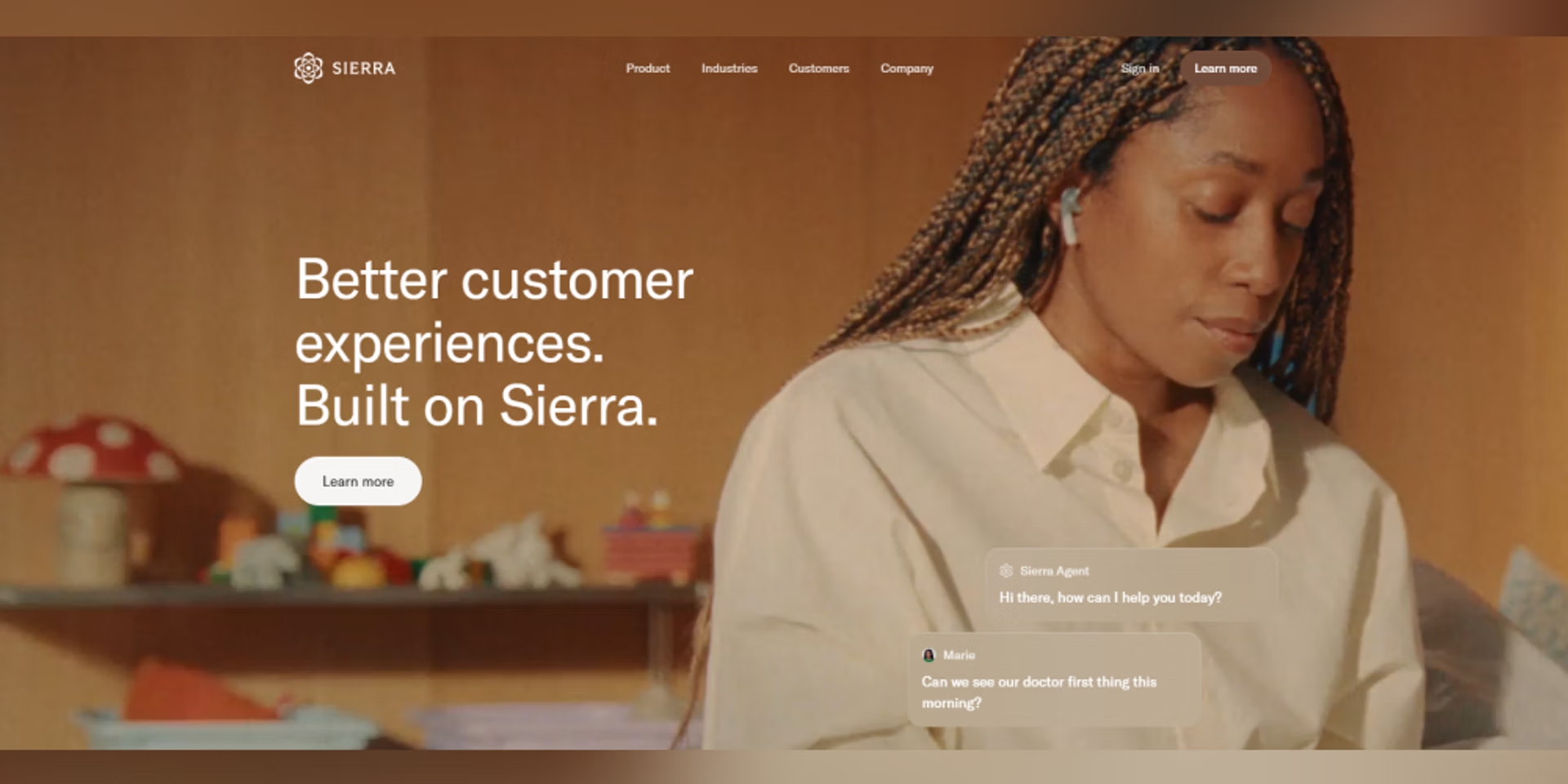
Sierra is commonly discussed as an enterprise-focused conversational platform. Sierra is a company focused on helping businesses build AI agents for customer experience across channels, with a strong emphasis on brand representation, trust, and enterprise control. Its platform is designed for customer-facing deployments where companies want AI agents to reflect their voice, policies, and service standards rather than act like generic bots. In practice, Sierra is often evaluated by enterprises that want governed rollout, multichannel support, and tighter oversight around how AI interacts with customers. It is often evaluated by organizations seeking structured deployments with governance considerations.
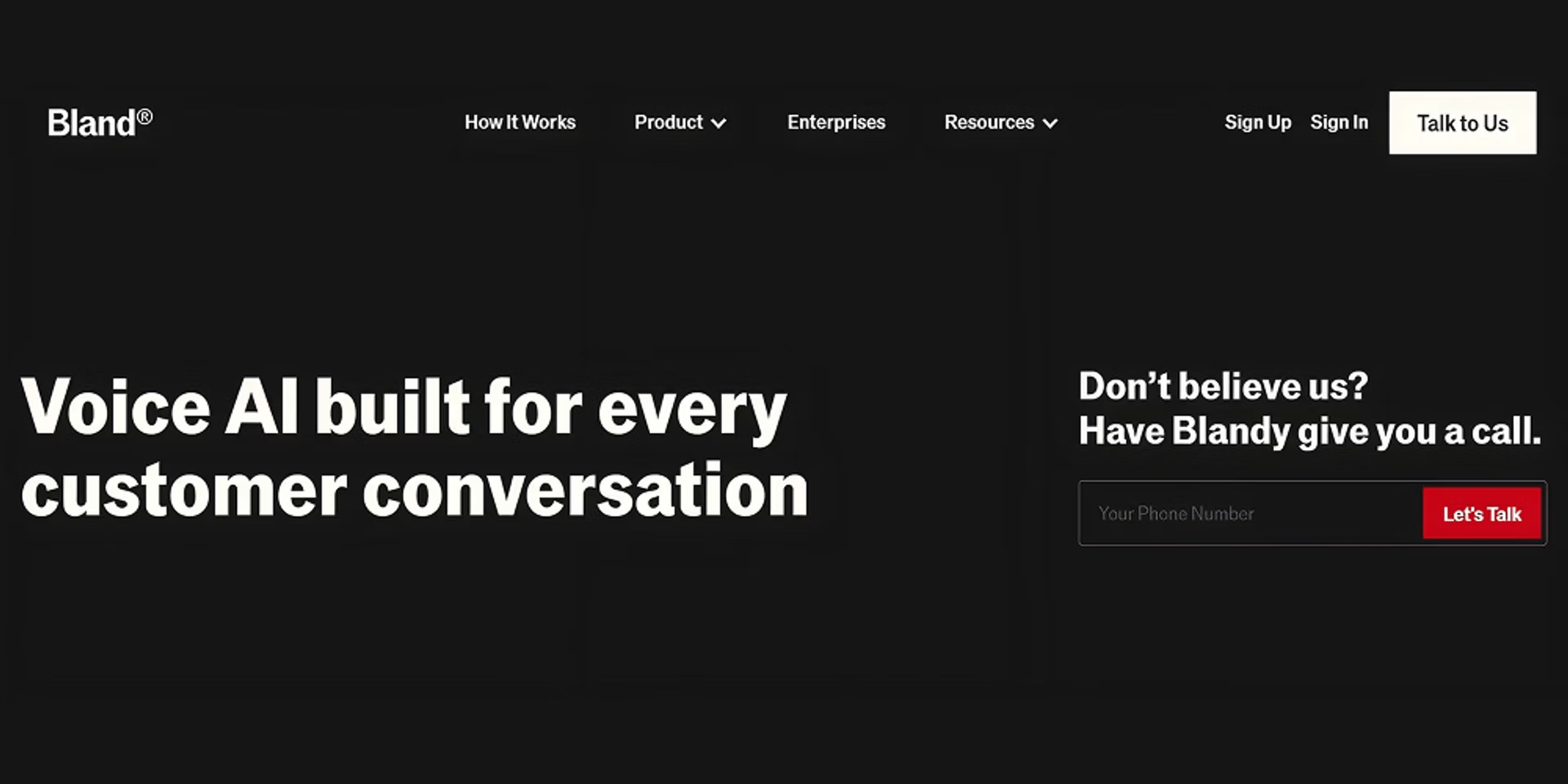
Bland AI is often considered for voice automation scenarios involving higher volumes of outbound or inbound interactions. Bland AI is a voice automation company focused specifically on AI phone calls for inbound and outbound workflows, with an emphasis on speed, scale, and real-time conversation handling. The platform is commonly used by teams that want to build and run AI calling workflows across customer service, lead qualification, scheduling, and similar structured phone-based use cases. In practice, Bland AI is typically evaluated by organizations looking for programmable voice automation, infrastructure control, and the ability to manage large call volumes with operational guardrails.
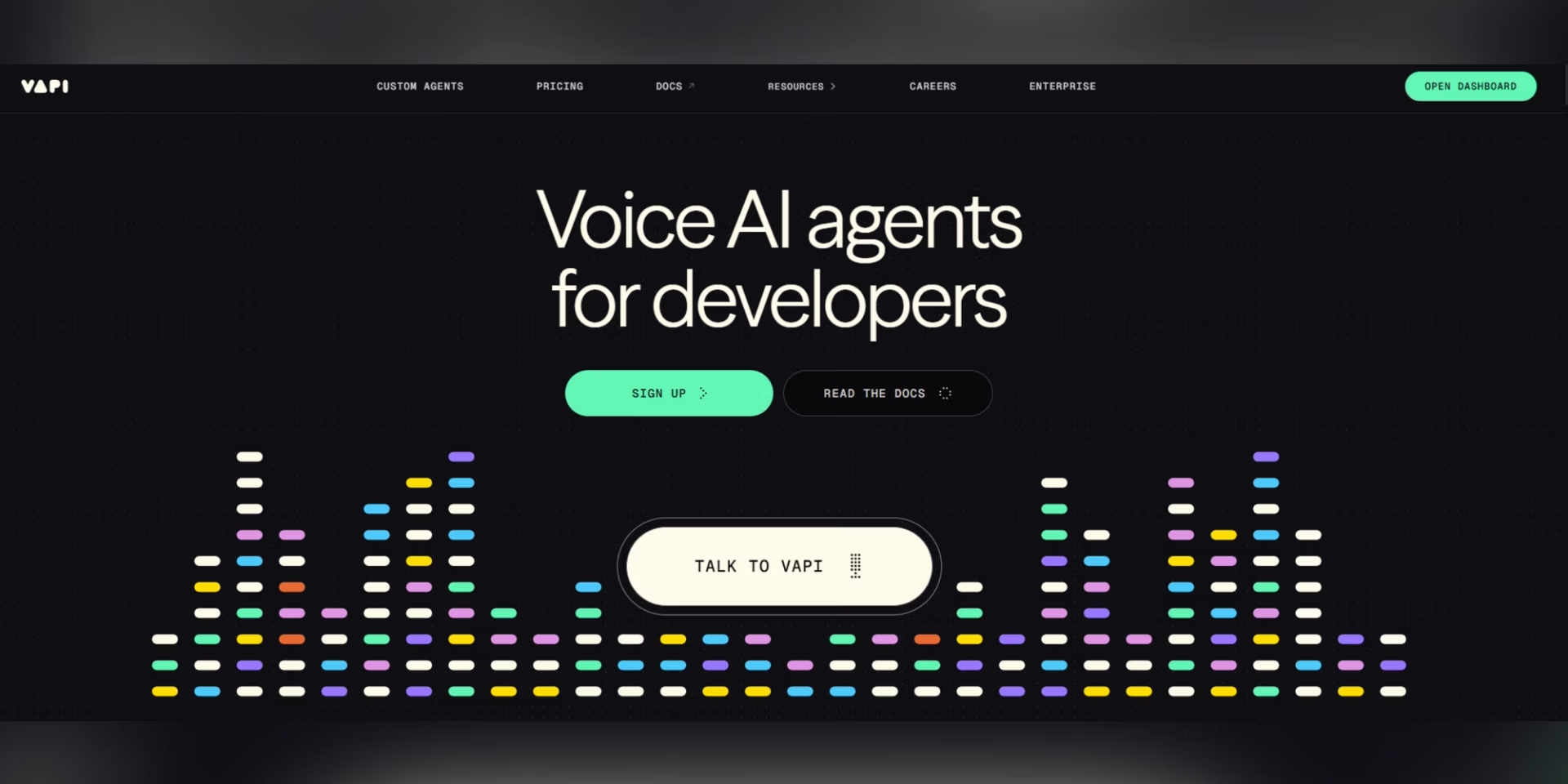
Vapi is an API-first toolkit designed for teams that want to assemble their own voice stack. Vapi is built for developers who want direct control over how voice agents are configured, connected, and deployed across their own architecture. The company is typically relevant for teams that prefer modular infrastructure and want to choose their own models, telephony components, and orchestration logic instead of relying on a packaged platform. In practice, Vapi is usually considered by engineering-heavy organizations building custom voice systems where flexibility matters more than having a fully managed operational layer. It offers flexibility at the cost of increased responsibility.
Once teams move beyond surface-level comparisons, platform selection usually becomes less about brand names and more about operational alignment. The most effective conversational systems are those that align with how an organization already works rather than forcing teams to adapt their processes to technology.
The sections below outline how different types of organizations typically evaluate platforms and what matters most at each stage.
| Platform | Best Fit | Primary Focus | Voice Readiness | Integration Depth |
|---|---|---|---|---|
| CallBotics | Contact centers and voice-led operations | End-to-end voice automation | High | Strong CRM and telephony alignment |
| Botpress | Developer-led teams | Custom conversational workflows | Medium | Flexible with engineering effort |
| Dialogflow | Google Cloud users | Intent-based conversations | Medium | Strong within Google ecosystem |
| Rasa | Engineering-first organizations | Fully custom conversational systems | Custom | Fully customizable |
| PolyAI | Large enterprises | Enterprise voice interactions | High | Enterprise integrations |
| Synthflow | Structured voice workflows | Builder-style voice automation | Medium to High | Platform-based integrations |
| Retell | Voice experimentation to production | Real-time voice interactions | High | Varies by use case |
| Sierra | Enterprise governance needs | Controlled conversational deployments | High | Enterprise-focused |
| Bland AI | High-volume voice workflows | Scaled voice automation | Medium to High | Platform-based |
| Vapi | Custom voice stacks | API-first voice systems | Custom | Fully custom |
Early-stage organizations are often focused on speed, learning, and experimentation. Their goal is to validate use cases, understand customer intent, and test whether AI agents can meaningfully support interactions without adding complexity too early.
At this stage, teams tend to value:
Startups often look for:
Voice may or may not be the primary channel at this stage. When voice is involved, it is typically limited to defined scenarios rather than full operational coverage.
Mid-market organizations often reach a point where conversational systems are no longer experiments. They become part of day-to-day operations, supporting real customers across multiple workflows.
At this stage, priorities usually shift toward:
Teams in this category often evaluate platforms as a long-term conversational AI platform, not a temporary tool. They look for systems that can handle variability in conversations while maintaining consistent outcomes.
Common evaluation criteria include:
At this stage, conversational systems begin to influence both efficiency and experience. Platforms that support continuity across channels and workflows tend to fit more naturally into growing operations.
Enterprise environments bring additional layers of complexity. Conversational systems must operate at scale, comply with internal standards, and integrate seamlessly with established processes.
Enterprise teams typically prioritize:
In these environments, conversational systems often support critical functions such as customer support and service operations. As a result, decision-makers evaluate platforms not only on technical capability but also on how well they fit existing operating models.
Key considerations often include:
Enterprise buyers are less focused on novelty and more focused on consistency, governance, and measurable value.
Across all organization sizes, teams that succeed with conversational systems tend to look beyond surface-level comparisons. They evaluate how a platform behaves in real conditions and how easily it fits into their environment.
A practical evaluation framework often includes:
Some teams also evaluate whether the platform allows them to design a custom AI assistant that reflects their policies, tone, and workflows rather than forcing generic behavior.
There is no universally “best” platform. The most effective choice is the one that aligns with your scale, channels, and operating model.
Teams that treat conversational systems as part of their customer engagement strategy tend to succeed when they choose platforms that:
This mindset allows organizations to build automation that feels intentional and dependable rather than experimental.
CallBotics helps organizations run voice automation in live operational environments without forcing teams to compromise on control, consistency, or speed to value. It is built for real contact center conditions, where conversations do not follow perfect paths, volumes shift quickly, customers interrupt, and escalation needs to happen cleanly when automation reaches its limit.
Instead of acting like a disconnected builder tool, CallBotics fits into how production voice operations actually run, helping teams automate meaningful workflows while maintaining visibility, continuity, and operational confidence.
Choosing among the best voiceflow alternatives in 2026 requires clarity about how conversations function within your organization. There is no universal answer, only a best fit based on scale, channel mix, and operational maturity.
Voiceflow remains relevant for design-focused use cases. Other platforms serve teams with developer-led builds, enterprise governance needs, or voice-first priorities. CallBotics aligns naturally with organizations that treat voice interactions as a core operational channel and value predictable performance, fast deployment, and visible outcomes.
The most effective choice is the one that integrates smoothly into your operations, supports your teams, and evolves alongside your needs.

See how enterprises automate calls, reduce handle time, and improve CX with CallBotics.
CallBotics is an enterprise-ready conversational AI platform, built on 18+ years of contact center leadership experience and designed to deliver structured resolution, stronger customer experience, and measurable performance.