Legal intake is often the first real test of whether a law firm can turn interest into a signed client. When someone calls about an accident, family matter, claim, or dispute, they usually need help quickly. A missed call, delayed callback, or rushed intake conversation can be enough for that person to contact another firm. This is especially important because a national study found that 35% of law firm calls go unanswered, which directly impacts potential case intake. Intake is not just an admin step, it is a conversion point.
The problem is that intake is important but time-consuming. Staff need to answer calls, collect case details, check urgency, avoid incomplete notes, schedule consultations, and route the matter correctly. For busy firms, the issue is usually not lack of intent, but lack of capacity. When intake depends only on available staff, after-hours calls, peak-time inquiries, and urgent matters can easily slip through. Even during working hours, high call volume can lead to rushed conversations and inconsistent information capture.
AI voice agents help firms make the first step more consistent. They can answer inbound calls, capture key details, ask qualifying questions, identify urgent matters, book consultations, and send structured summaries to the right team. This gives intake teams a clearer starting point instead of scattered notes, missed voicemails, or incomplete forms. It also helps attorneys spend more time reviewing qualified matters instead of chasing basic information. The goal is not to replace legal judgment, but to make sure every potential client receives a clear, timely, and organized first response.
Legal intake is the first step a law firm takes when a potential client reaches out. It usually includes answering the call, understanding the person’s issue, collecting basic case details, checking urgency, and deciding what should happen next. That next step could be booking a consultation, sending the matter to an attorney, asking for documents, or routing the inquiry to the right team.
This stage matters because it shapes both client conversion and case quality. If the first conversation is slow, unclear, or incomplete, the person may lose confidence or contact another firm. If the intake details are rushed or missing, the legal team may spend extra time chasing information before they can even evaluate the matter properly.
A strong intake process gives the firm a clear starting point. It helps teams understand who the caller is, what they need, how urgent the matter is, and whether the firm is the right fit. It also creates a better experience for the potential client, because they feel heard, guided, and informed from the first interaction.
Legal intake becomes harder when inquiry volume increases but the team size, working hours, and intake process stay the same. Each call may look simple on the surface, but the team still needs to answer quickly, ask the right questions, capture details clearly, and route the matter correctly. When this process depends only on manual effort, small gaps can turn into lost opportunities. The challenge is not only handling more calls, but handling each call with the same level of care and consistency. As call volume grows, intake teams need a process that protects speed, accuracy, and follow-up quality at the same time.
Law firms often receive calls during peak hours, after business hours, or while staff are already handling other client conversations. When too many inquiries come in at the same time, some calls are missed, rushed, or sent to voicemail. This creates a direct risk for firms because many potential clients will not wait long before contacting another attorney. Even when the team calls back later, the person may have already moved forward with a competitor.
Legal intake is not just about answering the phone. The team needs to collect the right details, understand the matter, check urgency, and document everything in a way that attorneys can review later. This becomes difficult when different team members capture information in different formats or skip details during busy periods. Without a structured intake process, the firm may have the lead, but not enough clarity to evaluate it properly.
Most people contacting a law firm are looking for clear guidance as soon as possible. If they do not hear back quickly, they may assume the firm is too busy or not interested in their matter. This is especially true for urgent legal issues where the caller may feel stressed, confused, or unsure about what to do next. A timely response helps the firm build trust before the consultation even begins.
Intake teams often ask the same basic questions across many calls: what happened, when it happened, where it happened, who was involved, and what help the person needs. These questions are necessary, but they take time when handled manually every time. As volume increases, this repeated work can reduce the team’s ability to focus on urgent follow-ups or complex matters. It can also make the intake process feel inconsistent when every staff member asks questions in a slightly different way.
AI voice agents help law firms manage the first stage of client intake more consistently. They can answer incoming calls, greet potential clients, ask structured intake questions, and capture key details such as contact information, case type, incident date, location, urgency, and preferred callback time. This helps the firm avoid scattered notes, missed voicemails, and incomplete intake forms.
Once the basic information is collected, AI voice agents can guide the caller through the next step based on the firm’s intake rules. For example, they can identify whether the matter is urgent, whether it fits the firm’s practice area, or whether it needs to be reviewed by a specific attorney or intake specialist. They can also route qualified leads, schedule consultations, trigger follow-up tasks, and send a clear summary to the right team.
The main value is consistency. Every caller gets a timely first response, and every intake conversation follows the same approved structure. This gives legal teams cleaner information, faster follow-up, and a better way to manage client inquiries without relying only on staff availability.
AI voice agents are most useful in legal intake when firms deal with high call volume, repeated questions, missed callbacks, and incomplete intake notes. They help keep the first client interaction organized, even when the intake team is busy, unavailable, or handling other urgent matters. This gives firms a more reliable way to manage inquiries without depending only on staff availability.
The goal is not to replace attorneys or legal judgment. It is to make sure every potential client gets a timely response, every intake call follows a clear structure, and the right information reaches the right person without unnecessary delay. This helps attorneys review matters with better context instead of starting from unclear notes.
The first intake call usually starts with basic but important details. AI voice agents can capture the caller’s name, phone number, email address, location, case type, incident date, and a short summary of what happened. These details help the firm understand the caller’s situation before a staff member or attorney gets involved.
This helps solve a common intake problem: incomplete or scattered information. Instead of staff trying to piece together voicemail notes, missed details, or rushed call summaries, the firm gets a cleaner intake record that is easier to review and follow up on. A structured intake summary also helps the team decide what should happen next.
Not every inquiry is the right fit for the firm, and intake teams often spend a lot of time asking the same screening questions. AI voice agents can ask predefined questions based on the firm’s practice area, such as when the issue happened, where it happened, who was involved, and what kind of legal help the caller is looking for. This helps the firm collect the same core information across every intake call.
This helps the firm identify which matters may be urgent, relevant, or ready for attorney review. It also reduces inconsistent screening, because every caller is guided through the same approved questions before the intake summary is sent to the team. For busy firms, this can reduce time spent on inquiries that clearly do not match the firm’s services.
Once a potential client appears to be a fit, the next step is often scheduling a consultation. AI voice agents can help book appointments based on attorney availability, intake rules, caller preferences, and urgency. This helps avoid delays between the first call and the first meaningful conversation with the firm.
This reduces the back-and-forth that often slows down onboarding. Instead of asking staff to manually call, confirm, reschedule, and update calendars, the caller can move from intake to scheduled consultation with less friction. The firm can also reduce missed opportunities caused by slow scheduling.
Many potential clients do not move forward after the first call because they need to gather documents, think through the decision, or wait for a family member’s input. Without a clear follow-up process, these leads can sit untouched until the opportunity is lost. Intake teams may also forget to follow up when they are managing active clients, urgent calls, and daily admin work.
AI voice agents can help by making reminder calls, confirming missing information, checking whether the person still needs help, and prompting the next step. This keeps the firm engaged with potential clients without adding more manual follow-up work for the intake team. It also helps the firm maintain a professional experience after the first call.
Legal issues do not always happen during office hours. A potential client may call at night, on a weekend, or during a holiday, and if no one answers, they may contact another firm before the next business day. This is especially risky for urgent matters where the caller wants reassurance right away.
AI voice agents can answer those calls, collect key details, ask basic qualifying questions, and send a structured summary to the right team for review. This helps firms capture more opportunities while giving callers a clear first response, even when staff are unavailable. It also gives the team a useful record to review as soon as business hours begin.
AI voice agents improve legal client onboarding by making the intake process faster, more consistent, and easier to track. Instead of relying only on staff availability, firms can respond to new inquiries, collect key details, qualify leads, and move potential clients to the next step with less delay. The impact can be measured through response time, missed call rate, qualified lead rate, consultation bookings, follow-up completion, and intake team workload.
This gives law firms a clearer view of where intake is working and where leads may be slipping through. It also helps teams improve onboarding without adding more manual pressure to already busy staff.
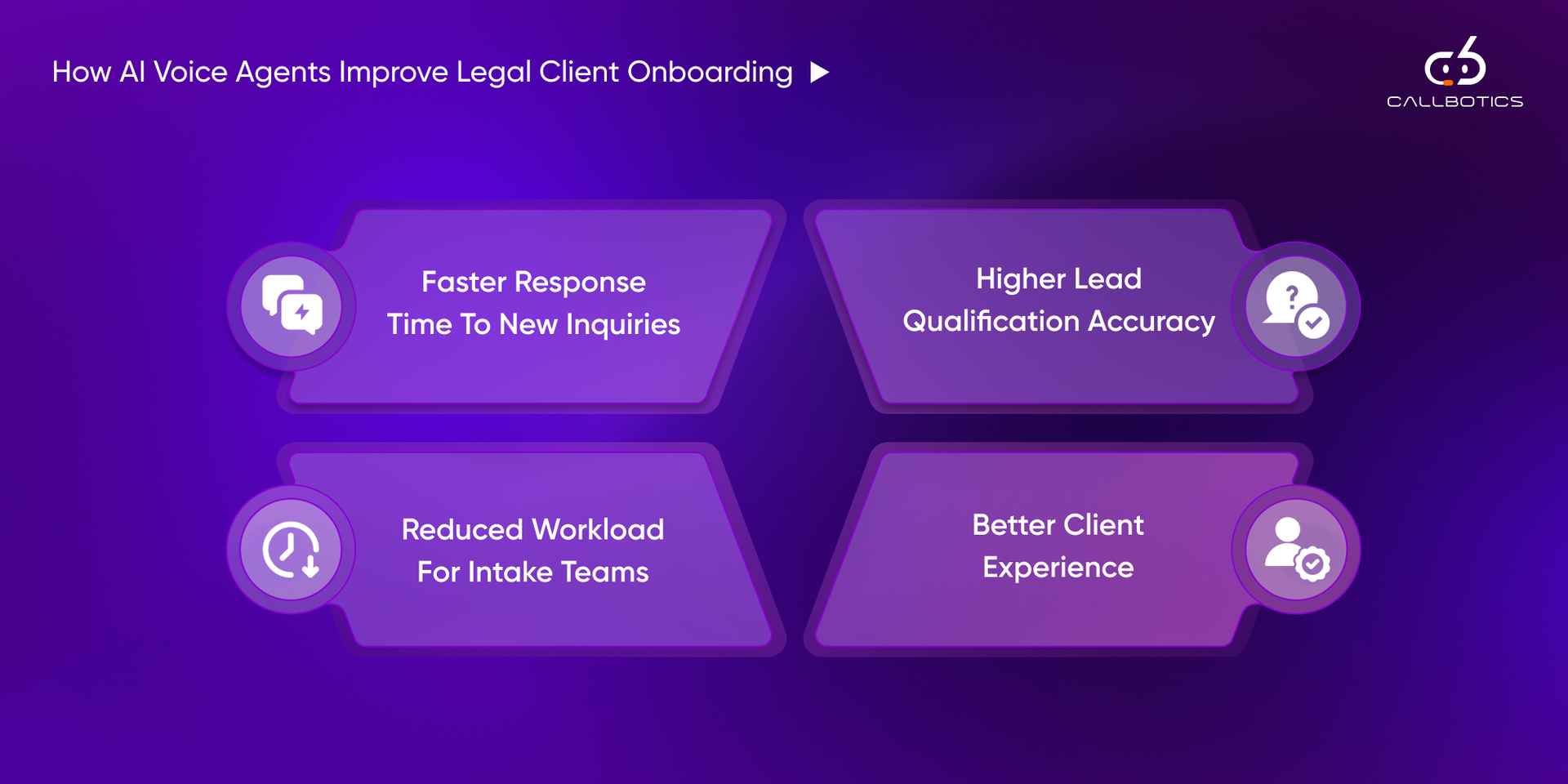
A fast first response matters because potential clients often contact more than one firm when they need legal help. AI voice agents can answer calls instantly, including during busy hours, lunch breaks, evenings, weekends, and holidays, so fewer inquiries are left waiting. This helps the firm stay available when the client is ready to talk, not just when staff are free. It also reduces the risk of a caller leaving a voicemail and never reconnecting with the firm.
Legal intake works better when every caller is asked the right questions in the right order. AI voice agents can follow a structured script based on the firm’s practice area, helping teams screen matters more clearly and avoid incomplete intake notes. This reduces the chance of important details being missed during a rushed or busy call. It also helps attorneys review each inquiry with cleaner context before deciding the next step.
Intake teams often spend a large part of the day answering similar questions, collecting the same details, and following up on basic information. AI voice agents can handle these repetitive steps so staff can focus on urgent matters, attorney coordination, and higher-value client support. This can reduce the daily strain on intake staff, especially during high-volume periods. It also helps teams avoid burnout caused by constantly switching between new calls, callbacks, scheduling, and admin tasks.
A potential client’s first call can shape how they feel about the firm. AI voice agents help create a more reliable experience by answering quickly, asking clear questions, confirming next steps, and sending the right information to the team. This gives callers a sense that their issue has been heard and recorded properly. It also helps reduce frustration because the client does not have to repeat the same details across multiple conversations.
Legal intake often includes sensitive personal details, such as names, contact information, incident facts, medical details, financial information, employment issues, or family matters. Because of this, AI voice agents must be used in a way that protects client information, respects confidentiality, and keeps the intake process within clear legal and ethical boundaries.
For law firms, the goal is not just to collect information faster. The goal is to collect it responsibly, store it securely, and make sure potential clients understand what the AI voice agent can and cannot do during the intake call. A well-designed process helps firms improve intake without creating confusion, privacy gaps, or ethical risk.
AI voice agents may collect information that a potential client would normally share with an intake specialist. This can include case details, timelines, documents needed, contact preferences, and other private information. Firms need to make sure this data is protected through secure systems, controlled access, and clear internal processes.
This matters because a weak intake process can create privacy risks before a case even begins. Legal teams should know where intake data is stored, who can access it, how call summaries are shared, and whether the system supports audit trails, data retention controls, and compliance requirements. This gives the firm more control over sensitive information from the first interaction.
Potential clients should understand when they are speaking with an AI voice agent and what the interaction is meant to do. The AI voice agent should clearly explain that it is collecting intake information, helping with next steps, or routing the inquiry to the right person. Clear language helps callers feel informed instead of surprised by the process.
This avoids confusion and builds trust from the first call. A caller should not be left thinking they received legal advice, spoke directly with an attorney, or created an attorney-client relationship unless the firm has clearly confirmed that through its normal process.
AI voice agents should stay within defined intake boundaries. They can ask questions, collect facts, confirm contact details, identify urgency, schedule consultations, and route the matter, but they should not interpret the law, predict outcomes, or tell someone what legal action to take. This keeps the interaction focused on intake support rather than legal decision-making.
This protects both the caller and the firm. The AI voice agent should be designed to support intake, not replace attorney judgment, and any legal assessment should be handled by a qualified professional after the information has been reviewed.
AI voice agents work best when they are built around a clear intake process, not a loose conversation. Law firms should define what information needs to be collected, when a lead should be escalated, and how the handoff should happen. This helps the intake process stay fast, consistent, and useful for both the caller and the legal team. It also prevents the AI voice agent from asking too many questions or collecting details the firm does not need at that stage. A strong setup gives the firm better intake records, faster follow-up, and more control over lead quality.
A structured intake script helps AI voice agents collect the same important details from every caller. This reduces incomplete notes, missed questions, and inconsistent information across different intake conversations. It also helps attorneys review new inquiries faster because the information arrives in a familiar format. When the script is clear, intake teams spend less time cleaning up notes and more time moving qualified matters forward.
Long intake calls can frustrate potential clients, especially when they are stressed or unsure about what to do next. AI voice agents should collect the information needed for the next step without making the caller answer unnecessary questions. The call should feel helpful, not like a long form being read out loud. A focused conversation also reduces drop-offs because the caller can quickly understand what is being asked and why it matters.
AI voice agents should know when to bring a human into the process. Qualified leads, urgent matters, upset callers, or complex situations should be transferred or routed with enough context so the caller does not have to start over. This is important because poor handoffs can make a potential client feel ignored or misunderstood. A smooth escalation gives the legal team the right information while giving the caller confidence that the firm is paying attention.
Legal intake improves when firms review which leads convert, which ones are not a fit, and where the process creates friction. AI voice agents should be updated as the firm learns more about lead quality, case value, and intake outcomes. This helps the qualification process become more accurate over time instead of staying fixed around old assumptions. Regular review also helps firms remove unnecessary questions, add better screening prompts, and improve the quality of leads reaching attorneys.
Legal intake automation should be measured by more than how many calls the AI voice agent answers. The real question is whether the intake process is helping the firm capture more potential clients, qualify them accurately, schedule consultations faster, and improve the path from first call to signed client. These numbers help firms understand whether automation is improving real intake outcomes, not just call activity.
Tracking the right KPIs also helps firms find weak points in the intake workflow. For example, a firm may be answering more calls but still losing leads because qualification is unclear, follow-up is slow, or appointments are not being booked at the right time. Regular KPI review gives intake teams a practical way to improve the process over time. It also helps attorneys and operations leaders see whether the system is supporting better client onboarding.
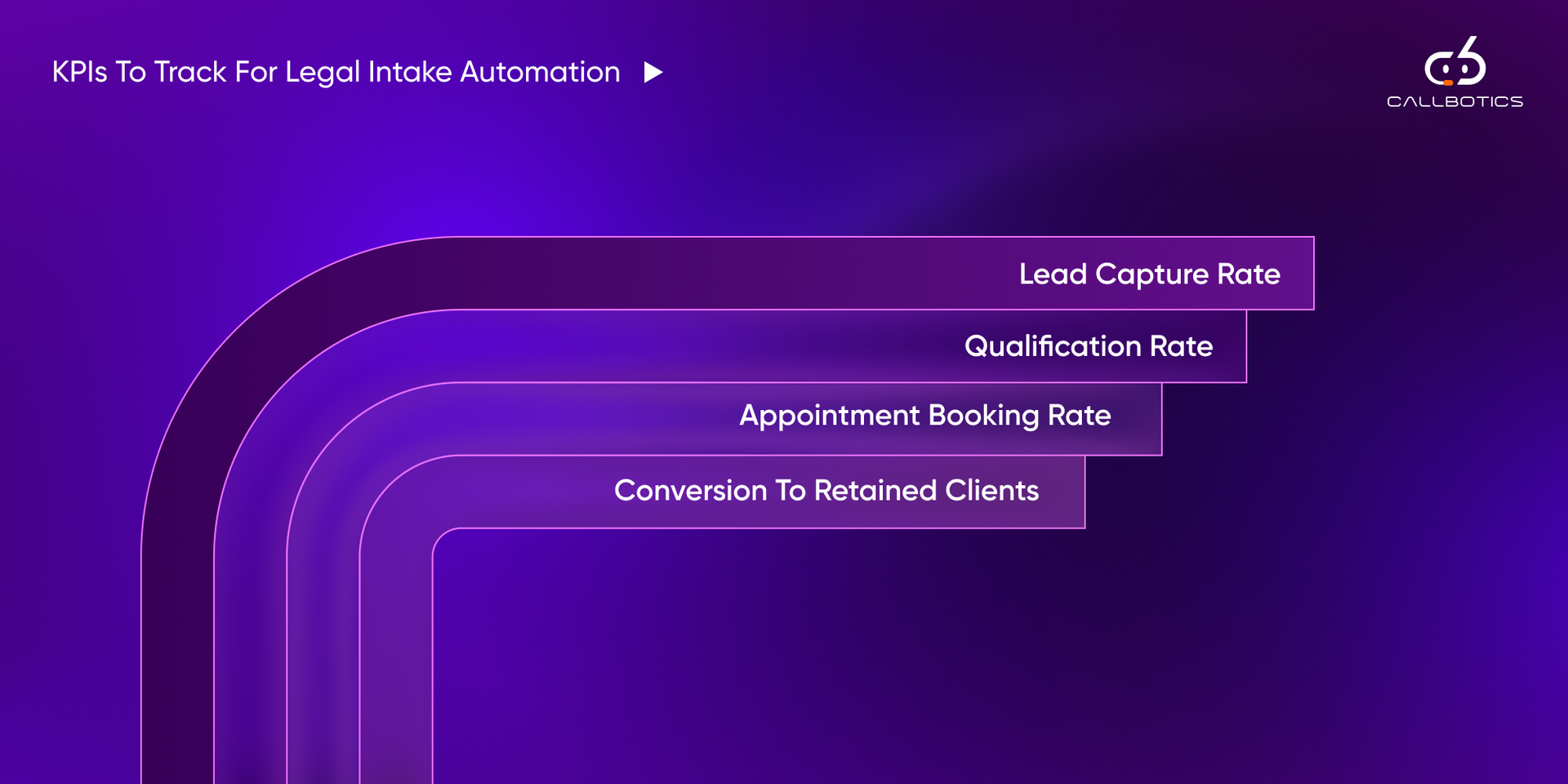
Lead capture rate shows the percentage of intake calls that turn into usable leads. A usable lead usually means the caller’s name, contact details, case type, and basic issue summary were captured clearly enough for the firm to follow up. This KPI is important because missed or incomplete intake records can make a potential client hard to reach later. It also helps firms understand whether calls are being answered and documented properly.
This KPI helps firms understand whether they are actually converting inbound calls into intake records. If the lead capture rate is low, the problem may be missed calls, long wait times, unclear intake questions, caller drop-offs, or incomplete information collection. Firms can also compare lead capture rates by business hours, after-hours calls, and peak call times.
Qualification rate shows how many captured leads meet the firm’s basic criteria. This may depend on practice area, location, incident date, case type, urgency, potential value, or whether the caller needs a service the firm actually provides. This KPI helps firms understand whether the intake process is bringing the right matters forward. It also reduces the risk of attorneys spending time reviewing inquiries that clearly do not fit the firm’s services.
This KPI helps firms avoid spending too much time on leads that are not a good fit. If the qualification rate is too low, the intake questions may need to be refined so the AI voice agent can screen matters more clearly before they reach the legal team. A balanced qualification rate helps the firm protect attorney time while still capturing strong opportunities.
Appointment booking rate shows how many qualified leads successfully schedule a consultation. This is important because a lead is not very useful if the person never gets connected to an attorney or intake specialist for the next step. A strong booking rate shows that the intake process is not only collecting information but also moving potential clients forward. It also helps firms measure whether scheduling is simple enough for callers to complete.
This KPI helps firms see whether the intake process is moving potential clients forward quickly enough. If booking rates are low, there may be delays in scheduling, limited appointment availability, unclear next steps, or too much manual back-and-forth after the first call. Shorter scheduling time usually means fewer chances for the potential client to lose interest or contact another firm.
Conversion to retained clients shows how many intake leads eventually become signed clients. This is one of the most important KPIs because it connects intake automation to actual business impact, not just call handling activity. It helps firms understand whether faster intake and better qualification are leading to stronger case conversion. It also shows whether the leads being captured are aligned with the firm’s ideal client profile.
This KPI helps firms understand whether better intake is improving revenue, case quality, and client acquisition. If many leads are captured and qualified but few become retained clients, the firm may need to review follow-up timing, consultation quality, lead fit, pricing conversations, or attorney review processes. Together, these numbers show where the client journey is working and where the firm needs to improve.
CallBotics helps law firms automate legal intake by using AI voice agents to answer calls, collect client details, qualify inquiries, and route leads to the right team with clear context. Instead of relying only on staff availability, firms can capture more inquiries, reduce missed follow-ups, and give potential clients a more organized first experience. This helps intake teams manage high call volume without rushing conversations or missing important details. It also gives attorneys cleaner summaries, so they can review qualified matters faster and decide the next step with better context.
Legal intake is too important to depend on missed calls, rushed notes, or delayed follow-ups. It is the first point where a potential client decides whether the firm feels responsive, organized, and ready to help. When intake is slow or inconsistent, firms risk losing qualified leads before an attorney ever reviews the matter.
AI voice agents help law firms make intake more reliable without increasing staff workload. They can answer calls, collect key details, ask structured questions, qualify inquiries, schedule consultations, and support follow-ups, while intake teams focus on urgent matters and qualified leads. The result is a faster, clearer, and more consistent onboarding experience for potential clients.

Anindita Majumder is a content and copywriter with about four years of experience across content writing, copywriting, and journalism. Her work has involved building and shaping content for global brands in B2B SaaS tech, healthcare, travel tech, edtech, and more. Her love for reading often spills into the way she ideates. Outside of work, she is a vocalist, which keeps her creativity flowing.
See how enterprises automate calls, reduce handle time, and improve CX with CallBotics.
CallBotics is an enterprise-ready conversational AI platform, built on 18+ years of contact center leadership experience and designed to deliver structured resolution, stronger customer experience, and measurable performance.